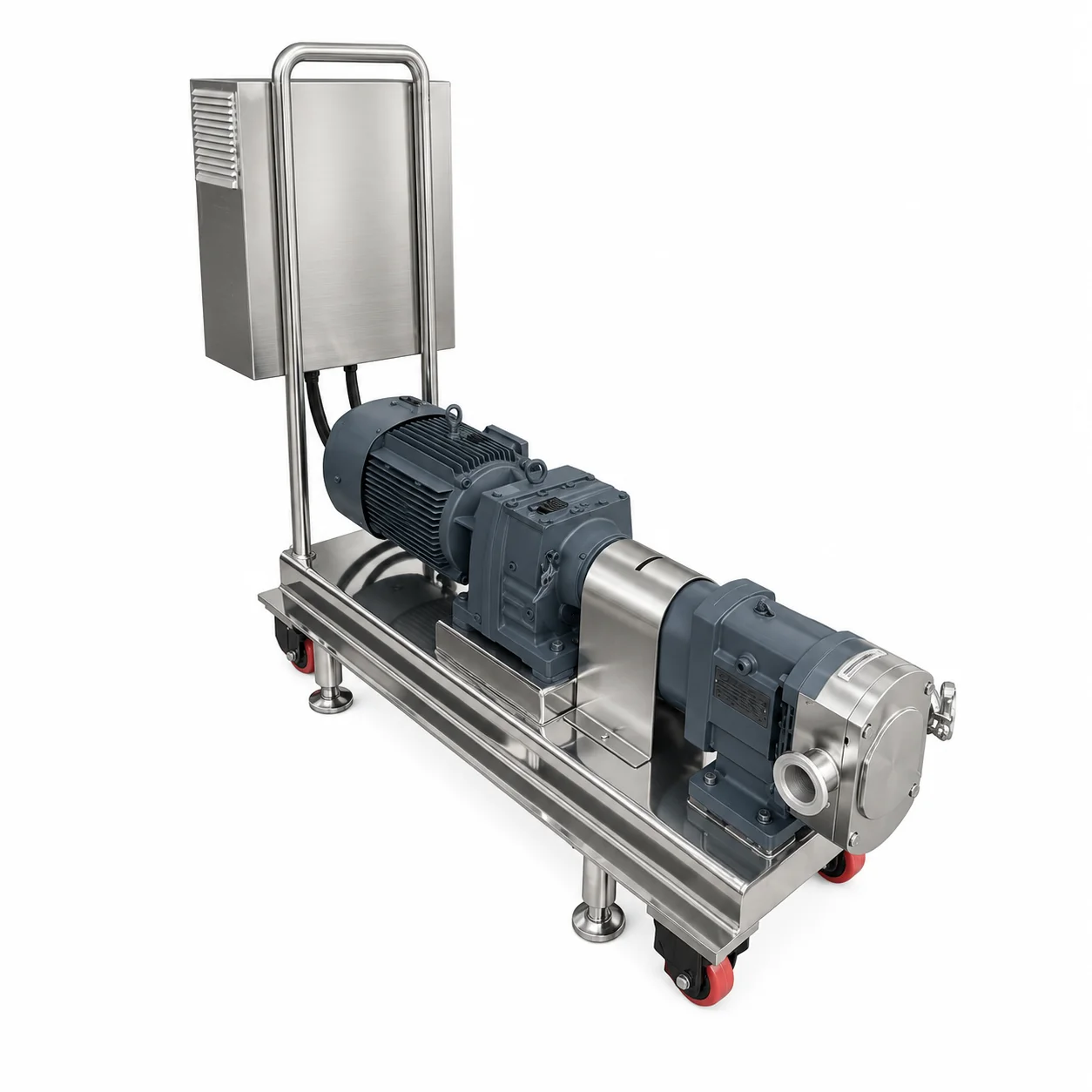
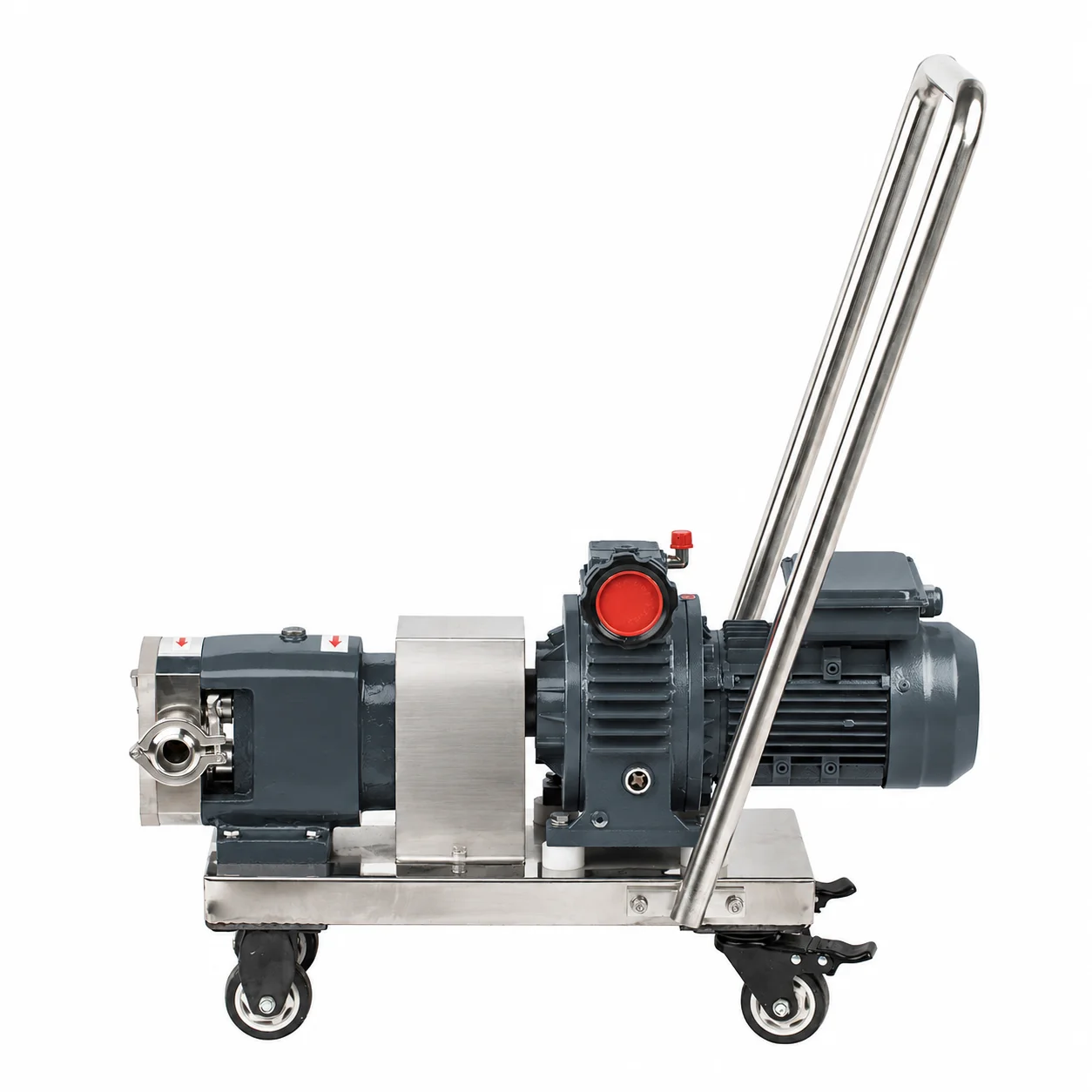
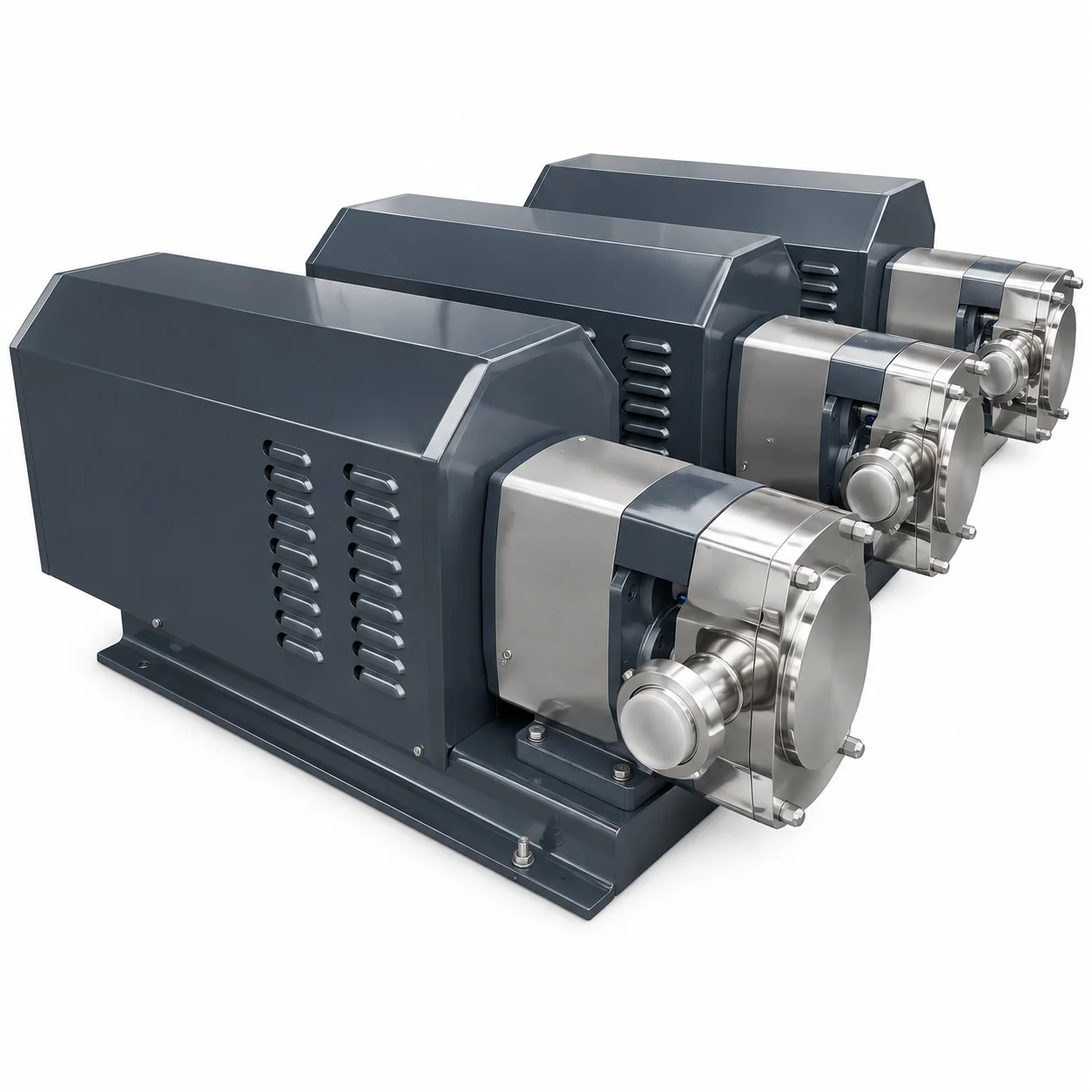
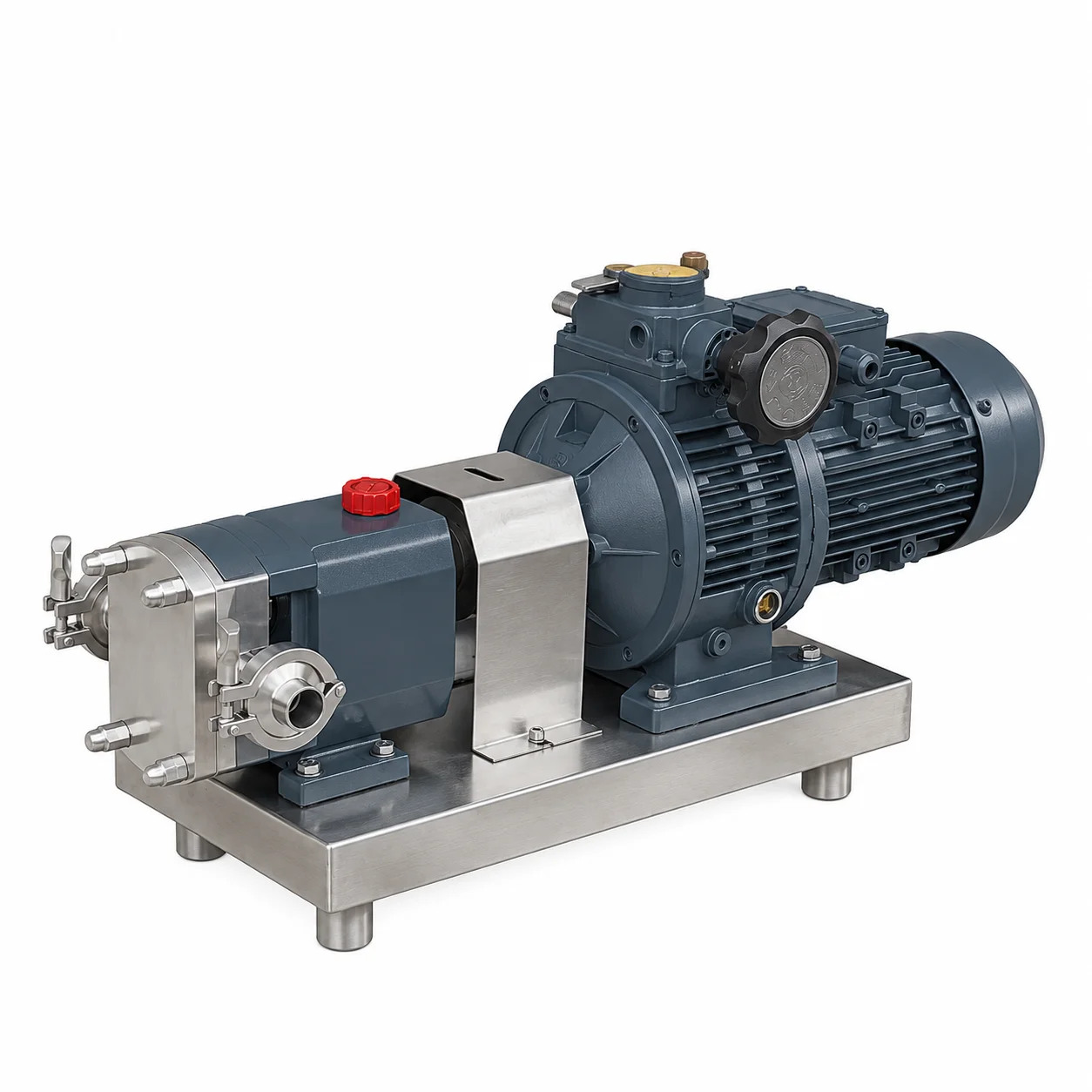
Sanitary 304/316L Stainless Steel Rotary Lobe Pump
$2,907.52 原价为:$2,907.52。$1,965.16当前价格为:$1,965.16。
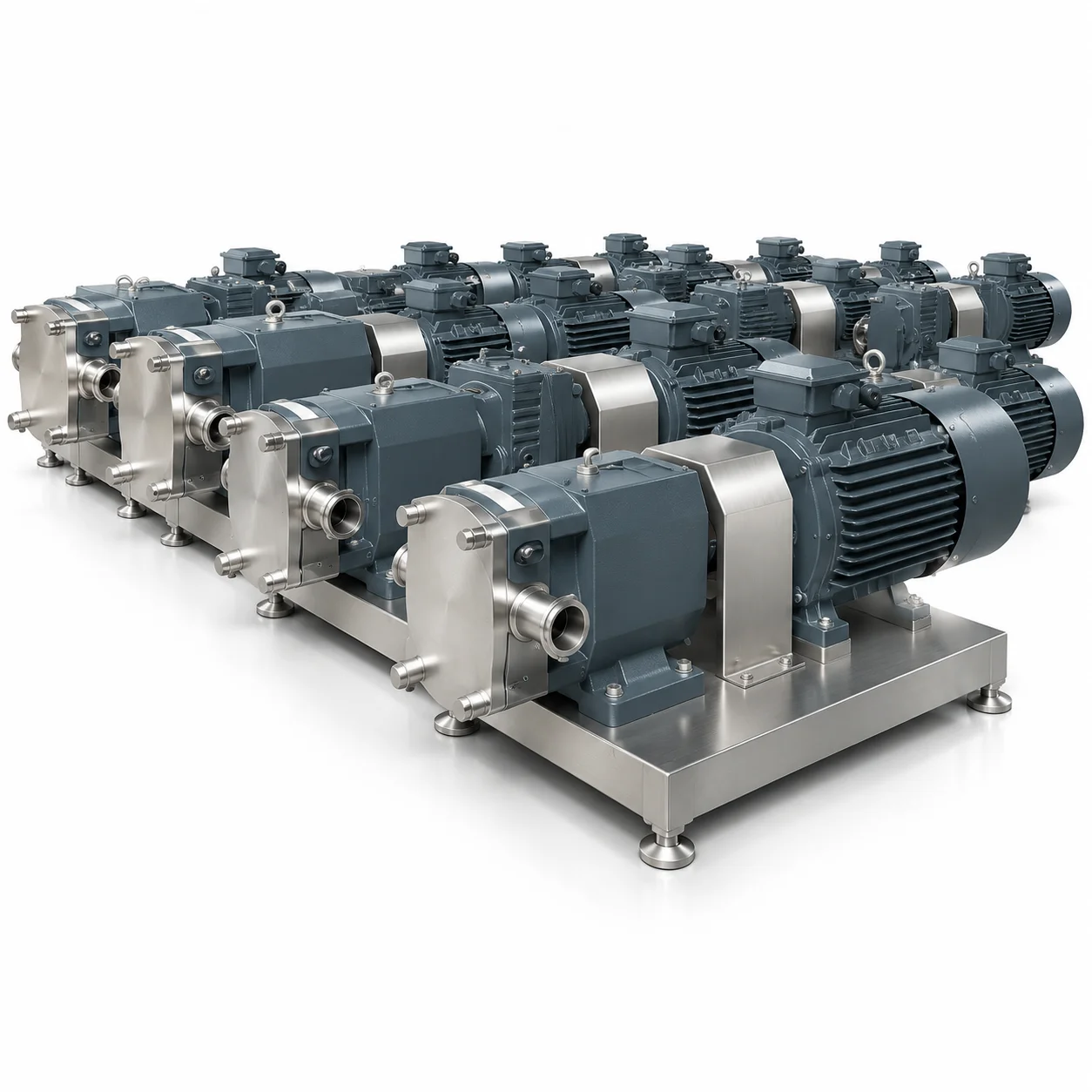
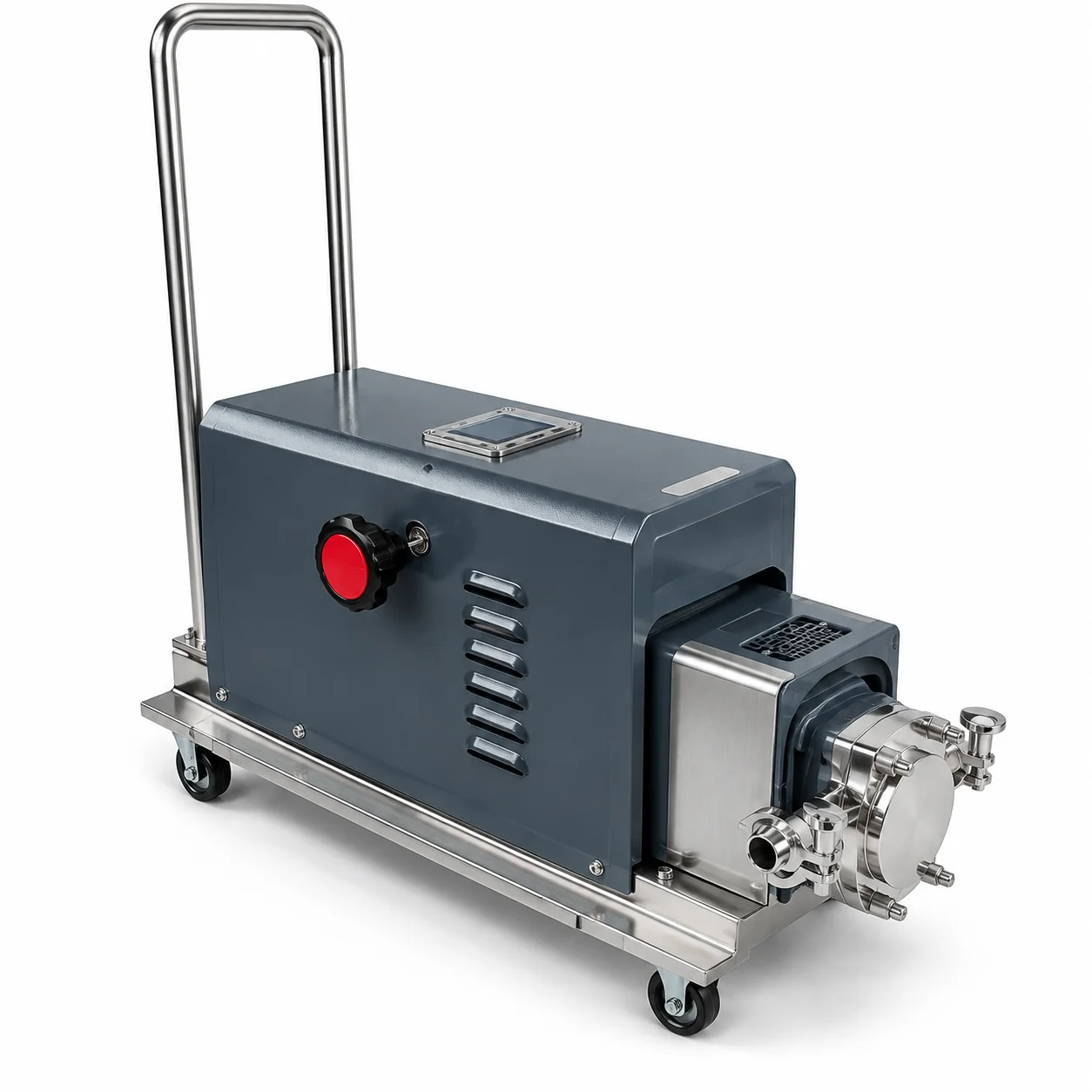
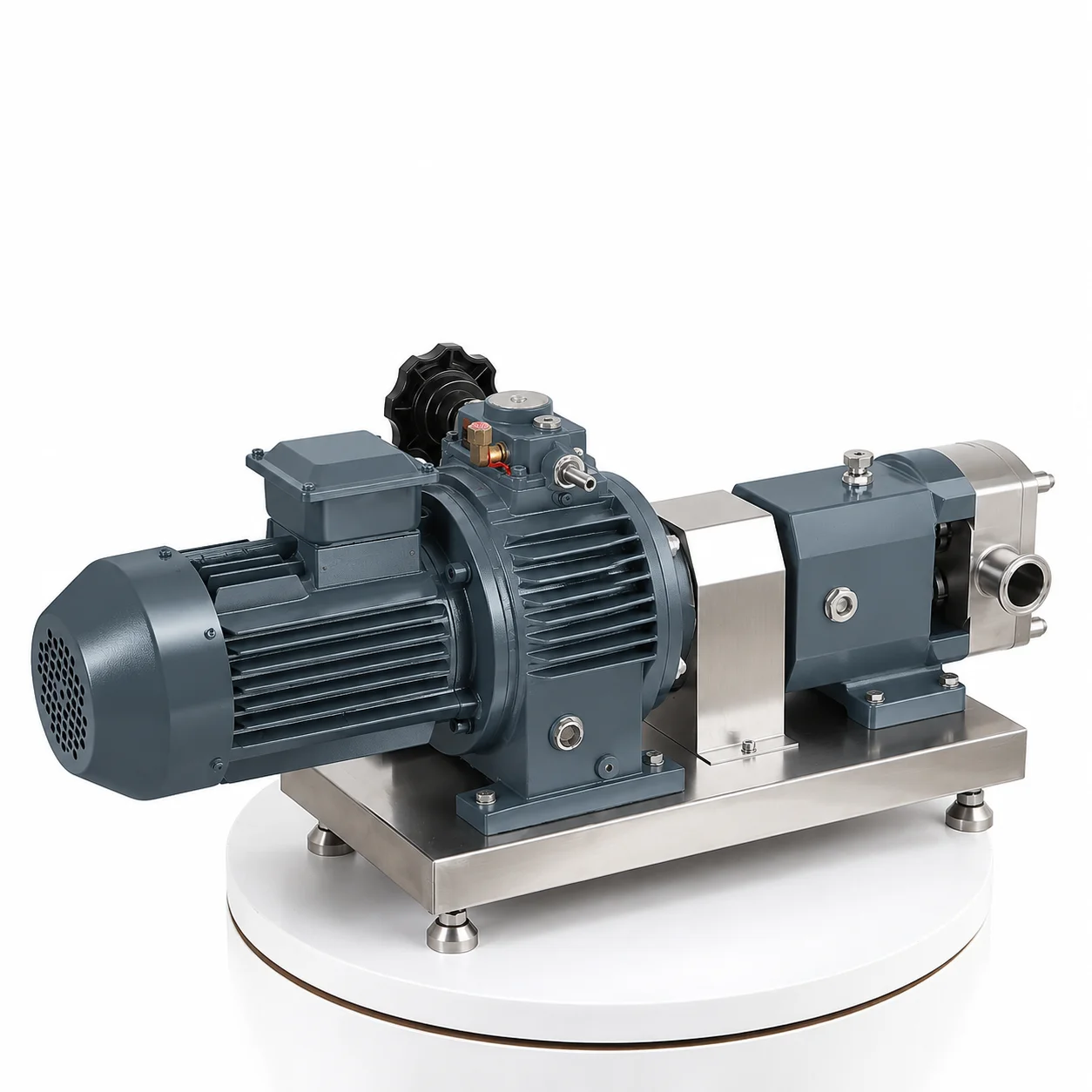
We have available a sanitary rotary lobe pump that is well suited to transfer viscous food products such as tomato paste, honey and cream. For optimum performance and compatibility with your process, please provide us with more information about the flow, operating pressure and temperature of your process as well as any cleaning cycles that may be required.
库存 100 件
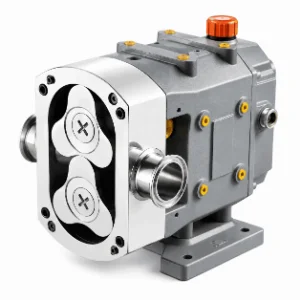
Rotor Optional
Three-Lobe Rotor
Applicable Liquids:
- Suitable for creams, liquids and sauces with low, medium and high viscosity, uniform texture and no hard granules.
- Example: Chocolate, honey, mashed potatoes and ice cream.
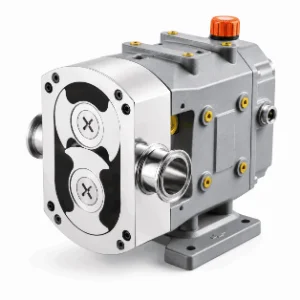
Butterfly Rotor
Applicable Liquids:
- Suitable for shear-free, non-destructive transfer of soft-grained sauces and small-particle materials.
- Example: Jam, pulp, juice, jelly and tomato sauce.
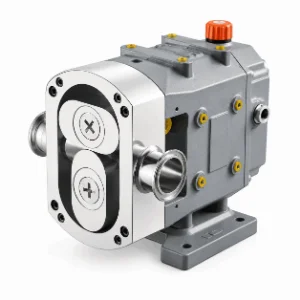
Single-Lobe Rotor
Applicable Liquids:
- Suitable for conveying materials containing larger solid particles while maintaining stable transfer.
- Example: Rock salt, chilli sauce and peanut butter.
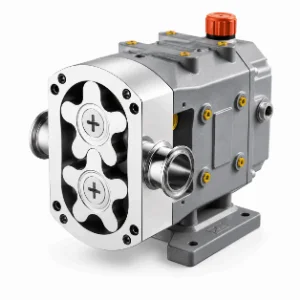
Multi-Lobe Rotor
Applicable Liquids:
- Suitable for creams, liquids and sauces with low, medium and high viscosity where higher output accuracy and smooth flow are required.
- Example: Chocolate, honey, cream, yoghurt, butter and grease.
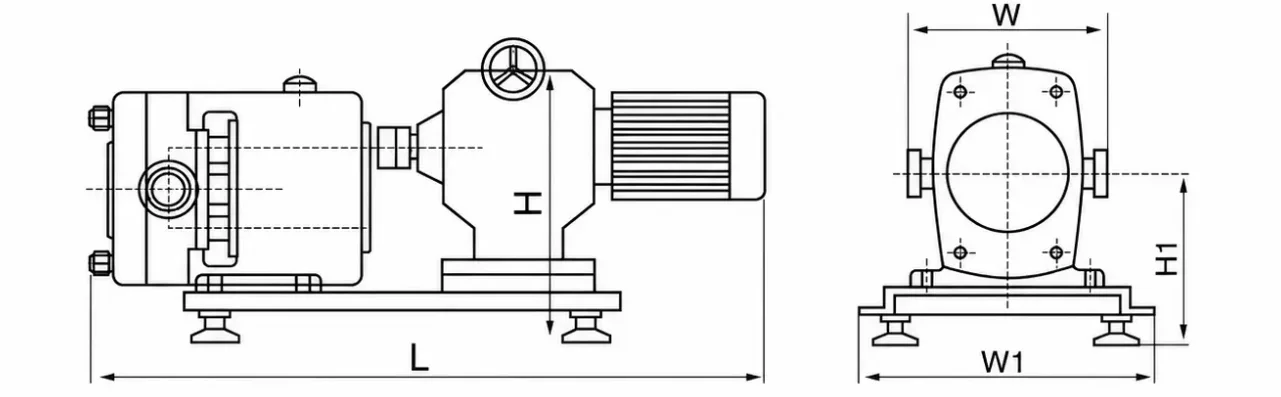
Parameter Chart
| Model | Flow per 100 Rotation |
Power (kW) |
Suggested RPM |
Capacity (L/H) |
Diameter | L | H | H1 | W | W1 | Connection Type |
|---|---|---|---|---|---|---|---|---|---|---|---|
| ZB3A-3 | 3L | 0.55 | 200-500 | 300-800 | Φ25×1.5 | 710 | 290 | 150 | 150 | 240 | Clamp / Thread / Flange |
| ZB3A-6 | 6L | 0.75 | 200-500 | 650-1600 | Φ25×1.5 | 780 | 390 | 170 | 190 | 240 | Clamp / Thread / Flange |
| ZB3A-8 | 8L | 1.5 | 200-500 | 850-2160 | Φ38×1.5 | 850 | 400 | 170 | 190 | 280 | Clamp / Thread / Flange |
| ZB3A-12 | 12L | 2.2 | 200-500 | 1300-3200 | Φ38×1.5 | 980 | 450 | 185 | 220 | 330 | Clamp / Thread / Flange |
| ZB3A-20 | 20L | 3 | 200-500 | 2100-5400 | Φ38×1.5 | 1000 | 450 | 190 | 250 | 330 | Clamp / Thread / Flange |
| ZB3A-30 | 30L | 4 | 200-500 | 3200-6400 | Φ50.8×1.5 | 1050 | 480 | 220 | 270 | 350 | Clamp / Thread / Flange |
| ZB3A-36 | 36L | 4 | 200-400 | 3800-7600 | Φ50.8×1.5 | 1100 | 490 | 220 | 270 | 360 | Clamp / Thread / Flange |
| ZB3A-52 | 52L | 5.5 | 200-400 | 5600-11000 | Φ63×1.5 | 1250 | 580 | 260 | 270 | 480 | Clamp / Thread / Flange |
| ZB3A-66 | 66L | 7.5 | 200-400 | 7100-14000 | Φ76×1.5 | 1350 | 600 | 260 | 270 | 480 | Clamp / Thread / Flange |
| ZB3A-78 | 78L | 7.5 | 200-400 | 9000-18000 | Φ76×1.5 | 1260 | 600 | 295 | 370 | 480 | Clamp / Thread / Flange |
| ZB3A-100 | 100L | 11 | 200-400 | 11000-22000 | Φ76×2 | 1320 | 670 | 295 | 370 | 480 | Clamp / Thread / Flange |
| ZB3A-135 | 135L | 15 | 200-400 | 15000-30000 | Φ89×2 | 1500 | 670 | 295 | 370 | 480 | Clamp / Thread / Flange |
| ZB3A-160 | 160L | 18.5 | 200-400 | 17000-34000 | Φ102×3 | 1500 | 720 | 320 | 420 | 560 | Clamp / Thread / Flange |
| ZB3A-200 | 200L | 22 | 200-400 | 21600-43000 | Φ102×3 | 1500 | 720 | 320 | 420 | 560 | Clamp / Thread / Flange |
| ZB3A-300 | 300L | 30 | 200-400 | 32400-64800 | Φ125×3 | 1650 | 800 | 400 | 480 | 620 | Clamp / Thread / Flange |
| ZB3A-400 | 400L | 37 | 200-400 | 43200-86400 | Φ150×3 | 1700 | 800 | 400 | 480 | 620 | Clamp / Thread / Flange |
Sanitary Rotary Lobe Pump for Foods and Food Products
We have available sanitary rotary lobe pumps made from 304 or 316L stainless steel for food and beverage processing. These pumps can transfer viscous products like tomato paste or honey. Which pump you should use depends on the product being transferred as well as the conditions of the process. The flow rate, temperature and pressure range of the process should also be considered when selecting the pump.
How it Works
The lobes turn within the casing of the pump to create a scoop like action to draw the product through the inlet of the pump and transport it to the outlet of the pump. The use of this type of action makes the pump suitable to transfer viscous product.
Benefits and Features
- 304 or 316L stainless steel options are available for the pump construction. 316L is more resistant to corrosion than 304, but is more expensive.
- To achieve sanitary design of the pump, it is important to choose the correct type of seal and connections to the pump.
- Rotary lobe pumps can transfer honey, cream or tomato paste for example.
- To move the product through the system, the pump should be operated at the correct speed to overcome the resistance of the system.
This pump can be used in food processing to transfer tomato paste to and from various process vessels to be further cooked and concentrated.
This pump is typically employed for transport of honey between storage, processing and packing areas. Requirements for shearing of creams vary with each formula and the process temperature. Discuss the level of shear sensitivity of the product to be transferred and the required flow rate to select the correct pump for the application.
Configuration and Features
There are a number of customizations available for this pump not described in the product literature. Before you purchase the pump, you should verify details such as the type of seal used, motor and gearbox specifications, valving, connection standards and speed control to name a few to ensure they are compatible with your process.
Product literature describes the transfer of tomato paste, honey and cream. The viscosity of the product to be transferred and the operating temperature of the product should also be provided to ensure the pump selected will be adequate.
Why Use Us?
We have the expertise to determine the best pump configuration for your product based on the characteristics of the product as well as the production process. This will enable you to evaluate compatibility of various connectors, materials and drives prior to finalizing your purchase.
How do I select the correct pump?
When specifying a pump to transfer your product give the estimated flow rate and the discharge pressure required. Additionally provide the viscosity of the product at operating temperature, any sensitivity of the product to shearing and the type of auxiliary equipment and controls to which the pump will be connected.
Assess the compatibility of this device with your formulation.
What is the difference between 304 and 316L stainless steel?
Both have stainless steel constituents. Depending on the product and the environment in which it is cleaned either of these may be suitable. To determine which is correct for your application send us the process flow diagram.
How do rotary lobe pumps move liquids?
Product is transported by a pair of lobes which rotate within the pump casing to draw liquid in and expel it out of the pump.
What pressure and flow rate can this pump achieve?
The values for flow and pressure can not be given for this pump. These need to be specified for the application to determine the performance required of the pump.
Is the pump designed for cleaning in place (CIP)?
No information is given regarding CIP. To determine if the pump can be cleaned in place contact us for additional information.
What information is required to give a quote?
To provide a quotation on this pump provide the approximate flow and pressure requirements of the service, the liquid to be pumped and the operating temperature of the process.
Request a Pump Configuration
To determine the type of materials to use in the construction of this pump for your particular application send us more information on the product and process involved.

Sanitary Rotary Lobe Pump for Foods and Food Products
We have available sanitary rotary lobe pumps made from 304 or 316L stainless steel for food and beverage processing. These pumps can transfer viscous products like tomato paste or honey. Which pump you should use depends on the product being transferred as well as the conditions of the process. The flow rate, temperature and pressure range of the process should also be considered when selecting the pump.
How it Works
The lobes turn within the casing of the pump to create a scoop like action to draw the product through the inlet of the pump and transport it to the outlet of the pump. The use of this type of action makes the pump suitable to transfer viscous product.
Benefits and Features
- 304 or 316L stainless steel options are available for the pump construction. 316L is more resistant to corrosion than 304, but is more expensive.
- To achieve sanitary design of the pump, it is important to choose the correct type of seal and connections to the pump.
- Rotary lobe pumps can transfer honey, cream or tomato paste for example.
- To move the product through the system, the pump should be operated at the correct speed to overcome the resistance of the system.
This pump can be used in food processing to transfer tomato paste to and from various process vessels to be further cooked and concentrated.
This pump is typically employed for transport of honey between storage, processing and packing areas. Requirements for shearing of creams vary with each formula and the process temperature. Discuss the level of shear sensitivity of the product to be transferred and the required flow rate to select the correct pump for the application.
Configuration and Features
There are a number of customizations available for this pump not described in the product literature. Before you purchase the pump, you should verify details such as the type of seal used, motor and gearbox specifications, valving, connection standards and speed control to name a few to ensure they are compatible with your process.
Product literature describes the transfer of tomato paste, honey and cream. The viscosity of the product to be transferred and the operating temperature of the product should also be provided to ensure the pump selected will be adequate.
Why Use Us?
We have the expertise to determine the best pump configuration for your product based on the characteristics of the product as well as the production process. This will enable you to evaluate compatibility of various connectors, materials and drives prior to finalizing your purchase.
How do I select the correct pump?
When specifying a pump to transfer your product give the estimated flow rate and the discharge pressure required. Additionally provide the viscosity of the product at operating temperature, any sensitivity of the product to shearing and the type of auxiliary equipment and controls to which the pump will be connected.
Assess the compatibility of this device with your formulation.
What is the difference between 304 and 316L stainless steel?
Both have stainless steel constituents. Depending on the product and the environment in which it is cleaned either of these may be suitable. To determine which is correct for your application send us the process flow diagram.
How do rotary lobe pumps move liquids?
Product is transported by a pair of lobes which rotate within the pump casing to draw liquid in and expel it out of the pump.
What pressure and flow rate can this pump achieve?
The values for flow and pressure can not be given for this pump. These need to be specified for the application to determine the performance required of the pump.
Is the pump designed for cleaning in place (CIP)?
No information is given regarding CIP. To determine if the pump can be cleaned in place contact us for additional information.
What information is required to give a quote?
To provide a quotation on this pump provide the approximate flow and pressure requirements of the service, the liquid to be pumped and the operating temperature of the process.
Request a Pump Configuration
To determine the type of materials to use in the construction of this pump for your particular application send us more information on the product and process involved.

MAECENAS IACULIS
Vestibulum curae torquent diam diam commodo parturient penatibus nunc dui adipiscing convallis bulum parturient suspendisse parturient a.Parturient in parturient scelerisque nibh lectus quam a natoque adipiscing a vestibulum hendrerit et pharetra fames nunc natoque dui.
ADIPISCING CONVALLIS BULUM
- Vestibulum penatibus nunc dui adipiscing convallis bulum parturient suspendisse.
- Abitur parturient praesent lectus quam a natoque adipiscing a vestibulum hendre.
- Diam parturient dictumst parturient scelerisque nibh lectus.
Scelerisque adipiscing bibendum sem vestibulum et in a a a purus lectus faucibus lobortis tincidunt purus lectus nisl class eros.Condimentum a et ullamcorper dictumst mus et tristique elementum nam inceptos hac parturient scelerisque vestibulum amet elit ut volutpat.