316L Sanitary Jacketed Lobe Pump Head for Honey
$2,875.81 原价为:$2,875.81。$1,957.14当前价格为:$1,957.14。
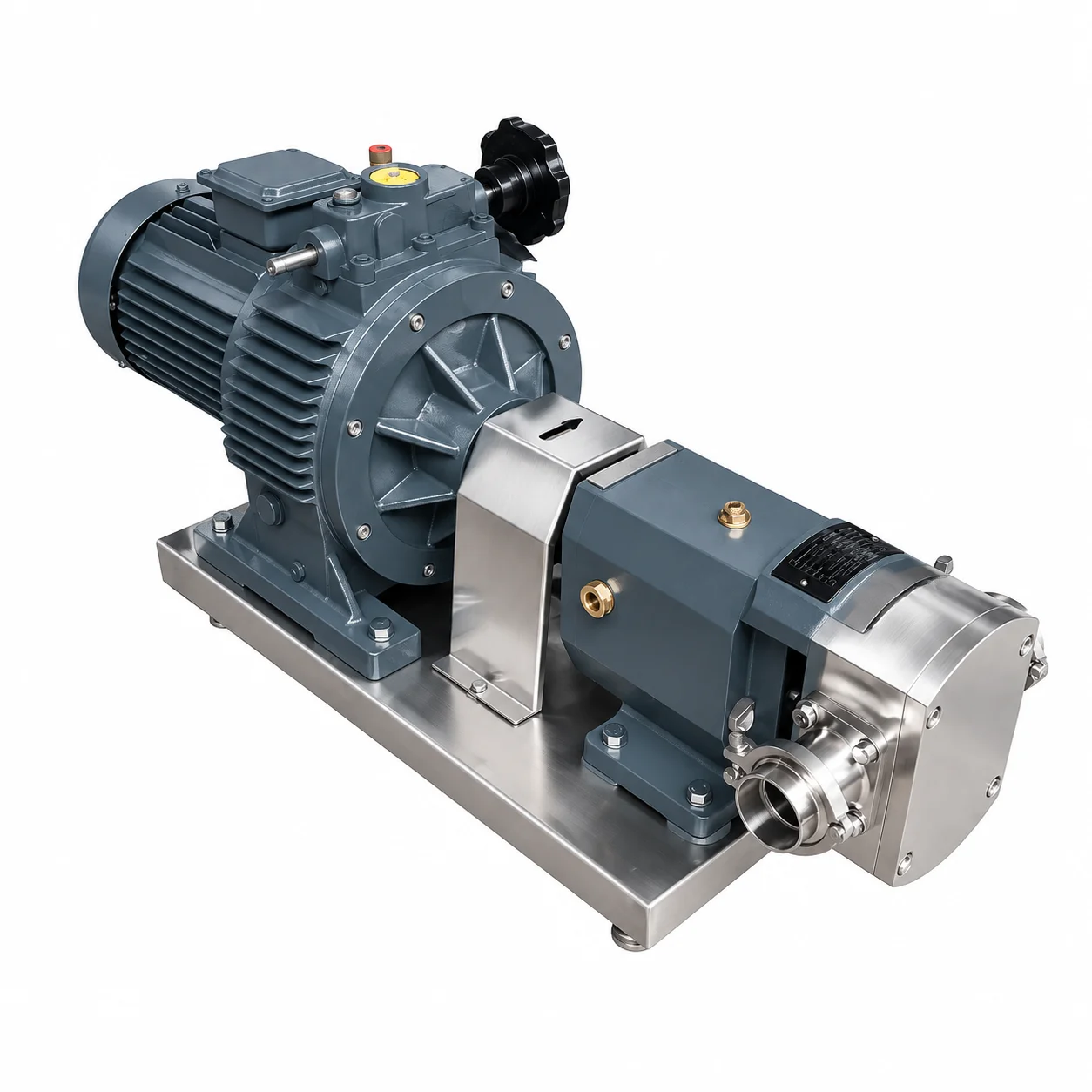
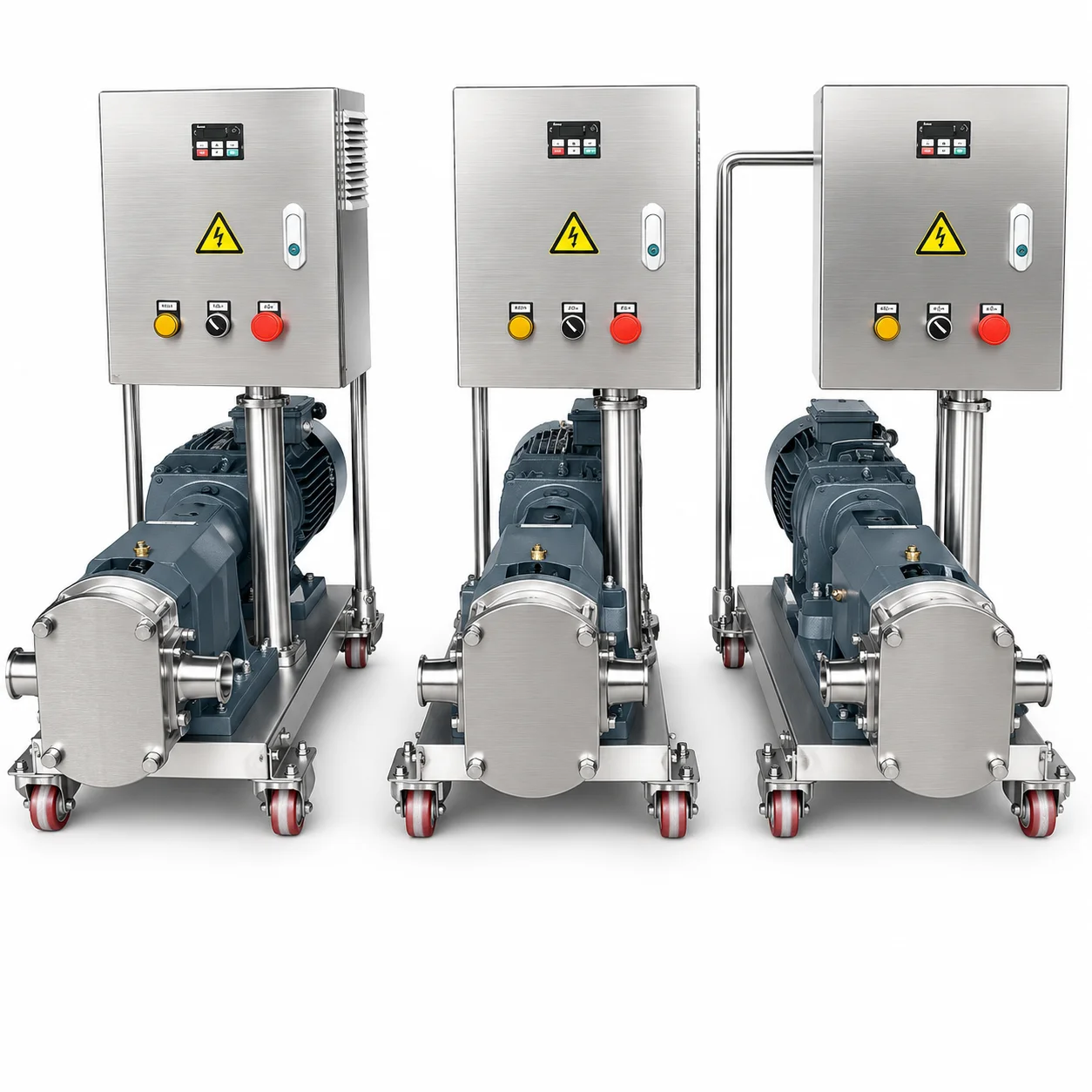
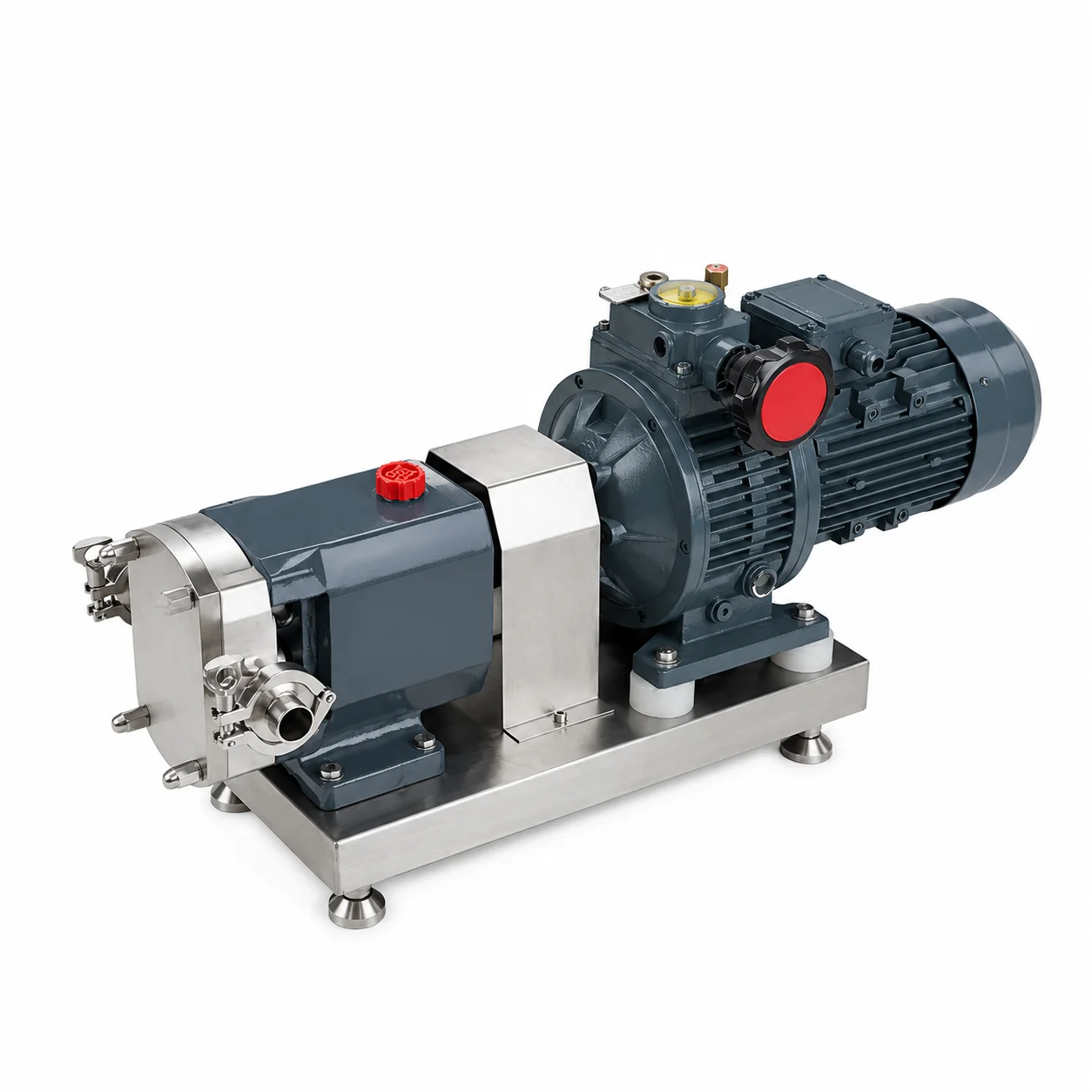
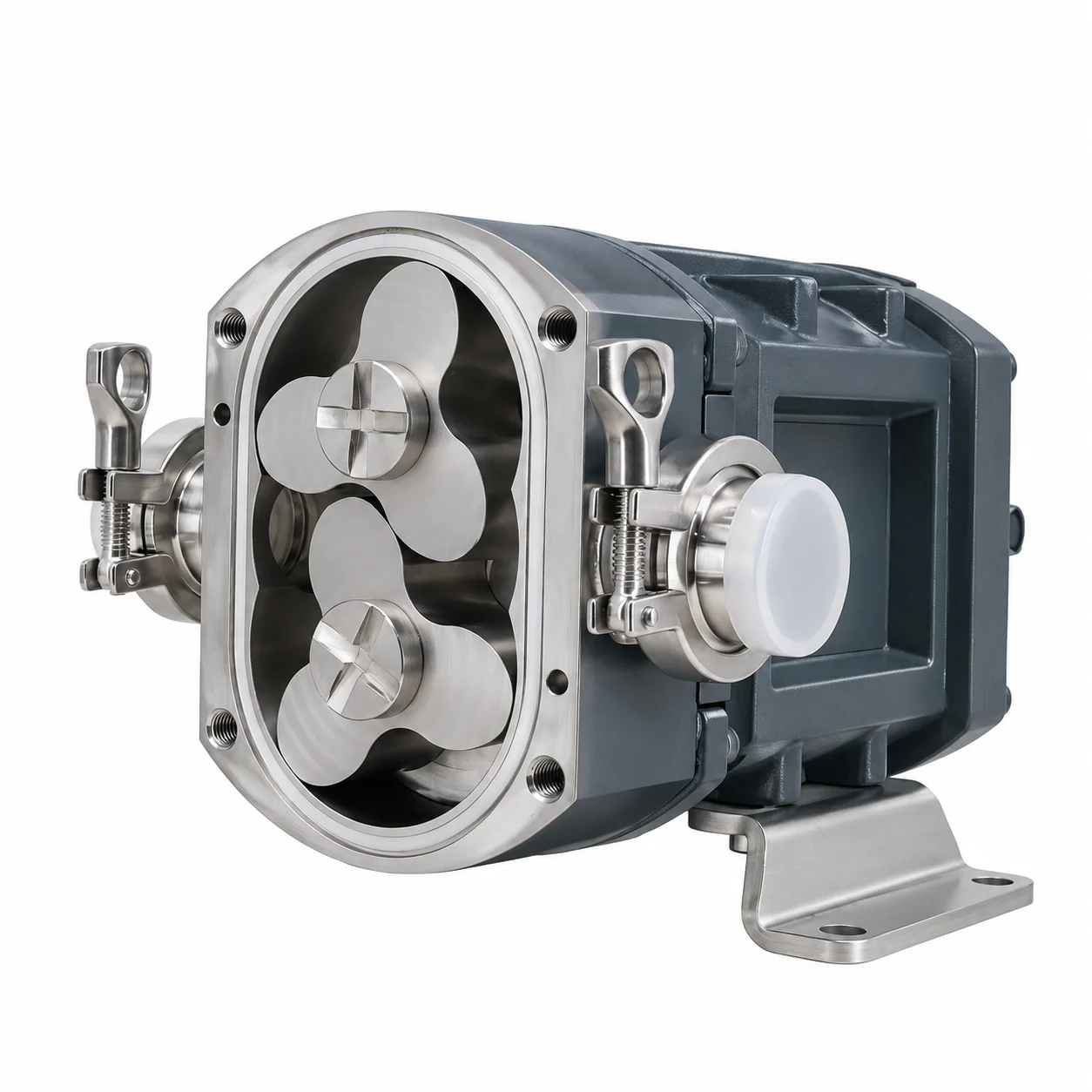
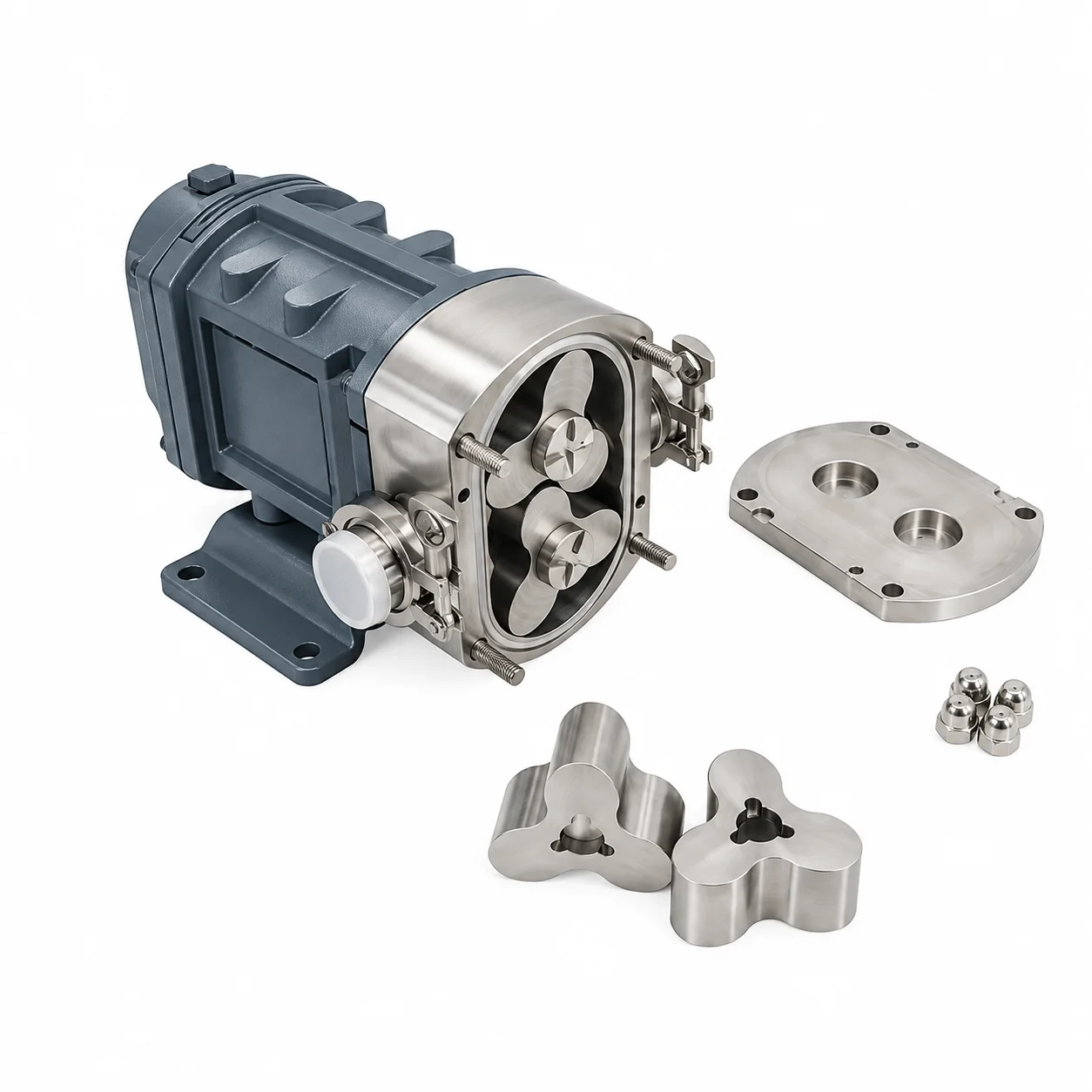
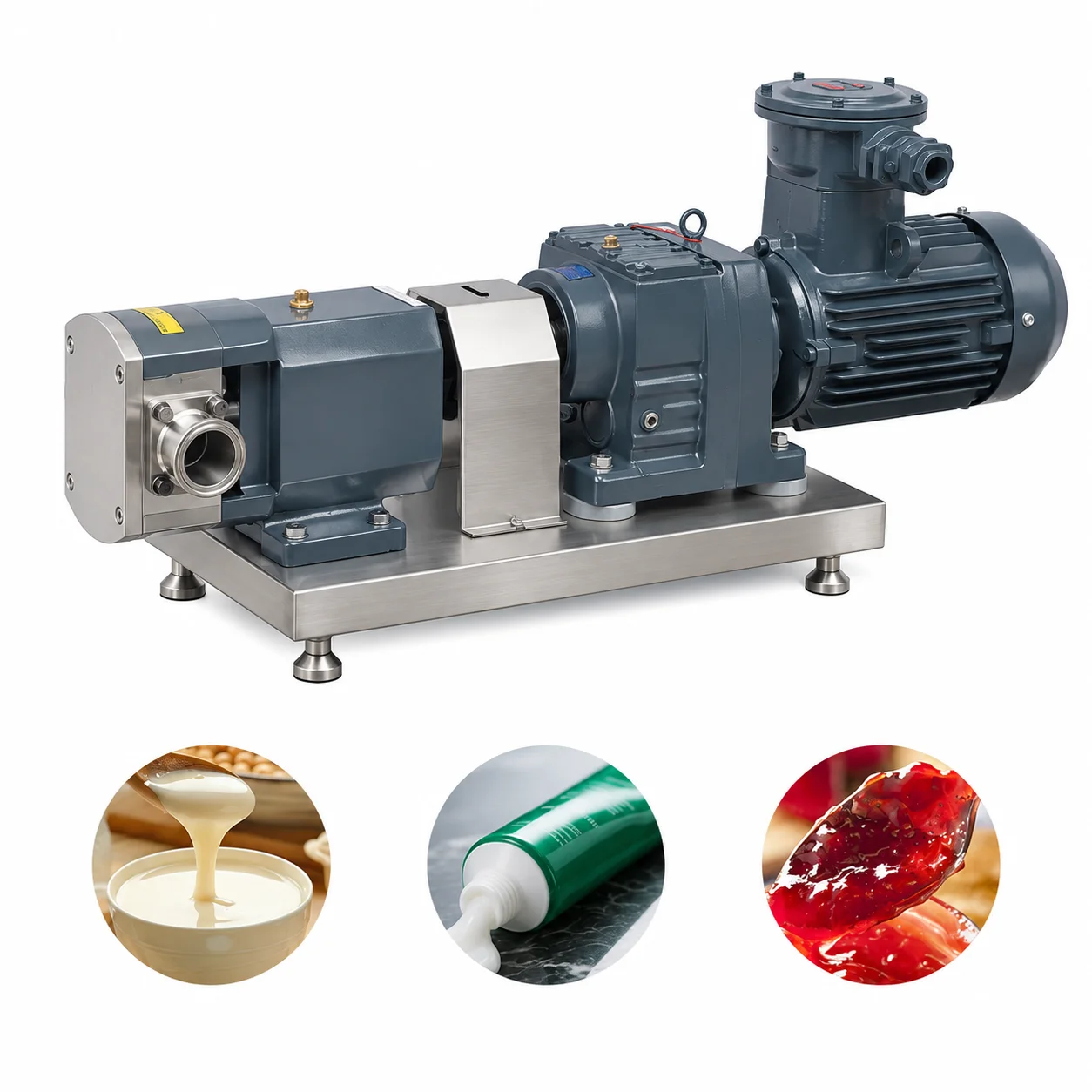
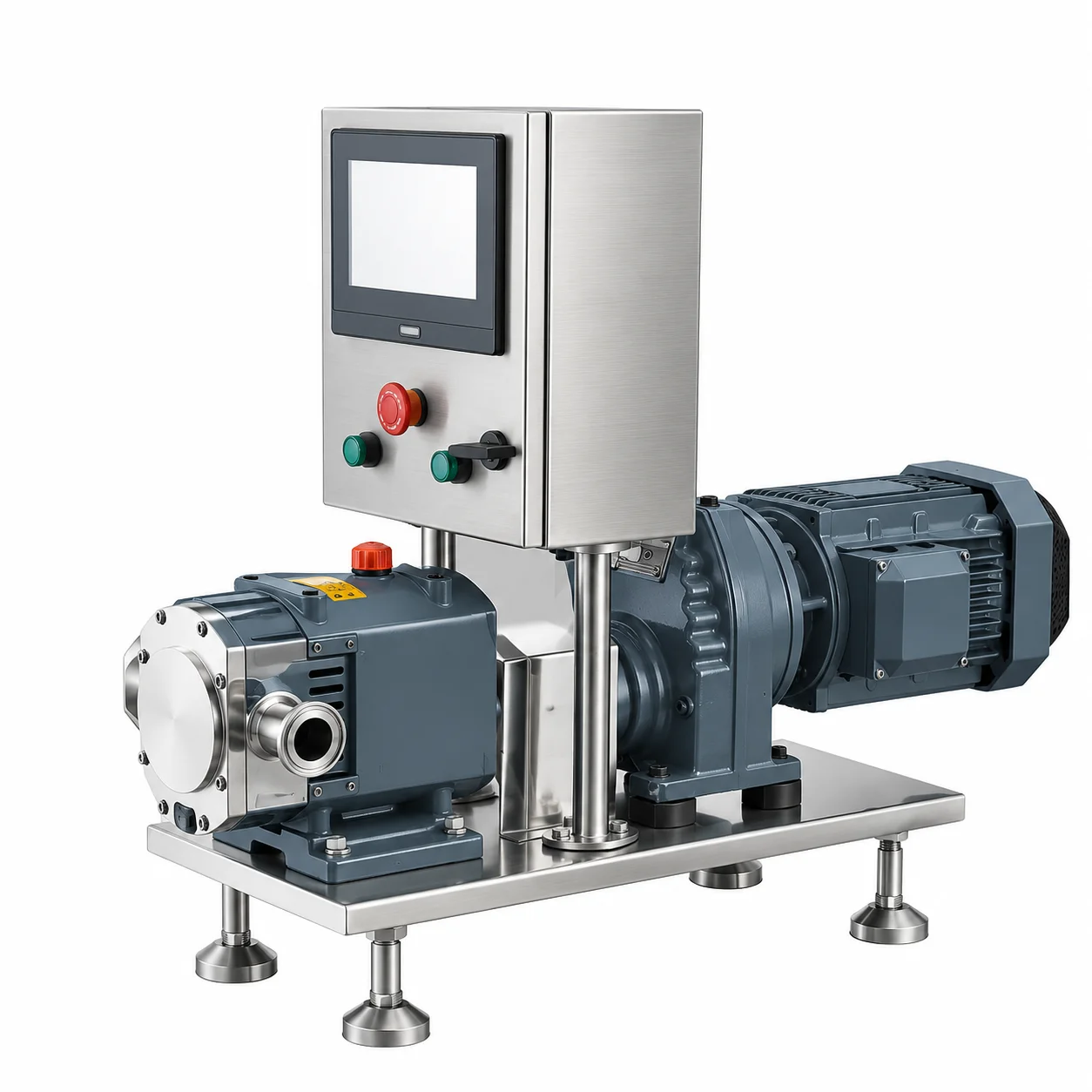
We manufacture a sanitary, SS316L rotary lobe pump head with three impellers to transfer honey. To design the rest of the pump to integrate correctly with your process, kindly provide the temperature of the process liquid, liquid flow and pressure requirements, and the type of connection used in your system. Also let us know the type of clean out procedure used in your system.
库存 100 件
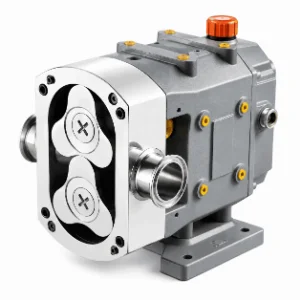
Rotor Optional
Three-Lobe Rotor
Applicable Liquids:
- Suitable for creams, liquids and sauces with low, medium and high viscosity, uniform texture and no hard granules.
- Example: Chocolate, honey, mashed potatoes and ice cream.
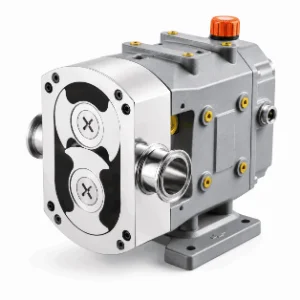
Butterfly Rotor
Applicable Liquids:
- Suitable for shear-free, non-destructive transfer of soft-grained sauces and small-particle materials.
- Example: Jam, pulp, juice, jelly and tomato sauce.
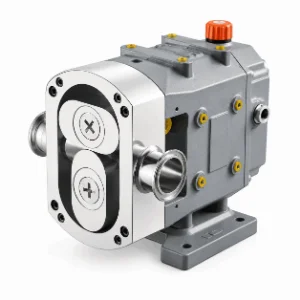
Single-Lobe Rotor
Applicable Liquids:
- Suitable for conveying materials containing larger solid particles while maintaining stable transfer.
- Example: Rock salt, chilli sauce and peanut butter.
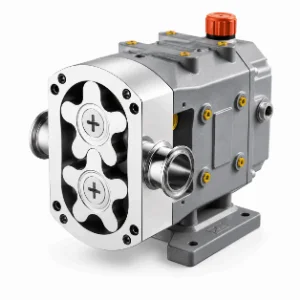
Multi-Lobe Rotor
Applicable Liquids:
- Suitable for creams, liquids and sauces with low, medium and high viscosity where higher output accuracy and smooth flow are required.
- Example: Chocolate, honey, cream, yoghurt, butter and grease.
Parameter Chart
| Model | Flow per 100 Rotation |
Power (kW) |
Suggested RPM |
Capacity (L/H) |
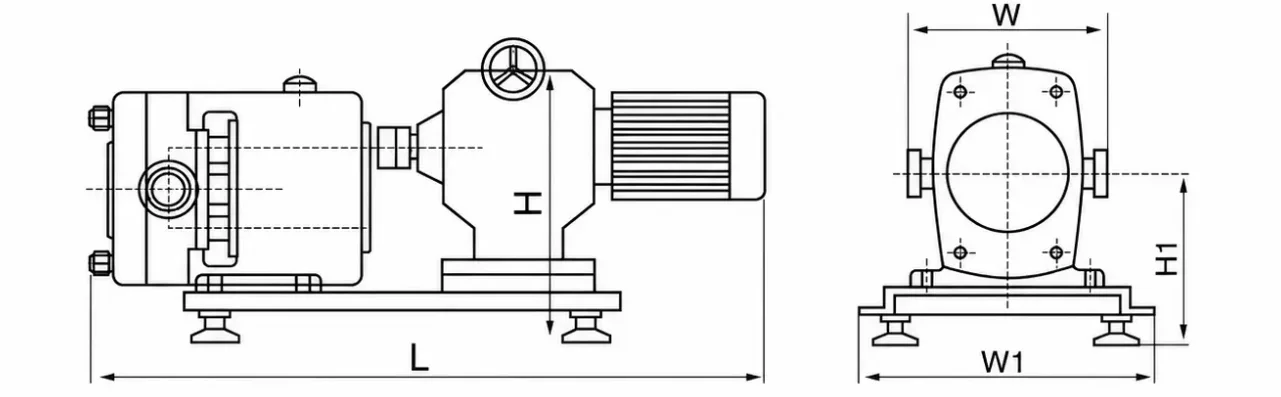
Diameter | L | H | H1 | W | W1 | Connection Type |
|---|---|---|---|---|---|---|---|---|---|---|---|
| ZB3A-3 | 3L | 0.55 | 200-500 | 300-800 | Φ25×1.5 | 710 | 290 | 150 | 150 | 240 | Clamp / Thread / Flange |
| ZB3A-6 | 6L | 0.75 | 200-500 | 650-1600 | Φ25×1.5 | 780 | 390 | 170 | 190 | 240 | Clamp / Thread / Flange |
| ZB3A-8 | 8L | 1.5 | 200-500 | 850-2160 | Φ38×1.5 | 850 | 400 | 170 | 190 | 280 | Clamp / Thread / Flange |
| ZB3A-12 | 12L | 2.2 | 200-500 | 1300-3200 | Φ38×1.5 | 980 | 450 | 185 | 220 | 330 | Clamp / Thread / Flange |
| ZB3A-20 | 20L | 3 | 200-500 | 2100-5400 | Φ38×1.5 | 1000 | 450 | 190 | 250 | 330 | Clamp / Thread / Flange |
| ZB3A-30 | 30L | 4 | 200-500 | 3200-6400 | Φ50.8×1.5 | 1050 | 480 | 220 | 270 | 350 | Clamp / Thread / Flange |
| ZB3A-36 | 36L | 4 | 200-400 | 3800-7600 | Φ50.8×1.5 | 1100 | 490 | 220 | 270 | 360 | Clamp / Thread / Flange |
| ZB3A-52 | 52L | 5.5 | 200-400 | 5600-11000 | Φ63×1.5 | 1250 | 580 | 260 | 270 | 480 | Clamp / Thread / Flange |
| ZB3A-66 | 66L | 7.5 | 200-400 | 7100-14000 | Φ76×1.5 | 1350 | 600 | 260 | 270 | 480 | Clamp / Thread / Flange |
| ZB3A-78 | 78L | 7.5 | 200-400 | 9000-18000 | Φ76×1.5 | 1260 | 600 | 295 | 370 | 480 | Clamp / Thread / Flange |
| ZB3A-100 | 100L | 11 | 200-400 | 11000-22000 | Φ76×2 | 1320 | 670 | 295 | 370 | 480 | Clamp / Thread / Flange |
| ZB3A-135 | 135L | 15 | 200-400 | 15000-30000 | Φ89×2 | 1500 | 670 | 295 | 370 | 480 | Clamp / Thread / Flange |
| ZB3A-160 | 160L | 18.5 | 200-400 | 17000-34000 | Φ102×3 | 1500 | 720 | 320 | 420 | 560 | Clamp / Thread / Flange |
| ZB3A-200 | 200L | 22 | 200-400 | 21600-43000 | Φ102×3 | 1500 | 720 | 320 | 420 | 560 | Clamp / Thread / Flange |
| ZB3A-300 | 300L | 30 | 200-400 | 32400-64800 | Φ125×3 | 1650 | 800 | 400 | 480 | 620 | Clamp / Thread / Flange |
| ZB3A-400 | 400L | 37 | 200-400 | 43200-86400 | Φ150×3 | 1700 | 800 | 400 | 480 | 620 | Clamp / Thread / Flange |
We manufacture a sanitary rotary lobe pump head designed to transfer honey using SS316L stainless steel.
As indicated in the title, this pump head consists of three impellers and is jacketed. This design would be used to control the temperature of the fluid within the pump head during operation. Users should also determine the appropriate drive, seals and connections for their application.
Honey Transfer Challenges
Honey, being a viscous fluid, can be extremely difficult to transport and can sometimes solidify. To mitigate these issues the fluid within the jacket of the pump head can be circulated with either a coolant or a heat transfer fluid to soften the honey before it enters the pump head.
Rotary Lobe Pump Design
A rotary lobe pump utilizes lobes, in this case three, to capture liquid and transport it to the outlet of the pump. For products with higher viscosity, like honey, this design would be more appropriate than using a centrifugal pump to effect liquid transport. The velocity and pressure at which the liquid is transported is dependent on several variables including, the properties of the liquid to be transported, design and dimensions of the pump and the overall system in which it is employed.
SS316L Stainless Steel
This type of stainless steel is commonly used in contact with food. To ensure this material meets your specific application, you should check the composition of each part prior to purchase.
Jacketed Pump Head
Through this jacket users can control the process temperature of the fluid prior to it entering the pump head.
Request supplier to verify jackets and define operating limits.
Tri-impeller Design
The drawing title denotes a tri-impeller configuration. Check to see if the design also incorporates triangular side plates and check that this meets your requirement for installation and clean out.
Honey Transfer Application
To transfer honey using a positive displacement pump the speed of the pump has to be adjusted to match the viscosity of the honey to be transferred. The length of the transfer line should also be taken into consideration.
This pump head may be used to transfer honey between various process vessels in a honey production facility to a filling machine. When using this pump to transfer honey with particulates, users should consult with the supplier to determine if the pump is adequate for this service.
Compatibility and Clean Out
Rotary lobe pumps are not defined to operate with a particular seal or motor and gearbox. Depending on the surface finish and port configuration this pump head may not be compatible for easy clean out. The type of materials used to construct this pump head are defined as SS316L, however, the seals and other internal components may not be of this material. Prior to specifying this pump head users should confirm the pump head dimensions and the manner of connection to the process to ensure compatibility for users clean out and disassembly needs.
This pump head is well suited for transferring honey from process equipment in a honey production facility.
We suggest reviewing the full assembly to confirm components such as the seal and drive fit the application and work with the balance of the piping and controls to achieve the desired process flow.
How to Select the Correct Configuration
Provide the desired flow rate and discharge pressure of honey. Indicate the type of honey including its viscosity and the operating cycle of the process. Show piping and vacuum arrangement to be used. Describe the desired cleaning cycle of the honey and the type of material to be used for contact with honey. Indicate whether the jacket is to be used for heating or cooling.
Based on the information provided, we can determine the type of drive and seals to be used with the pump head. Title of the pump does not indicate capacity, viscosity or operational limits.
What is this pump head used for?
As identified in the title this pump is to transfer honey. The particular grade and purity of the honey to be transferred depends on the viscosity of the honey as well as any solid or crystalline impurities in the honey.
What is the function of the jacket?
The jacket is to be connected to a medium through which heat or cold is transferred to the pump head.
No food contact evaluation has been performed as stated in the title. Verify the compliance of the material with the supplier.
As stated in the title, there is no drawing showing the configuration of the three impellers. To verify this, obtain a drawing from the supplier.
Neither flow rates nor pressure have been stated in the title. These will vary based on the complete pump and system requirements.
Not with the information provided in the title. To determine if this pump head would integrate with the existing piping and motor, more information is needed on the details of the motor and interfaces to the pump.
To determine the integrity of the pump head to transfer honey and verify other design aspects of the pump head to meet your requirements, provide us with the flow rate and temperature of honey to be pumped and any other pertinent information.

We manufacture a sanitary rotary lobe pump head designed to transfer honey using SS316L stainless steel.
As indicated in the title, this pump head consists of three impellers and is jacketed. This design would be used to control the temperature of the fluid within the pump head during operation. Users should also determine the appropriate drive, seals and connections for their application.
Honey Transfer Challenges
Honey, being a viscous fluid, can be extremely difficult to transport and can sometimes solidify. To mitigate these issues the fluid within the jacket of the pump head can be circulated with either a coolant or a heat transfer fluid to soften the honey before it enters the pump head.
Rotary Lobe Pump Design
A rotary lobe pump utilizes lobes, in this case three, to capture liquid and transport it to the outlet of the pump. For products with higher viscosity, like honey, this design would be more appropriate than using a centrifugal pump to effect liquid transport. The velocity and pressure at which the liquid is transported is dependent on several variables including, the properties of the liquid to be transported, design and dimensions of the pump and the overall system in which it is employed.
SS316L Stainless Steel
This type of stainless steel is commonly used in contact with food. To ensure this material meets your specific application, you should check the composition of each part prior to purchase.
Jacketed Pump Head
Through this jacket users can control the process temperature of the fluid prior to it entering the pump head.
Request supplier to verify jackets and define operating limits.
Tri-impeller Design
The drawing title denotes a tri-impeller configuration. Check to see if the design also incorporates triangular side plates and check that this meets your requirement for installation and clean out.
Honey Transfer Application
To transfer honey using a positive displacement pump the speed of the pump has to be adjusted to match the viscosity of the honey to be transferred. The length of the transfer line should also be taken into consideration.
This pump head may be used to transfer honey between various process vessels in a honey production facility to a filling machine. When using this pump to transfer honey with particulates, users should consult with the supplier to determine if the pump is adequate for this service.
Compatibility and Clean Out
Rotary lobe pumps are not defined to operate with a particular seal or motor and gearbox. Depending on the surface finish and port configuration this pump head may not be compatible for easy clean out. The type of materials used to construct this pump head are defined as SS316L, however, the seals and other internal components may not be of this material. Prior to specifying this pump head users should confirm the pump head dimensions and the manner of connection to the process to ensure compatibility for users clean out and disassembly needs.
This pump head is well suited for transferring honey from process equipment in a honey production facility.
We suggest reviewing the full assembly to confirm components such as the seal and drive fit the application and work with the balance of the piping and controls to achieve the desired process flow.
How to Select the Correct Configuration
Provide the desired flow rate and discharge pressure of honey. Indicate the type of honey including its viscosity and the operating cycle of the process. Show piping and vacuum arrangement to be used. Describe the desired cleaning cycle of the honey and the type of material to be used for contact with honey. Indicate whether the jacket is to be used for heating or cooling.
Based on the information provided, we can determine the type of drive and seals to be used with the pump head. Title of the pump does not indicate capacity, viscosity or operational limits.
What is this pump head used for?
As identified in the title this pump is to transfer honey. The particular grade and purity of the honey to be transferred depends on the viscosity of the honey as well as any solid or crystalline impurities in the honey.
What is the function of the jacket?
The jacket is to be connected to a medium through which heat or cold is transferred to the pump head.
No food contact evaluation has been performed as stated in the title. Verify the compliance of the material with the supplier.
As stated in the title, there is no drawing showing the configuration of the three impellers. To verify this, obtain a drawing from the supplier.
Neither flow rates nor pressure have been stated in the title. These will vary based on the complete pump and system requirements.
Not with the information provided in the title. To determine if this pump head would integrate with the existing piping and motor, more information is needed on the details of the motor and interfaces to the pump.
To determine the integrity of the pump head to transfer honey and verify other design aspects of the pump head to meet your requirements, provide us with the flow rate and temperature of honey to be pumped and any other pertinent information.

MAECENAS IACULIS
Vestibulum curae torquent diam diam commodo parturient penatibus nunc dui adipiscing convallis bulum parturient suspendisse parturient a.Parturient in parturient scelerisque nibh lectus quam a natoque adipiscing a vestibulum hendrerit et pharetra fames nunc natoque dui.
ADIPISCING CONVALLIS BULUM
- Vestibulum penatibus nunc dui adipiscing convallis bulum parturient suspendisse.
- Abitur parturient praesent lectus quam a natoque adipiscing a vestibulum hendre.
- Diam parturient dictumst parturient scelerisque nibh lectus.
Scelerisque adipiscing bibendum sem vestibulum et in a a a purus lectus faucibus lobortis tincidunt purus lectus nisl class eros.Condimentum a et ullamcorper dictumst mus et tristique elementum nam inceptos hac parturient scelerisque vestibulum amet elit ut volutpat.