Food-Grade Sanitary Rotary Lobe Pump with Removable Trolley
$2,344.82 原价为:$2,344.82。$1,703.06当前价格为:$1,703.06。
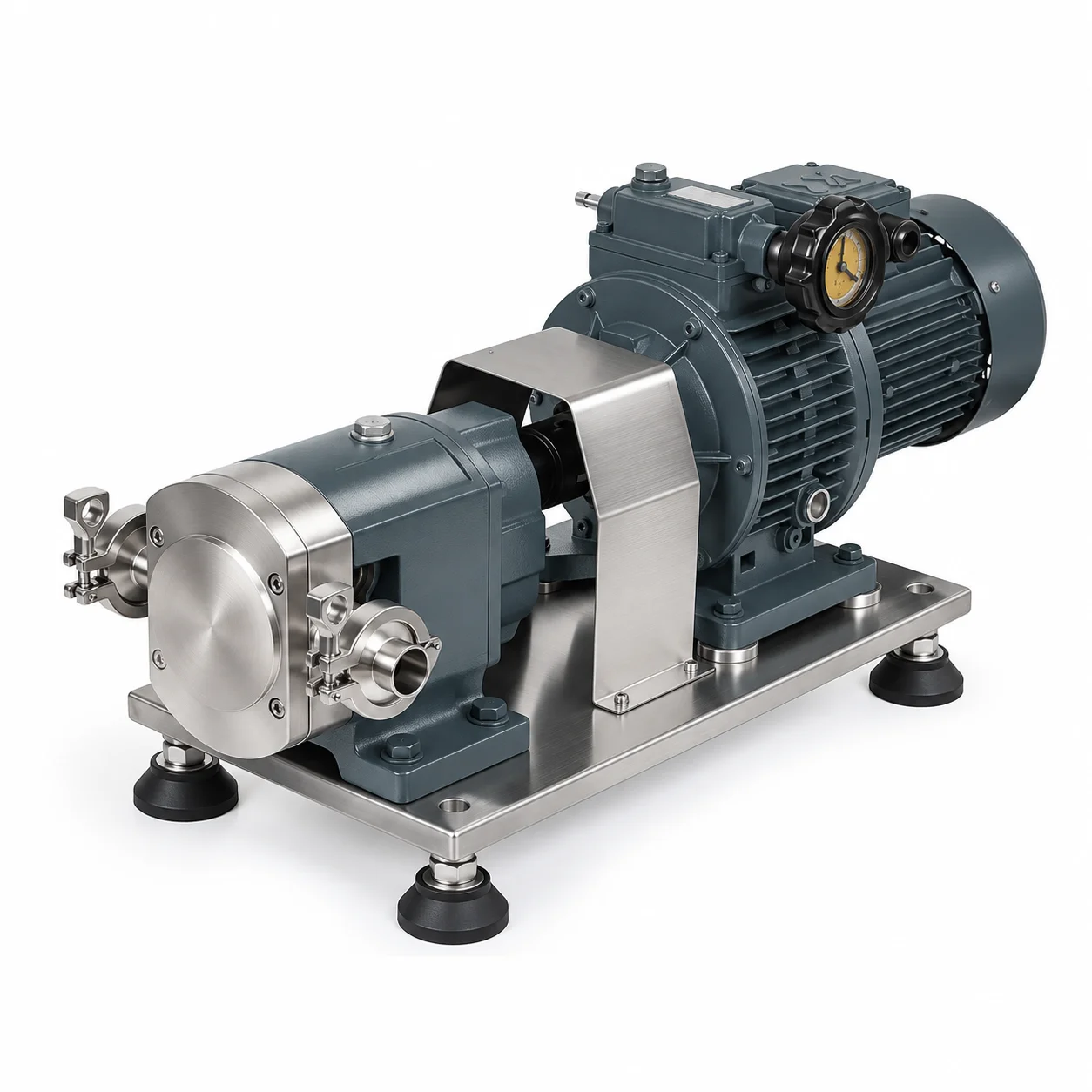
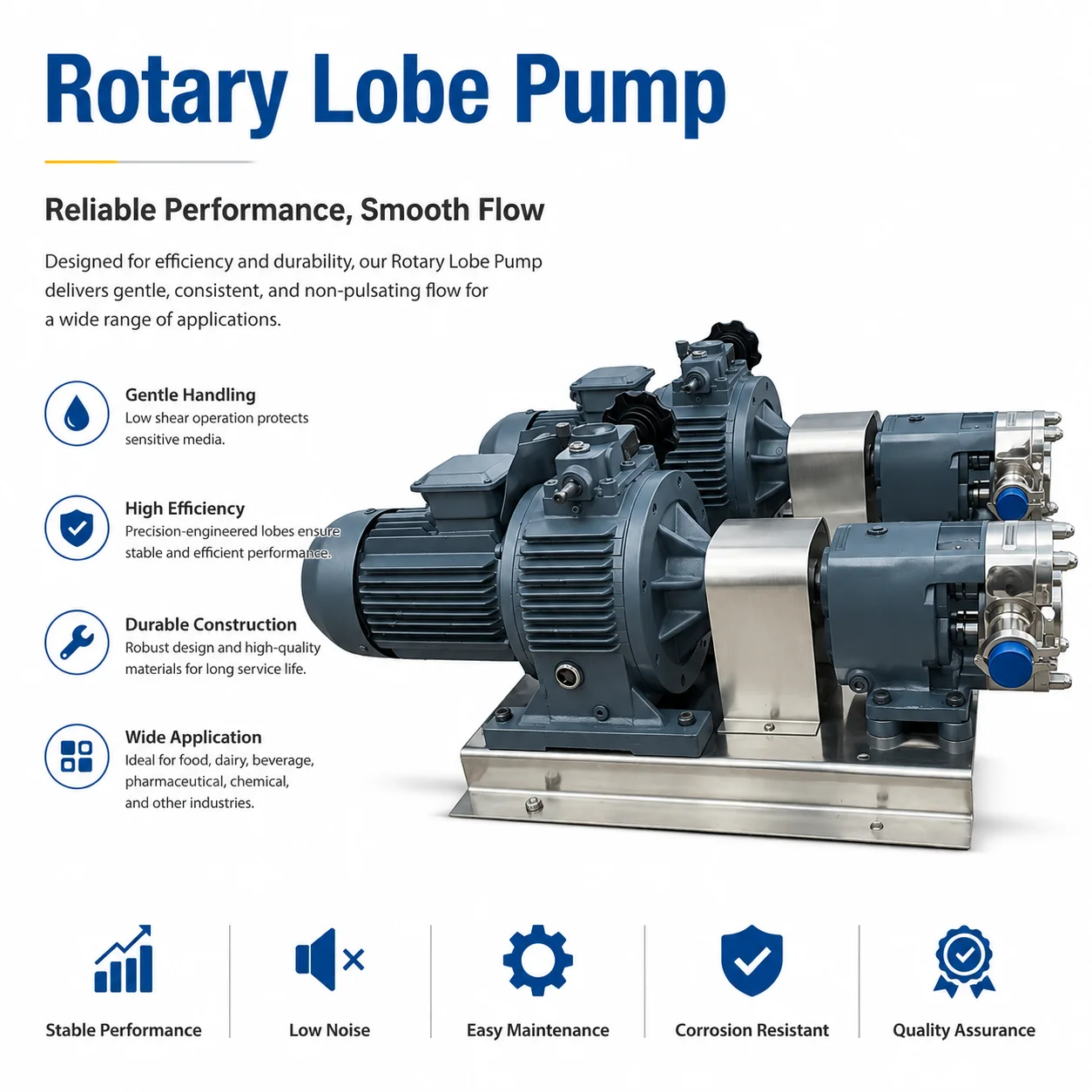
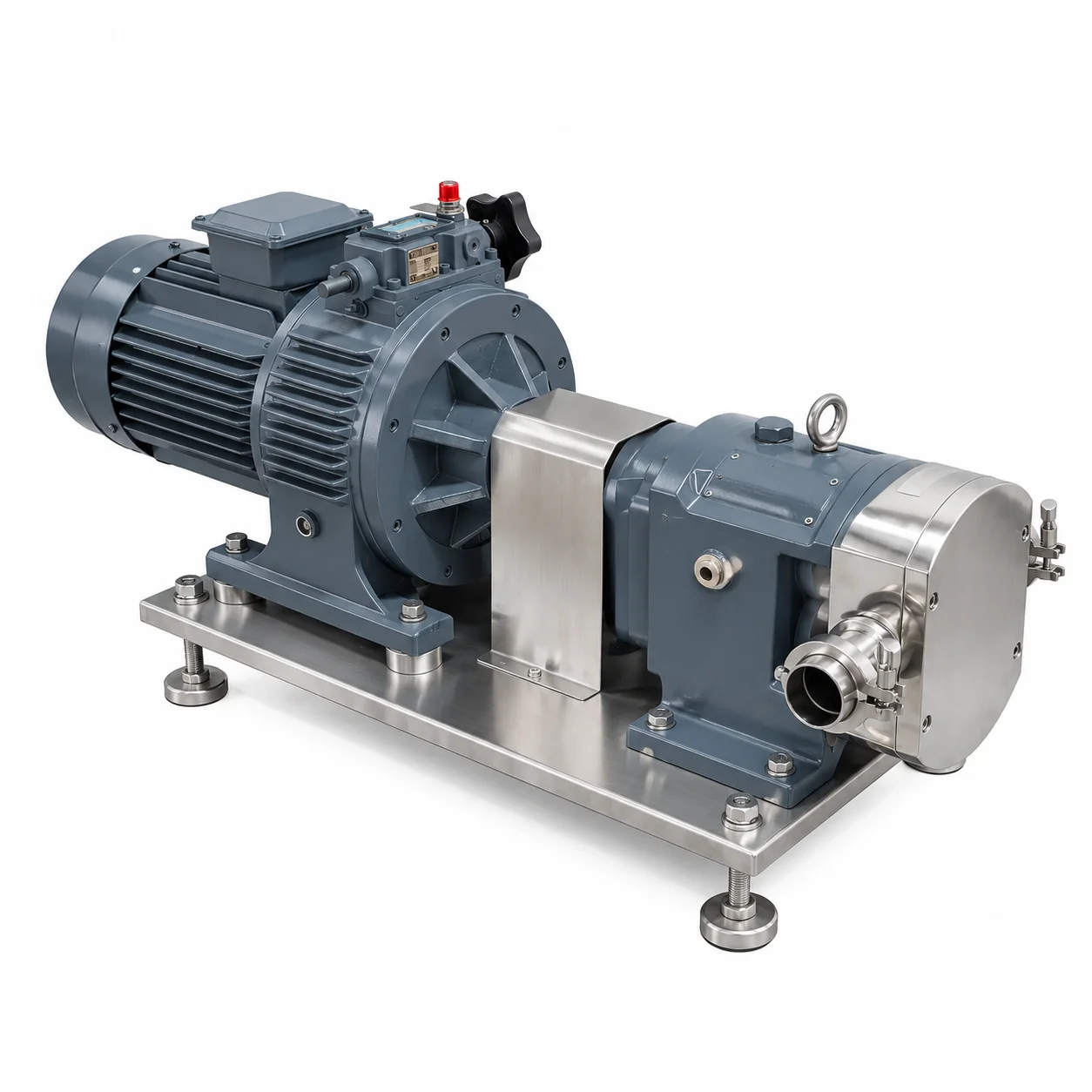
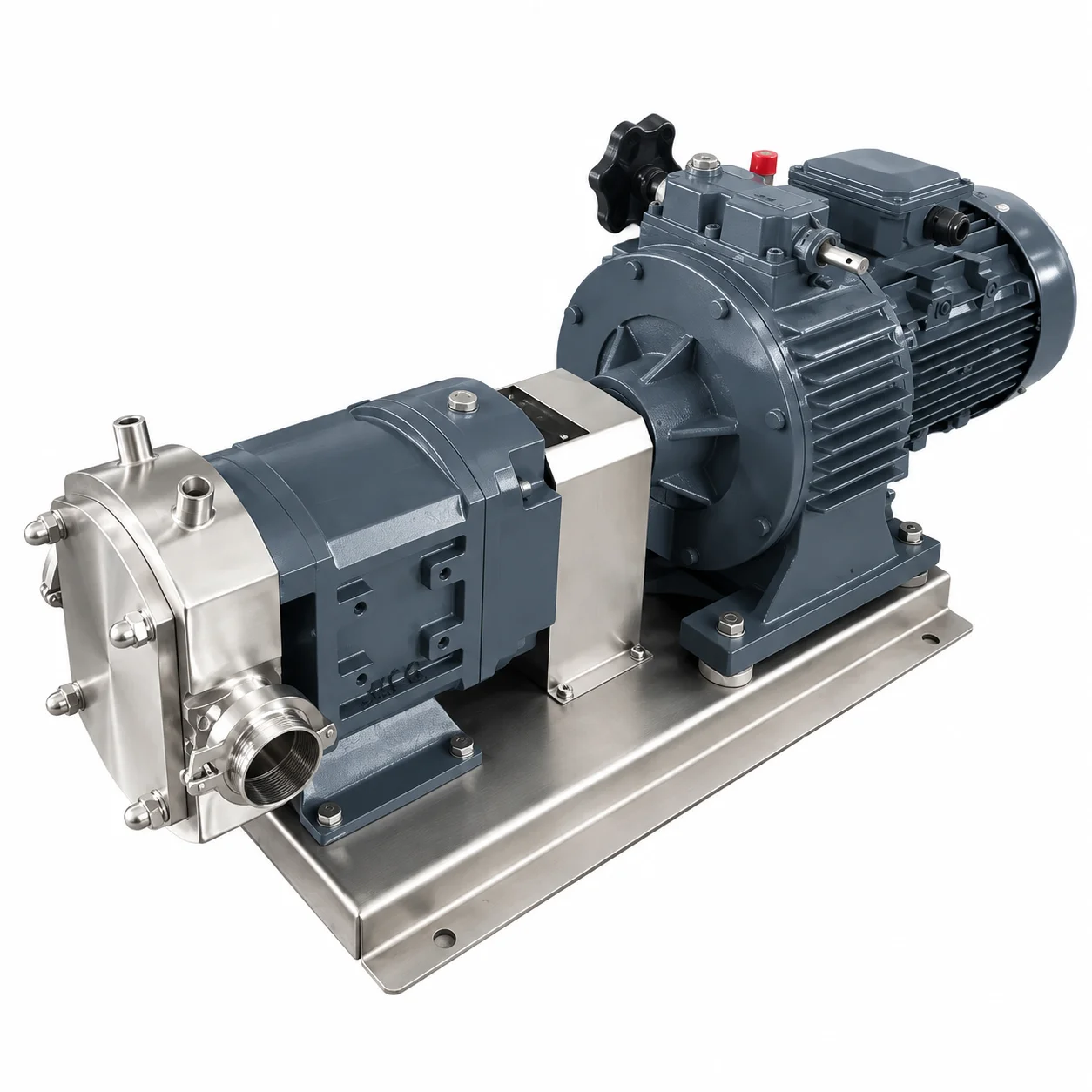
We provide a sanitary rotary lobe pump on a mobile frame to move viscous foods like honey, cream, peanut butter or sesame paste, etc. position the pump as required to different process stations. Give us the specifics of your application including the operating temperature of the product, the flow rate required, the fittings used and the level of sanitation required, and we will give you our recommendation.
库存 100 件
Rotor Optional
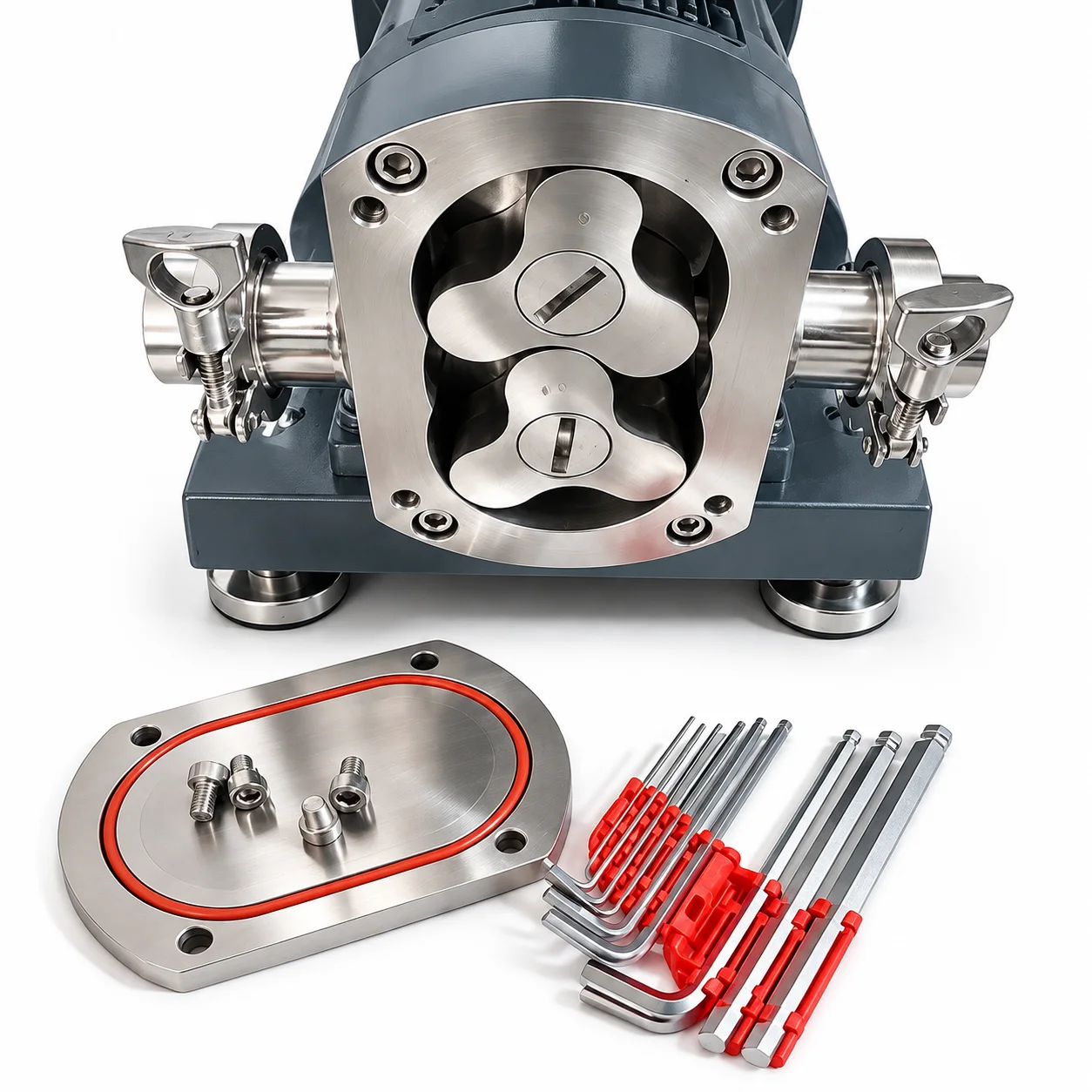
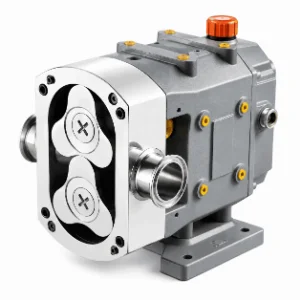
Three-Lobe Rotor
Applicable Liquids:
- Suitable for creams, liquids and sauces with low, medium and high viscosity, uniform texture and no hard granules.
- Example: Chocolate, honey, mashed potatoes and ice cream.
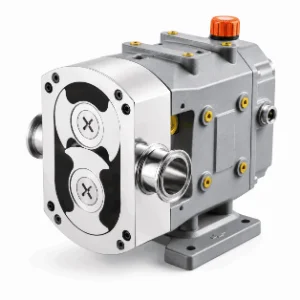
Butterfly Rotor
Applicable Liquids:
- Suitable for shear-free, non-destructive transfer of soft-grained sauces and small-particle materials.
- Example: Jam, pulp, juice, jelly and tomato sauce.
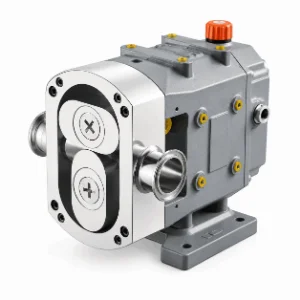
Single-Lobe Rotor
Applicable Liquids:
- Suitable for conveying materials containing larger solid particles while maintaining stable transfer.
- Example: Rock salt, chilli sauce and peanut butter.
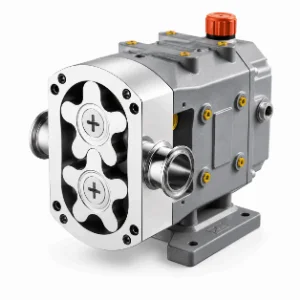
Multi-Lobe Rotor
Applicable Liquids:
- Suitable for creams, liquids and sauces with low, medium and high viscosity where higher output accuracy and smooth flow are required.
- Example: Chocolate, honey, cream, yoghurt, butter and grease.
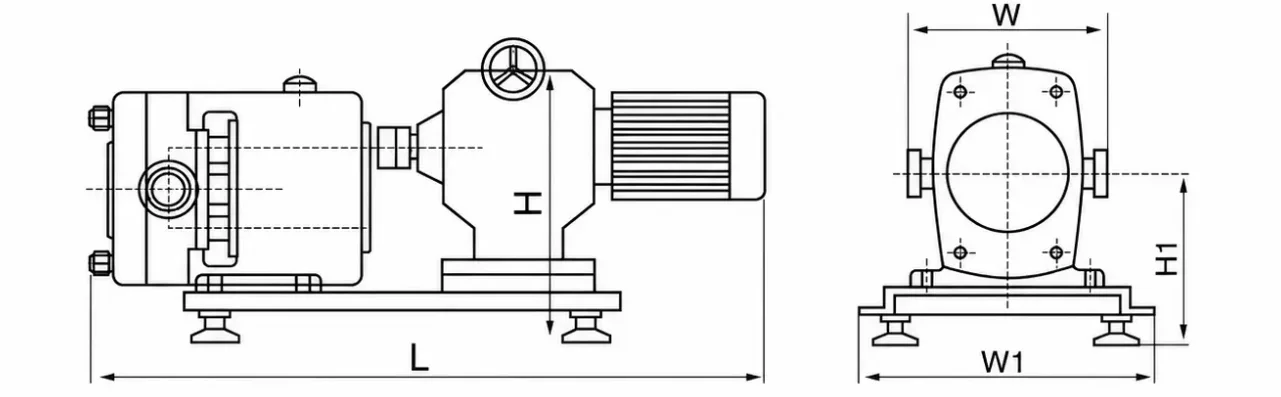
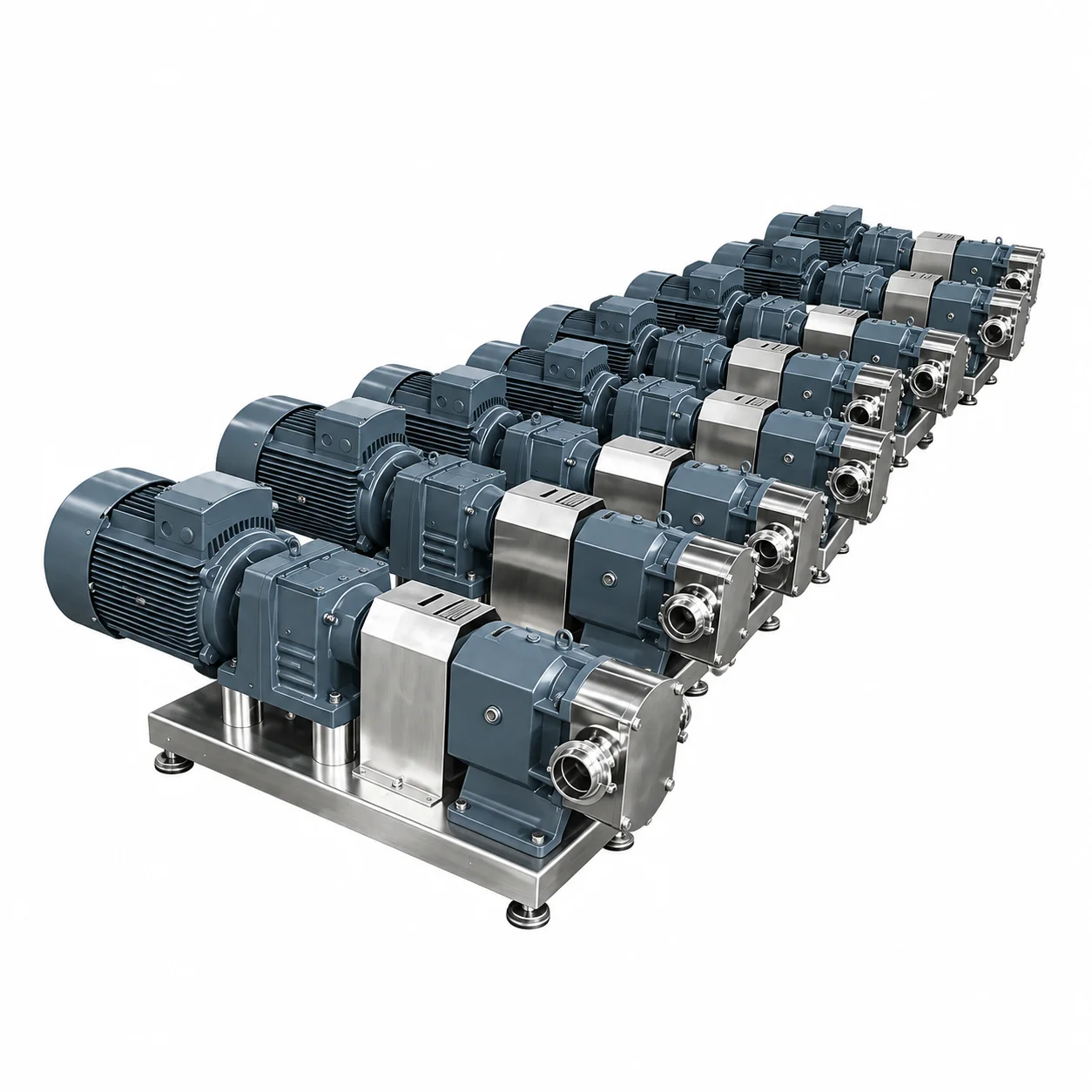
Parameter Chart
| Model | Flow per 100 Rotation |
Power (kW) |
Suggested RPM |
Capacity (L/H) |
Diameter | L | H | H1 | W | W1 | Connection Type |
|---|---|---|---|---|---|---|---|---|---|---|---|
| ZB3A-3 | 3L | 0.55 | 200-500 | 300-800 | Φ25×1.5 | 710 | 290 | 150 | 150 | 240 | Clamp / Thread / Flange |
| ZB3A-6 | 6L | 0.75 | 200-500 | 650-1600 | Φ25×1.5 | 780 | 390 | 170 | 190 | 240 | Clamp / Thread / Flange |
| ZB3A-8 | 8L | 1.5 | 200-500 | 850-2160 | Φ38×1.5 | 850 | 400 | 170 | 190 | 280 | Clamp / Thread / Flange |
| ZB3A-12 | 12L | 2.2 | 200-500 | 1300-3200 | Φ38×1.5 | 980 | 450 | 185 | 220 | 330 | Clamp / Thread / Flange |
| ZB3A-20 | 20L | 3 | 200-500 | 2100-5400 | Φ38×1.5 | 1000 | 450 | 190 | 250 | 330 | Clamp / Thread / Flange |
| ZB3A-30 | 30L | 4 | 200-500 | 3200-6400 | Φ50.8×1.5 | 1050 | 480 | 220 | 270 | 350 | Clamp / Thread / Flange |
| ZB3A-36 | 36L | 4 | 200-400 | 3800-7600 | Φ50.8×1.5 | 1100 | 490 | 220 | 270 | 360 | Clamp / Thread / Flange |
| ZB3A-52 | 52L | 5.5 | 200-400 | 5600-11000 | Φ63×1.5 | 1250 | 580 | 260 | 270 | 480 | Clamp / Thread / Flange |
| ZB3A-66 | 66L | 7.5 | 200-400 | 7100-14000 | Φ76×1.5 | 1350 | 600 | 260 | 270 | 480 | Clamp / Thread / Flange |
| ZB3A-78 | 78L | 7.5 | 200-400 | 9000-18000 | Φ76×1.5 | 1260 | 600 | 295 | 370 | 480 | Clamp / Thread / Flange |
| ZB3A-100 | 100L | 11 | 200-400 | 11000-22000 | Φ76×2 | 1320 | 670 | 295 | 370 | 480 | Clamp / Thread / Flange |
| ZB3A-135 | 135L | 15 | 200-400 | 15000-30000 | Φ89×2 | 1500 | 670 | 295 | 370 | 480 | Clamp / Thread / Flange |
| ZB3A-160 | 160L | 18.5 | 200-400 | 17000-34000 | Φ102×3 | 1500 | 720 | 320 | 420 | 560 | Clamp / Thread / Flange |
| ZB3A-200 | 200L | 22 | 200-400 | 21600-43000 | Φ102×3 | 1500 | 720 | 320 | 420 | 560 | Clamp / Thread / Flange |
| ZB3A-300 | 300L | 30 | 200-400 | 32400-64800 | Φ125×3 | 1650 | 800 | 400 | 480 | 620 | Clamp / Thread / Flange |
| ZB3A-400 | 400L | 37 | 200-400 | 43200-86400 | Φ150×3 | 1700 | 800 | 400 | 480 | 620 | Clamp / Thread / Flange |
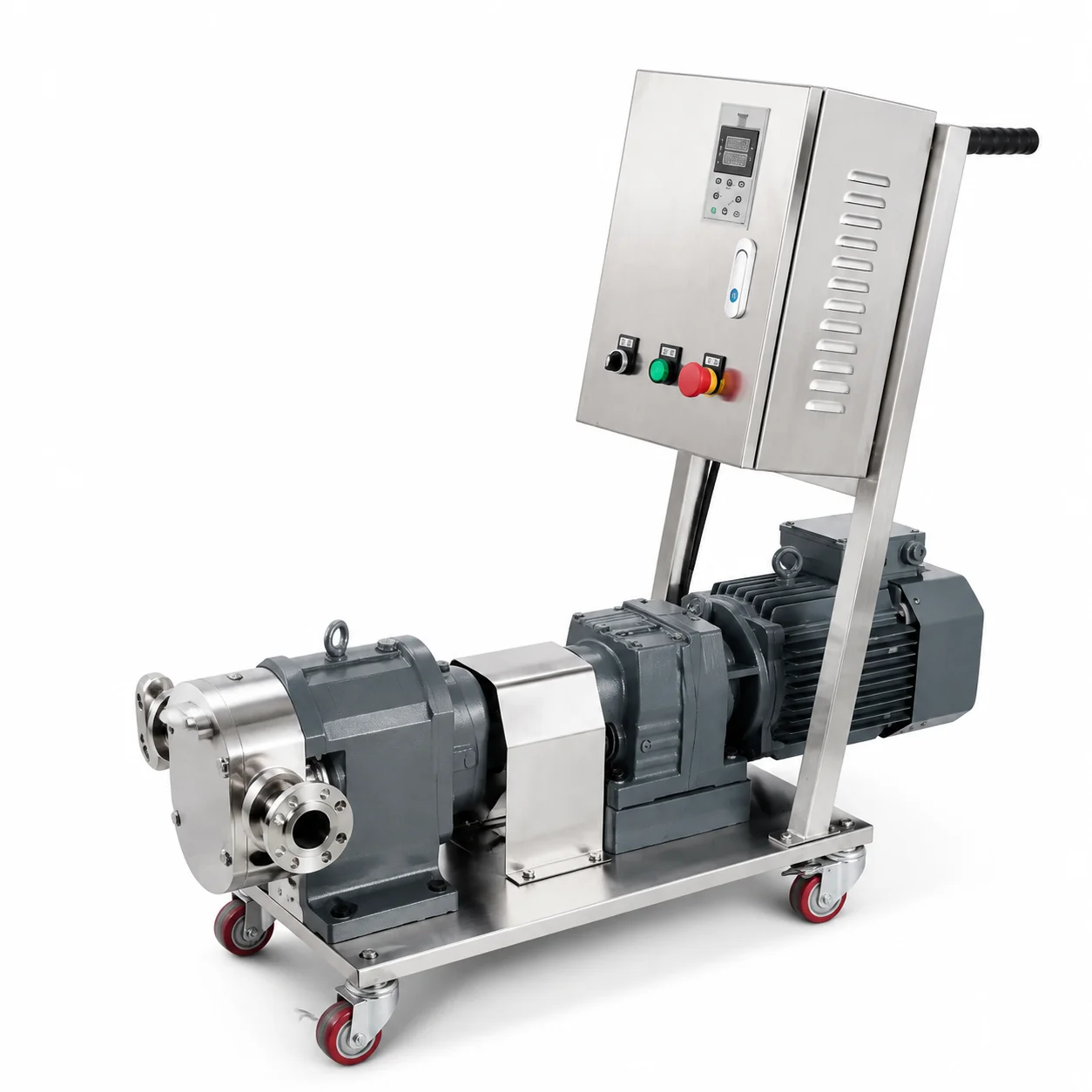
We offer this sanitary rotary lobe pump mounted on a trolley to move viscous products such as honey, cream, peanut butter or sesame paste, to any location in your facility. Operators can maneuver the trolley to the different processing or filling location and remove it for maintenance.
Transferring viscous food products through a production facility creates many challenges including Product clinging to the sides of the transfer line. A rotary lobe pump is well suited to transfer these types of products. Flow and pressure through the pump is determined by several factors including the product being transferred and the length of the transfer line.
To effect transfer of a food product a rotary lobe pump must be properly sized to the food and the system it is connected to. Inside the pump casing are two lobes mounted on a drive shaft and turn in opposite directions. As the lobes move away from the inlet of the pump they create a partial vacuum which draws the product into the pump. The product is trapped by the lobes and moved through the pump to the outlet.
Removable trolley – allows the pump to be placed next to the location from which product is to be removed or to which it is to be transferred.
Sanitary design – facilitates the transfer of food products in a food processing plant.
Contact materials, surface finishes and seals must also be assessed to confirm they comply with the hygiene standards and specification of the product to be conveyed.
Transfer of viscous products is possible using this type of pump. Sticky, thick products may be difficult to convey and increase the drive power required to effect transfer.
The inlet and outlet connections of the pump should be positioned as required to interface with the process transfer lines.
Possible uses of this pump include transfer of honey to a blending vessel or to a filling station to fill cream filled capsules. Peanut butter and sesame paste may also be transferred using this type of pump. For thicker products the suction line should be as short and unobstructed as possible to facilitate flow.
The pump may be mounted on a trolley for ease of movement to different processing areas. Equipment on a mobile trolley may be shared by several different work centers to improve equipment utilization. From this design, several process steps may be completed without having to move bulky process equipment.
Look at the trolley footprint, route width and reach to confirm the pump will operate in the space available. Also consider the method of securing the pump during operation.
To choose the right configuration for your needs provide the required flow rate, distance to be transferred and the characteristics of the fluid including its viscosity and temperature. Is the fluid lumpy? Will the fluid be drawn from a tank? What connections will be utilized to transfer the fluid to the next process? What power source and connection will be used? Will the pump need to be dismantled to be cleaned? Once this information is provided we will be able to suggest the most appropriate arrangement of pump and trolley for your process.
What liquids can this pump transport?
This pump has been used to transport honey, cream and some other heavy, viscous liquids. Check the compatibility of your liquid with the pump for the operating conditions in which it will be used.
How does this pump operate to transfer viscous foods?
The pump utilizes two lobes which rotate inside a casing to create a vacuum to draw the product along to the outlet of the pump.
Why is it useful to have a trolley which the pump can be easily removed from?
When the process to be performed on the food product varies between batches it may be necessary to relocate the pump to another station.
Will this pump be suitable to transfer food in a sanitary environment?
Although this pump may be used to transport food it may not meet all regulations required of the food processing industry to be considered ‘sanitary.’
This information will help determine if the pump is appropriate for your application.
To define your pump requirements provide the following: The consistency and temperature of the product to be pumped, the distance the product needs to be transported, the power source available, the flow rate required and what type of connection will be used.
What is the flow rate and power of the motor of the pump you are considering?
Neither of these pieces of information are included in the product description. To determine if the pump is appropriate for your application you must also supply the operating conditions.
Request a Configuration or Quote
To assist you further in determining the appropriate pump for transferring your product, please provide the estimated flow rate required, the type of connections on each end of the pump and whether or not the pump needs to be mobile.

We offer this sanitary rotary lobe pump mounted on a trolley to move viscous products such as honey, cream, peanut butter or sesame paste, to any location in your facility. Operators can maneuver the trolley to the different processing or filling location and remove it for maintenance.
Transferring viscous food products through a production facility creates many challenges including Product clinging to the sides of the transfer line. A rotary lobe pump is well suited to transfer these types of products. Flow and pressure through the pump is determined by several factors including the product being transferred and the length of the transfer line.
To effect transfer of a food product a rotary lobe pump must be properly sized to the food and the system it is connected to. Inside the pump casing are two lobes mounted on a drive shaft and turn in opposite directions. As the lobes move away from the inlet of the pump they create a partial vacuum which draws the product into the pump. The product is trapped by the lobes and moved through the pump to the outlet.
Removable trolley – allows the pump to be placed next to the location from which product is to be removed or to which it is to be transferred.
Sanitary design – facilitates the transfer of food products in a food processing plant.
Contact materials, surface finishes and seals must also be assessed to confirm they comply with the hygiene standards and specification of the product to be conveyed.
Transfer of viscous products is possible using this type of pump. Sticky, thick products may be difficult to convey and increase the drive power required to effect transfer.
The inlet and outlet connections of the pump should be positioned as required to interface with the process transfer lines.
Possible uses of this pump include transfer of honey to a blending vessel or to a filling station to fill cream filled capsules. Peanut butter and sesame paste may also be transferred using this type of pump. For thicker products the suction line should be as short and unobstructed as possible to facilitate flow.
The pump may be mounted on a trolley for ease of movement to different processing areas. Equipment on a mobile trolley may be shared by several different work centers to improve equipment utilization. From this design, several process steps may be completed without having to move bulky process equipment.
Look at the trolley footprint, route width and reach to confirm the pump will operate in the space available. Also consider the method of securing the pump during operation.
To choose the right configuration for your needs provide the required flow rate, distance to be transferred and the characteristics of the fluid including its viscosity and temperature. Is the fluid lumpy? Will the fluid be drawn from a tank? What connections will be utilized to transfer the fluid to the next process? What power source and connection will be used? Will the pump need to be dismantled to be cleaned? Once this information is provided we will be able to suggest the most appropriate arrangement of pump and trolley for your process.
What liquids can this pump transport?
This pump has been used to transport honey, cream and some other heavy, viscous liquids. Check the compatibility of your liquid with the pump for the operating conditions in which it will be used.
How does this pump operate to transfer viscous foods?
The pump utilizes two lobes which rotate inside a casing to create a vacuum to draw the product along to the outlet of the pump.
Why is it useful to have a trolley which the pump can be easily removed from?
When the process to be performed on the food product varies between batches it may be necessary to relocate the pump to another station.
Will this pump be suitable to transfer food in a sanitary environment?
Although this pump may be used to transport food it may not meet all regulations required of the food processing industry to be considered ‘sanitary.’
This information will help determine if the pump is appropriate for your application.
To define your pump requirements provide the following: The consistency and temperature of the product to be pumped, the distance the product needs to be transported, the power source available, the flow rate required and what type of connection will be used.
What is the flow rate and power of the motor of the pump you are considering?
Neither of these pieces of information are included in the product description. To determine if the pump is appropriate for your application you must also supply the operating conditions.
Request a Configuration or Quote
To assist you further in determining the appropriate pump for transferring your product, please provide the estimated flow rate required, the type of connections on each end of the pump and whether or not the pump needs to be mobile.

MAECENAS IACULIS
Vestibulum curae torquent diam diam commodo parturient penatibus nunc dui adipiscing convallis bulum parturient suspendisse parturient a.Parturient in parturient scelerisque nibh lectus quam a natoque adipiscing a vestibulum hendrerit et pharetra fames nunc natoque dui.
ADIPISCING CONVALLIS BULUM
- Vestibulum penatibus nunc dui adipiscing convallis bulum parturient suspendisse.
- Abitur parturient praesent lectus quam a natoque adipiscing a vestibulum hendre.
- Diam parturient dictumst parturient scelerisque nibh lectus.
Scelerisque adipiscing bibendum sem vestibulum et in a a a purus lectus faucibus lobortis tincidunt purus lectus nisl class eros.Condimentum a et ullamcorper dictumst mus et tristique elementum nam inceptos hac parturient scelerisque vestibulum amet elit ut volutpat.