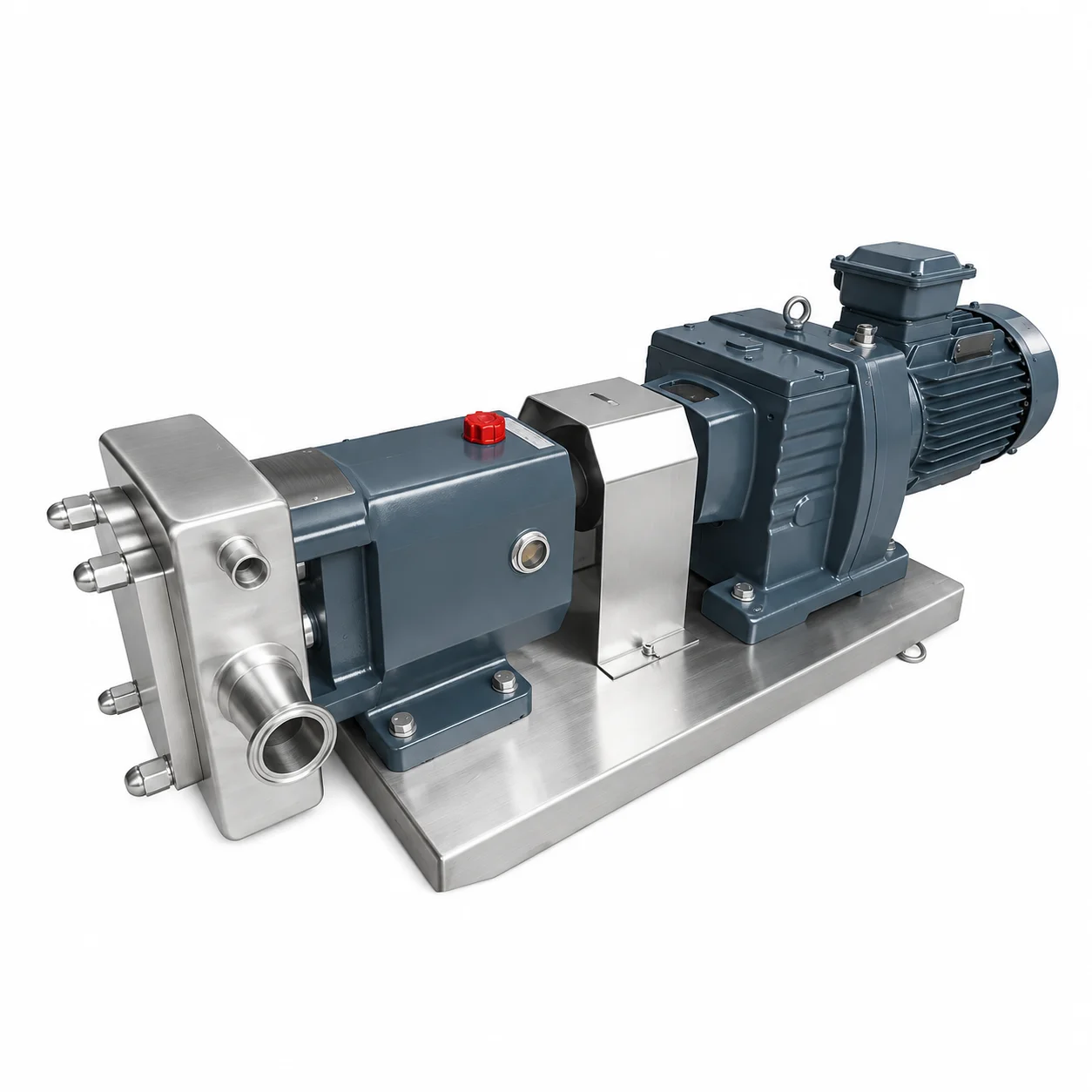
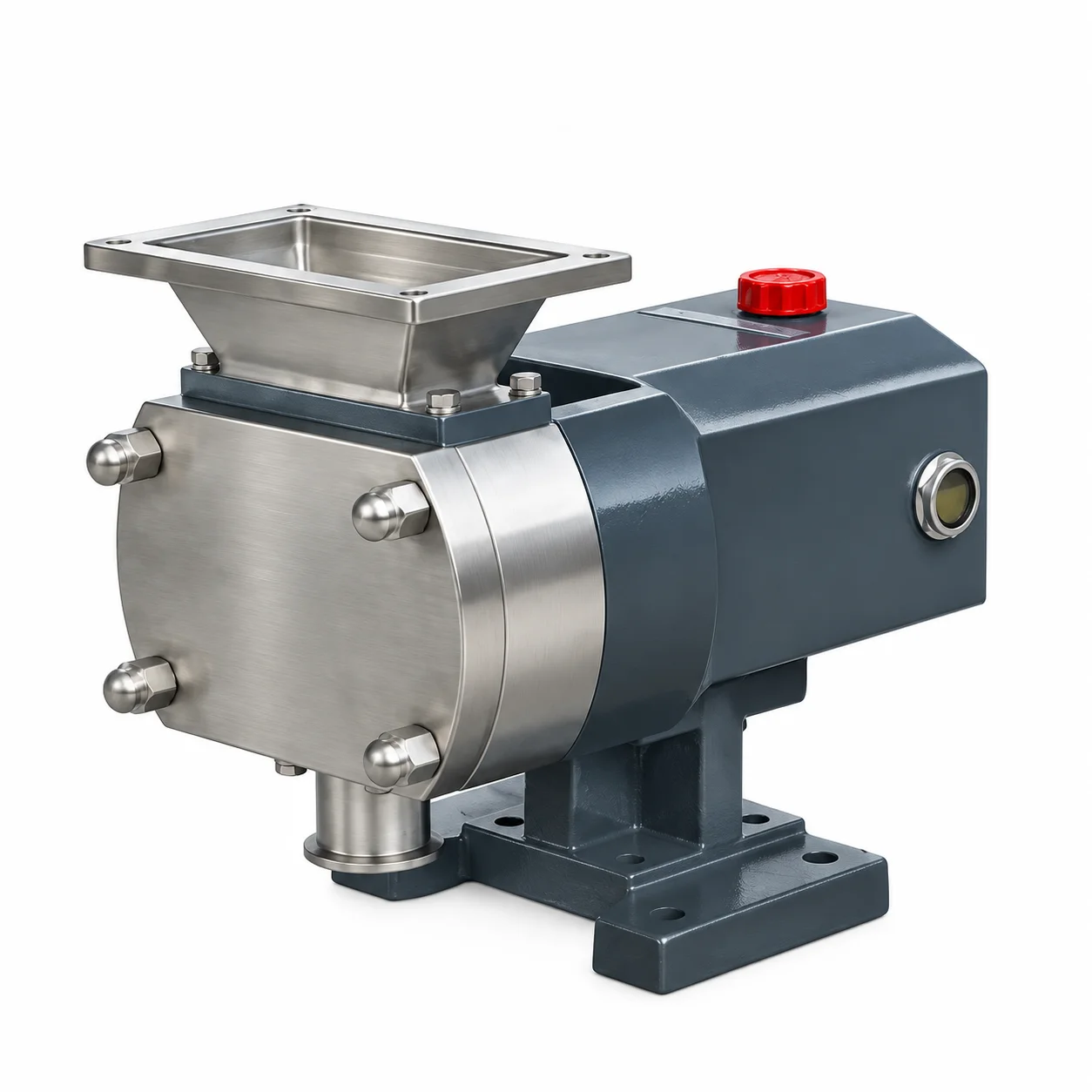
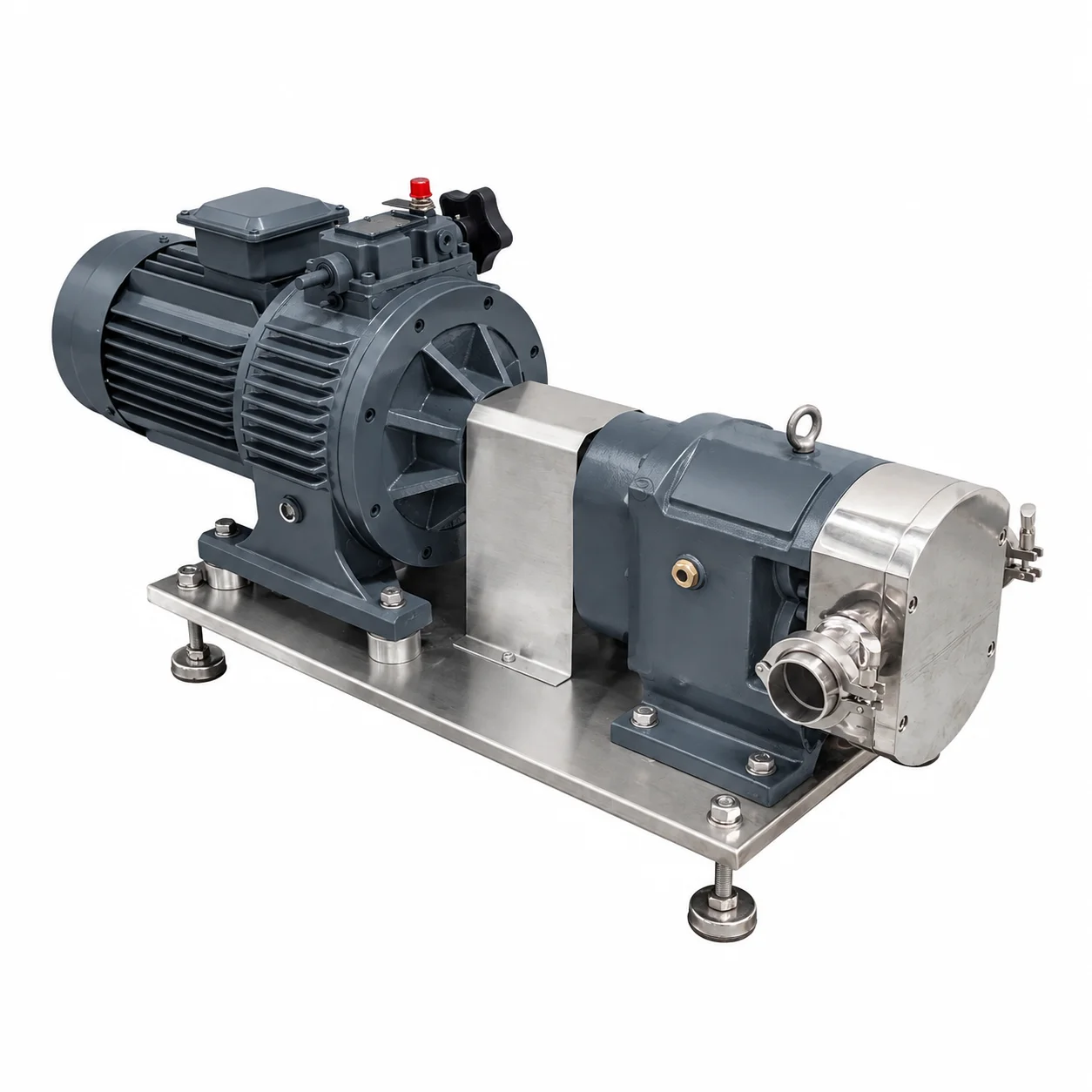
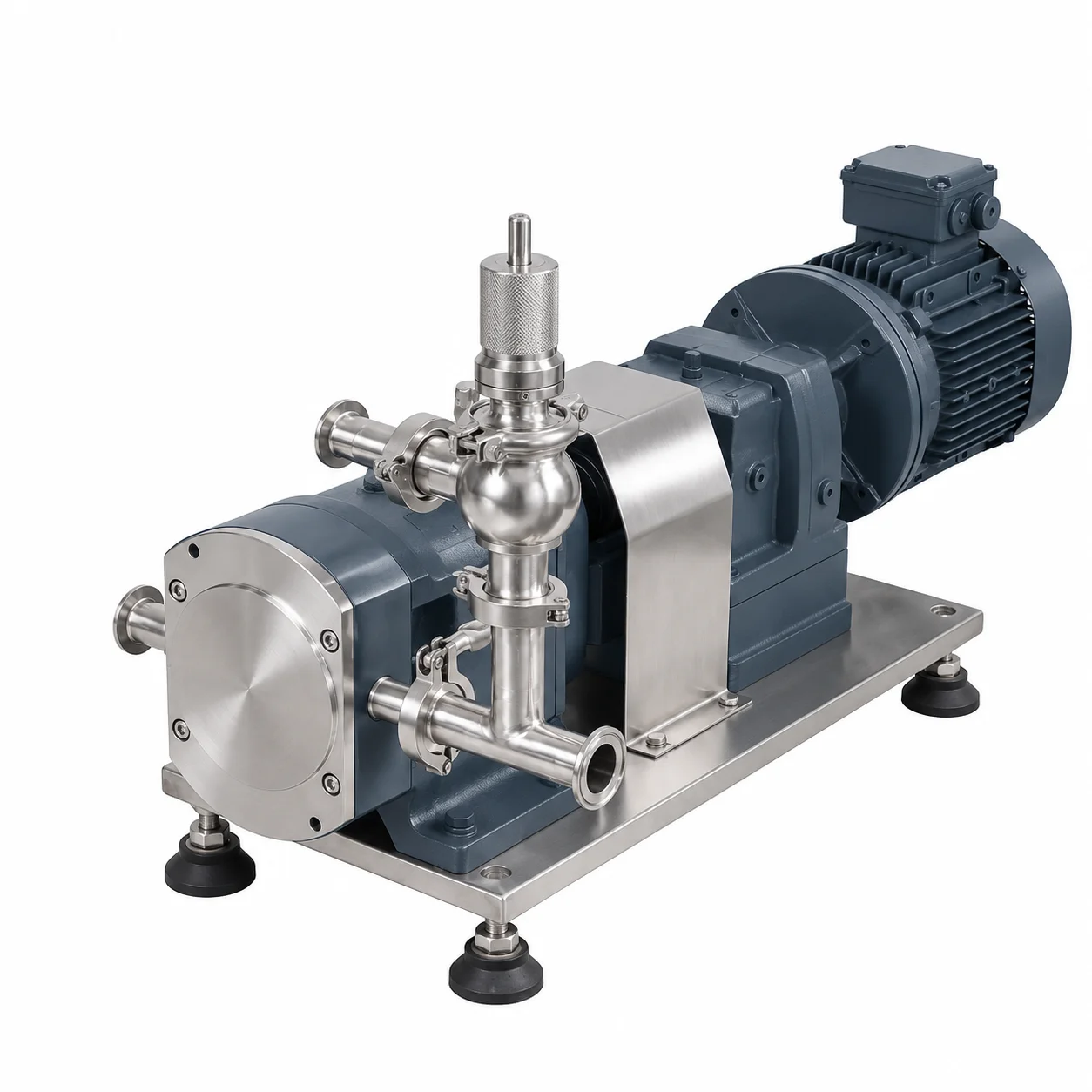
Sanitary Stainless Steel Lobe Pump for Milk Transfer
$2,799.20 原价为:$2,799.20。$1,894.45当前价格为:$1,894.45。
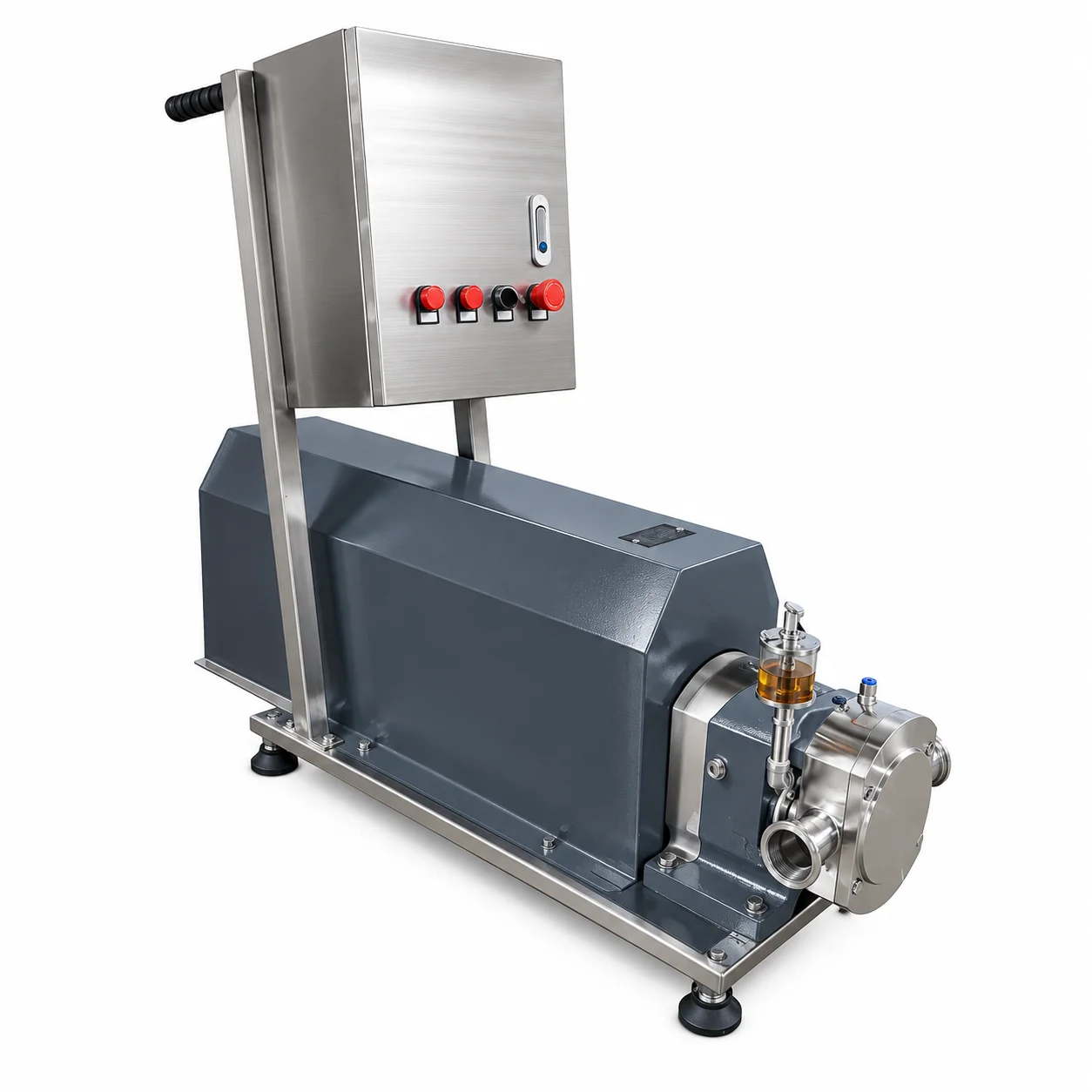
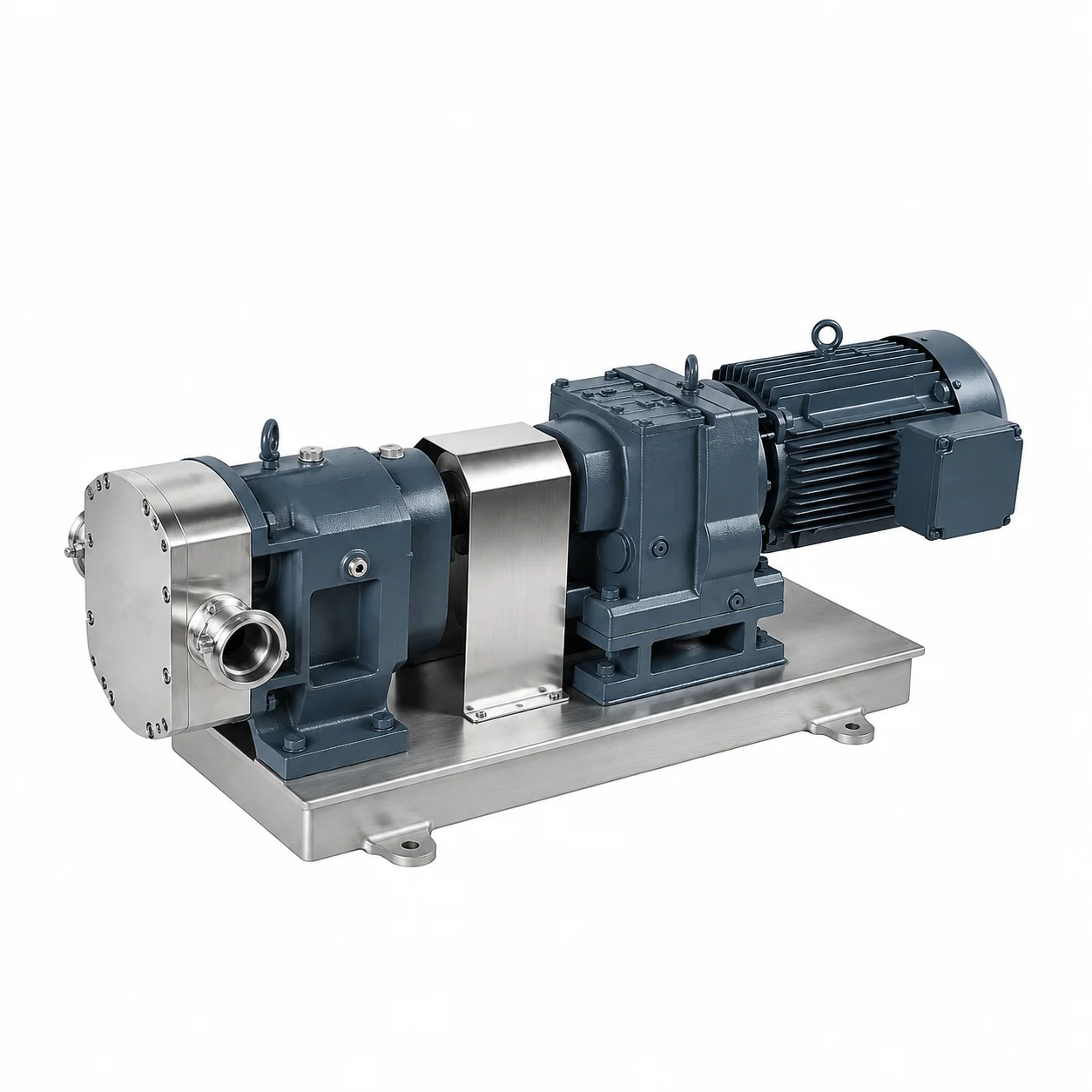
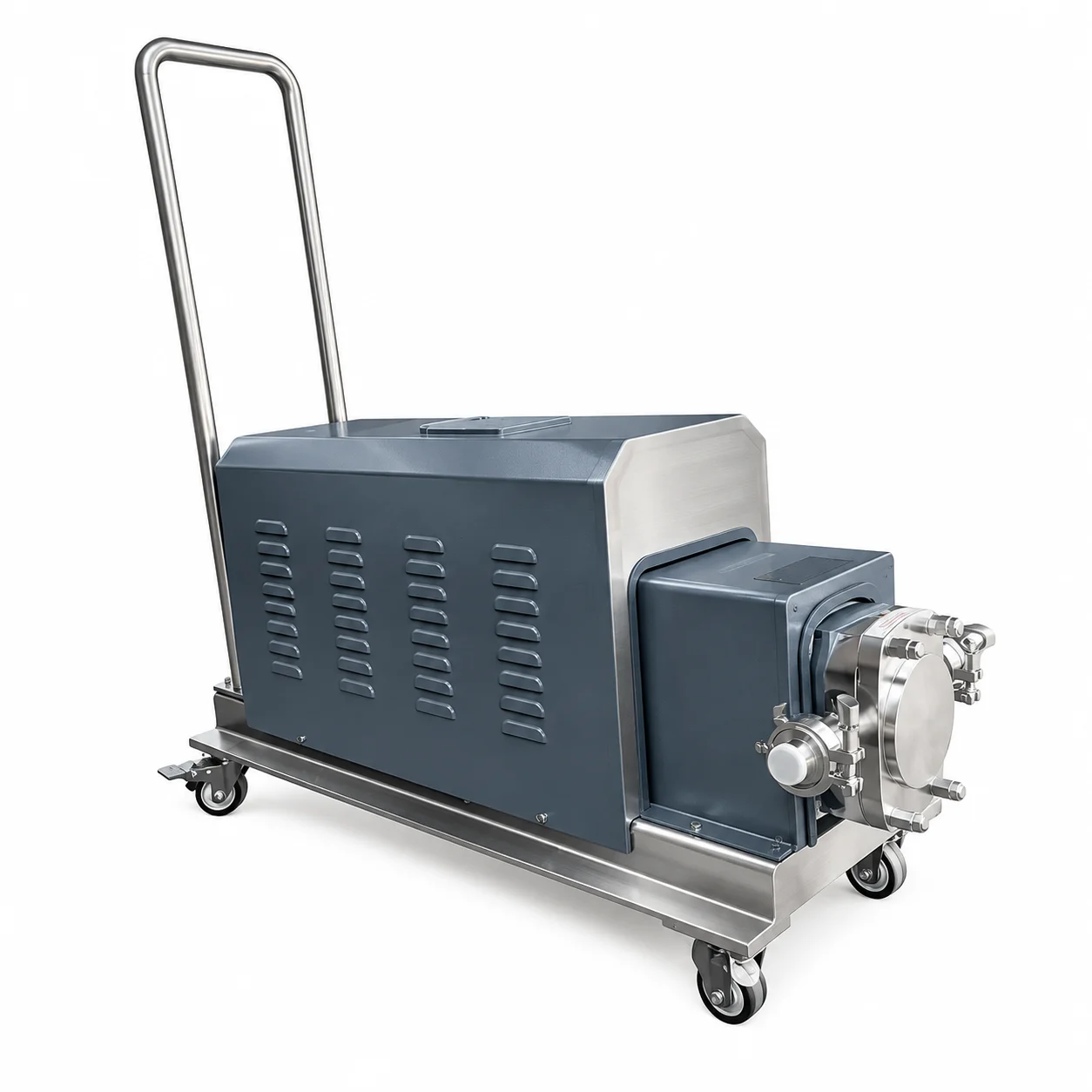
We manufacture a stainless steel rotary lobe pump specifically to transfer liquid milk between tanks, through the processing line and to the packaging equipment. Based on the flow and operating pressure required, the temperature of milk being transferred and the cleaning process, we assist in determining the appropriate pump size as well as seals and connections.
库存 100 件
Rotor Optional
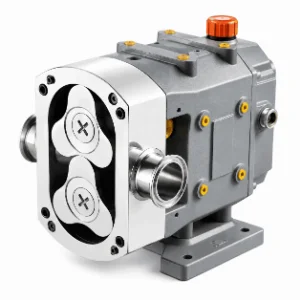
Three-Lobe Rotor
Applicable Liquids:
- Suitable for creams, liquids and sauces with low, medium and high viscosity, uniform texture and no hard granules.
- Example: Chocolate, honey, mashed potatoes and ice cream.
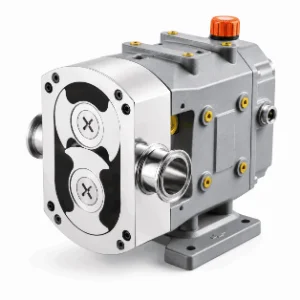
Butterfly Rotor
Applicable Liquids:
- Suitable for shear-free, non-destructive transfer of soft-grained sauces and small-particle materials.
- Example: Jam, pulp, juice, jelly and tomato sauce.
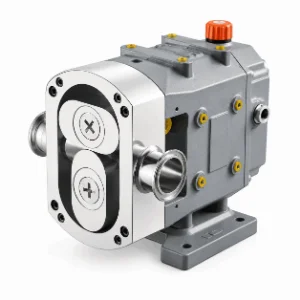
Single-Lobe Rotor
Applicable Liquids:
- Suitable for conveying materials containing larger solid particles while maintaining stable transfer.
- Example: Rock salt, chilli sauce and peanut butter.
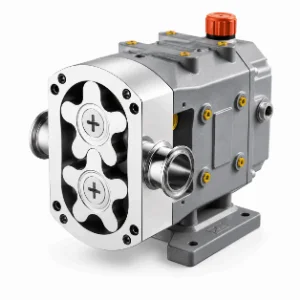
Multi-Lobe Rotor
Applicable Liquids:
- Suitable for creams, liquids and sauces with low, medium and high viscosity where higher output accuracy and smooth flow are required.
- Example: Chocolate, honey, cream, yoghurt, butter and grease.
Parameter Chart
| Model | Flow per 100 Rotation |
Power (kW) |
Suggested RPM |
Capacity (L/H) |
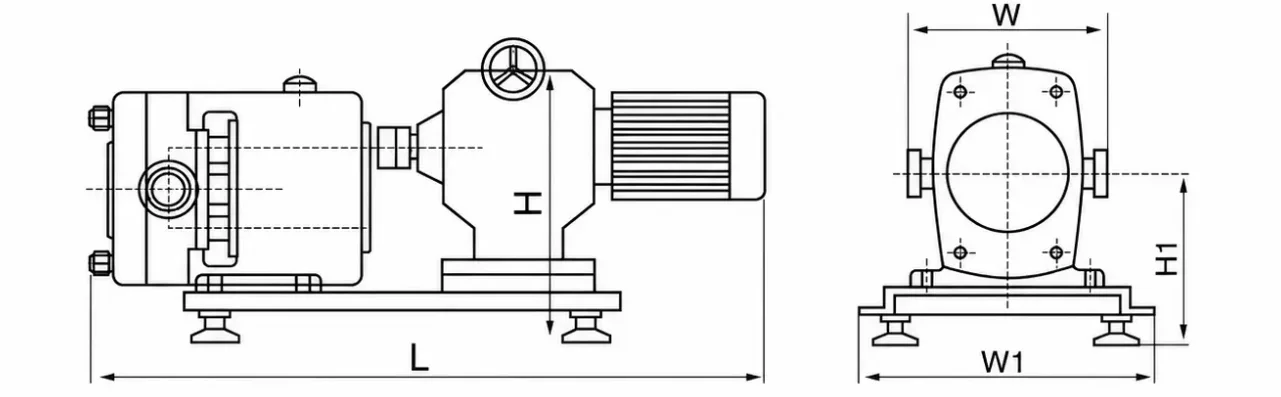
Diameter | L | H | H1 | W | W1 | Connection Type |
|---|---|---|---|---|---|---|---|---|---|---|---|
| ZB3A-3 | 3L | 0.55 | 200-500 | 300-800 | Φ25×1.5 | 710 | 290 | 150 | 150 | 240 | Clamp / Thread / Flange |
| ZB3A-6 | 6L | 0.75 | 200-500 | 650-1600 | Φ25×1.5 | 780 | 390 | 170 | 190 | 240 | Clamp / Thread / Flange |
| ZB3A-8 | 8L | 1.5 | 200-500 | 850-2160 | Φ38×1.5 | 850 | 400 | 170 | 190 | 280 | Clamp / Thread / Flange |
| ZB3A-12 | 12L | 2.2 | 200-500 | 1300-3200 | Φ38×1.5 | 980 | 450 | 185 | 220 | 330 | Clamp / Thread / Flange |
| ZB3A-20 | 20L | 3 | 200-500 | 2100-5400 | Φ38×1.5 | 1000 | 450 | 190 | 250 | 330 | Clamp / Thread / Flange |
| ZB3A-30 | 30L | 4 | 200-500 | 3200-6400 | Φ50.8×1.5 | 1050 | 480 | 220 | 270 | 350 | Clamp / Thread / Flange |
| ZB3A-36 | 36L | 4 | 200-400 | 3800-7600 | Φ50.8×1.5 | 1100 | 490 | 220 | 270 | 360 | Clamp / Thread / Flange |
| ZB3A-52 | 52L | 5.5 | 200-400 | 5600-11000 | Φ63×1.5 | 1250 | 580 | 260 | 270 | 480 | Clamp / Thread / Flange |
| ZB3A-66 | 66L | 7.5 | 200-400 | 7100-14000 | Φ76×1.5 | 1350 | 600 | 260 | 270 | 480 | Clamp / Thread / Flange |
| ZB3A-78 | 78L | 7.5 | 200-400 | 9000-18000 | Φ76×1.5 | 1260 | 600 | 295 | 370 | 480 | Clamp / Thread / Flange |
| ZB3A-100 | 100L | 11 | 200-400 | 11000-22000 | Φ76×2 | 1320 | 670 | 295 | 370 | 480 | Clamp / Thread / Flange |
| ZB3A-135 | 135L | 15 | 200-400 | 15000-30000 | Φ89×2 | 1500 | 670 | 295 | 370 | 480 | Clamp / Thread / Flange |
| ZB3A-160 | 160L | 18.5 | 200-400 | 17000-34000 | Φ102×3 | 1500 | 720 | 320 | 420 | 560 | Clamp / Thread / Flange |
| ZB3A-200 | 200L | 22 | 200-400 | 21600-43000 | Φ102×3 | 1500 | 720 | 320 | 420 | 560 | Clamp / Thread / Flange |
| ZB3A-300 | 300L | 30 | 200-400 | 32400-64800 | Φ125×3 | 1650 | 800 | 400 | 480 | 620 | Clamp / Thread / Flange |
| ZB3A-400 | 400L | 37 | 200-400 | 43200-86400 | Φ150×3 | 1700 | 800 | 400 | 480 | 620 | Clamp / Thread / Flange |
We manufacture this lobe pump for transporting liquid milk within a dairy processing facility.
Some of the typical applications are transfer of milk from a buffer tank to a processing unit, transfer of milk from the pasteurizer to a holding tank, and pumping of milk to a packing machine. Depending on these different applications the pump is sized accordingly.
A pair of counter rotating lobes channel the flow of milk along the inside of the pump case.
To maintain this separation a timing mechanism is used to synchronize the rotation of the two lobes. Increasing the rotational speed of the lobes increases the volume of milk transferred. The actual flow rate is affected by internal clearances between the lobes and the viscosity of the milk.
In a dairy processing facility it is important to transfer liquid to the correct level in holding tanks to be in synchronization with the equipment downstream.
To facilitate this we can provide a variable speed drive to control the pump. This provides more control during the starting and stopping of the processing line. To ensure the pump is transferring milk as required we measure the flow using a calibrated flow meter.
Stainless steel construction is to be used for all components of this pump.
We consider various details of the components that touch the milk to evaluate the suitability of a pump for use with milk handling. Some of these details also influence how the pump may be integrated into the milk plant’s cleaning process.
Product Selection and Technical Data:
| Type: | Sanitary rotary lobe pump |
| Construction: | Stainless steel. Confirm grade and surface finish. |
| Medium: | Liquid milk |
| Flow and differential pressure: | Confirm the pump model can function at these conditions. |
| Seals and elastomers: | Confirm these with respect to the type of milk to be pumped and the cleaning solutions used by the plant. |
| Motor and gear box: | Confirm the power, speed range and type of motor to be used with the gear box. |
| Inlet and outlet connections: | Confirm size and type of connections to be used on the pump with respect to the piping. |
When used to transfer milk from a balance tank to a packaging machine, the inlet condition to the pump should be checked to ensure that milk can still be withdrawn from the tank at the lowest level.
When used to transfer pasteurized milk, we check the internal design of the pump to confirm it will meet the requirements of the plant with respect to milk contact surfaces and cleaning.
The pump used to transfer milk to a buffer tank which in turn supplies a packaging machine should be sized to meet peak demand of the packaging machine.
A rotary lobe pump has the added feature of being able to change the transfer rate by varying the speed of the drive.
To determine the size of the pump required, we have to account for the minimum and maximum flow of milk required, the pressure available at the suction side of the pump and the pressure at the discharge side of the pump, the density and viscosity of the milk to be transported as well as the height and layout of the piping system. Once this information is gathered, we can determine the specific pump to utilize and the speed at which it should operate. Lastly, we confirm the pump and drive assembly will fit in the available space at the site and will operate within the electricity supply constraints.
Q: Will this pump transfer warm milk?
A: Yes. As long as the pump and drive components can operate at the required speed to move milk at the given temperature and viscosity.
Q: How precisely can this type of pump meter flow?
A: It cannot precisely meter flow.
Q: Is this pump head designs acceptable for ‘clean in place’?
A: Yes, as long as an appropriate cleaning solution and conditions are used.
Q: What type of stainless steel is used in the construction of the pump?
A: Stainless steel is used throughout the construction of the pump.
We can verify the grade of the materials and surface finish of the wetted components of your quoted product.
Can the milk transfer rate be modified during the production process?
The speed of the rotors can be changed over a range within the limits of the drive and pump. We would check to ensure the range meets the requirements of the line.
What is needed to provide a quotation for a new pump?
It would be beneficial to include the model number of the existing pump, the normal flow and differential pressure of the system, the sizes of the ports on the connections of the system, and the space available for mounting the pump. Knowledge of the milk’s temperature would also be helpful to determine appropriate seals and materials for the pump.
Request A Quote
To better estimate the pump required to transfer milk from one location to another on your dairy, include the milk’s temperature and the cleaning requirements.

We manufacture this lobe pump for transporting liquid milk within a dairy processing facility.
Some of the typical applications are transfer of milk from a buffer tank to a processing unit, transfer of milk from the pasteurizer to a holding tank, and pumping of milk to a packing machine. Depending on these different applications the pump is sized accordingly.
A pair of counter rotating lobes channel the flow of milk along the inside of the pump case.
To maintain this separation a timing mechanism is used to synchronize the rotation of the two lobes. Increasing the rotational speed of the lobes increases the volume of milk transferred. The actual flow rate is affected by internal clearances between the lobes and the viscosity of the milk.
In a dairy processing facility it is important to transfer liquid to the correct level in holding tanks to be in synchronization with the equipment downstream.
To facilitate this we can provide a variable speed drive to control the pump. This provides more control during the starting and stopping of the processing line. To ensure the pump is transferring milk as required we measure the flow using a calibrated flow meter.
Stainless steel construction is to be used for all components of this pump.
We consider various details of the components that touch the milk to evaluate the suitability of a pump for use with milk handling. Some of these details also influence how the pump may be integrated into the milk plant’s cleaning process.
Product Selection and Technical Data:
| Type: | Sanitary rotary lobe pump |
| Construction: | Stainless steel. Confirm grade and surface finish. |
| Medium: | Liquid milk |
| Flow and differential pressure: | Confirm the pump model can function at these conditions. |
| Seals and elastomers: | Confirm these with respect to the type of milk to be pumped and the cleaning solutions used by the plant. |
| Motor and gear box: | Confirm the power, speed range and type of motor to be used with the gear box. |
| Inlet and outlet connections: | Confirm size and type of connections to be used on the pump with respect to the piping. |
When used to transfer milk from a balance tank to a packaging machine, the inlet condition to the pump should be checked to ensure that milk can still be withdrawn from the tank at the lowest level.
When used to transfer pasteurized milk, we check the internal design of the pump to confirm it will meet the requirements of the plant with respect to milk contact surfaces and cleaning.
The pump used to transfer milk to a buffer tank which in turn supplies a packaging machine should be sized to meet peak demand of the packaging machine.
A rotary lobe pump has the added feature of being able to change the transfer rate by varying the speed of the drive.
To determine the size of the pump required, we have to account for the minimum and maximum flow of milk required, the pressure available at the suction side of the pump and the pressure at the discharge side of the pump, the density and viscosity of the milk to be transported as well as the height and layout of the piping system. Once this information is gathered, we can determine the specific pump to utilize and the speed at which it should operate. Lastly, we confirm the pump and drive assembly will fit in the available space at the site and will operate within the electricity supply constraints.
Q: Will this pump transfer warm milk?
A: Yes. As long as the pump and drive components can operate at the required speed to move milk at the given temperature and viscosity.
Q: How precisely can this type of pump meter flow?
A: It cannot precisely meter flow.
Q: Is this pump head designs acceptable for ‘clean in place’?
A: Yes, as long as an appropriate cleaning solution and conditions are used.
Q: What type of stainless steel is used in the construction of the pump?
A: Stainless steel is used throughout the construction of the pump.
We can verify the grade of the materials and surface finish of the wetted components of your quoted product.
Can the milk transfer rate be modified during the production process?
The speed of the rotors can be changed over a range within the limits of the drive and pump. We would check to ensure the range meets the requirements of the line.
What is needed to provide a quotation for a new pump?
It would be beneficial to include the model number of the existing pump, the normal flow and differential pressure of the system, the sizes of the ports on the connections of the system, and the space available for mounting the pump. Knowledge of the milk’s temperature would also be helpful to determine appropriate seals and materials for the pump.
Request A Quote
To better estimate the pump required to transfer milk from one location to another on your dairy, include the milk’s temperature and the cleaning requirements.

MAECENAS IACULIS
Vestibulum curae torquent diam diam commodo parturient penatibus nunc dui adipiscing convallis bulum parturient suspendisse parturient a.Parturient in parturient scelerisque nibh lectus quam a natoque adipiscing a vestibulum hendrerit et pharetra fames nunc natoque dui.
ADIPISCING CONVALLIS BULUM
- Vestibulum penatibus nunc dui adipiscing convallis bulum parturient suspendisse.
- Abitur parturient praesent lectus quam a natoque adipiscing a vestibulum hendre.
- Diam parturient dictumst parturient scelerisque nibh lectus.
Scelerisque adipiscing bibendum sem vestibulum et in a a a purus lectus faucibus lobortis tincidunt purus lectus nisl class eros.Condimentum a et ullamcorper dictumst mus et tristique elementum nam inceptos hac parturient scelerisque vestibulum amet elit ut volutpat.