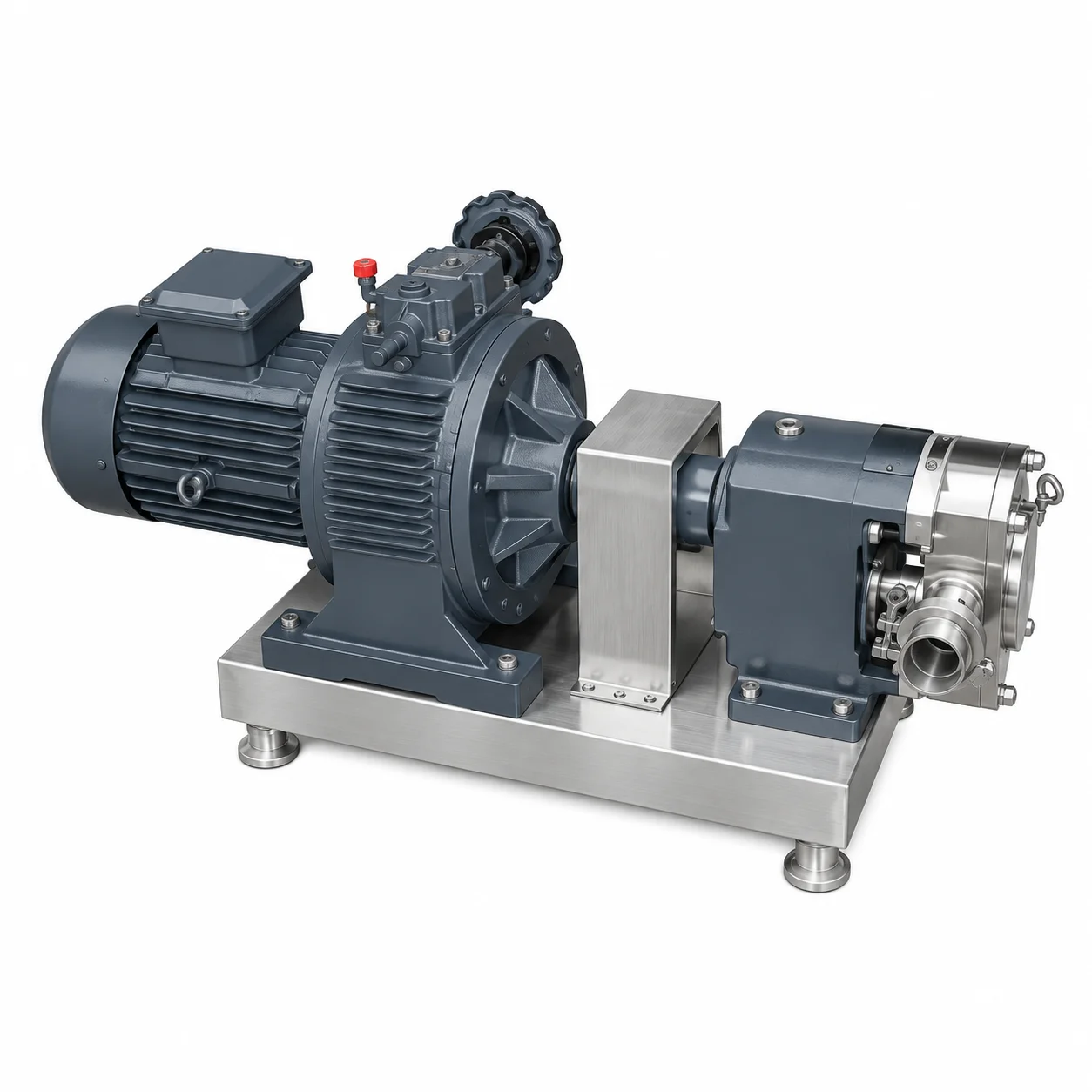
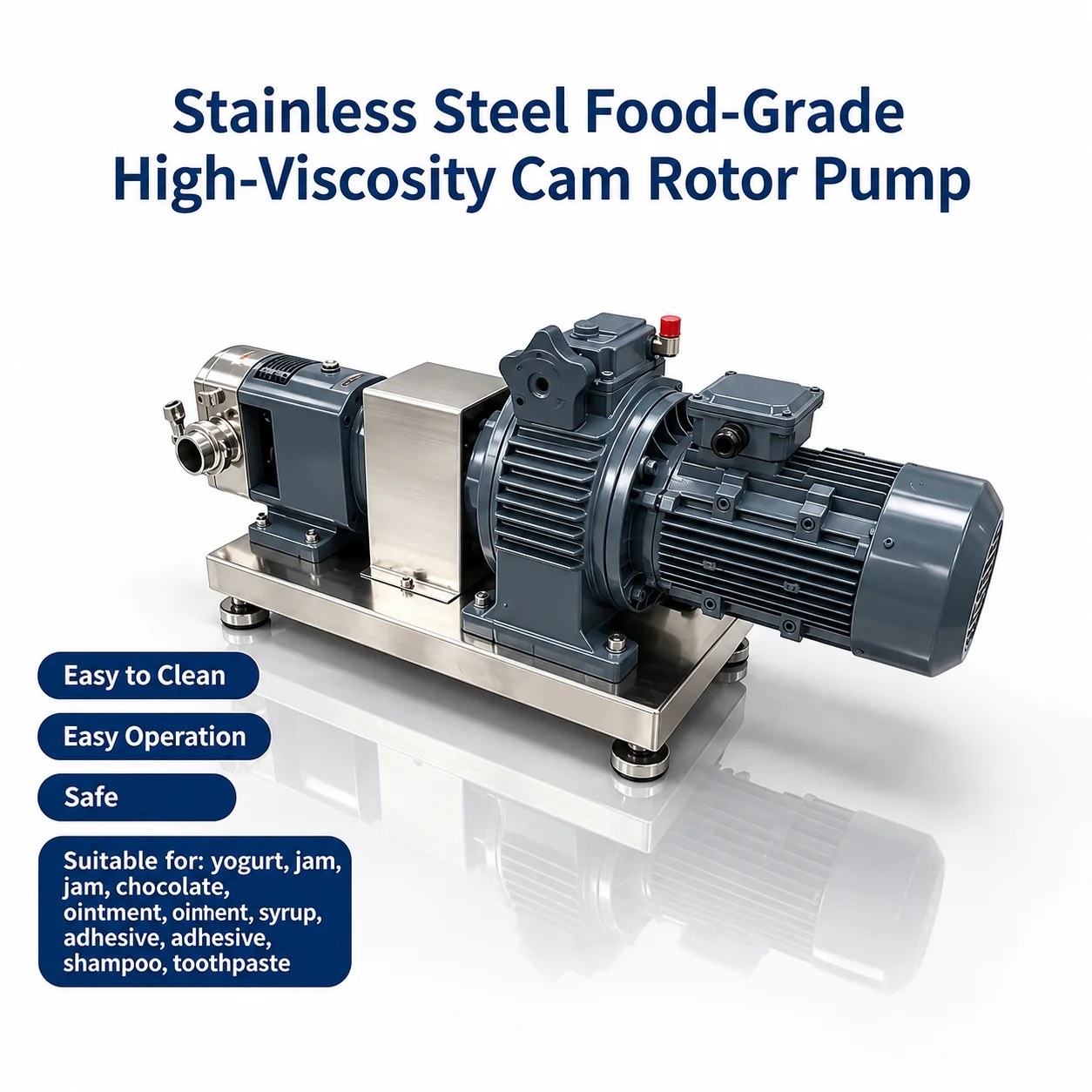
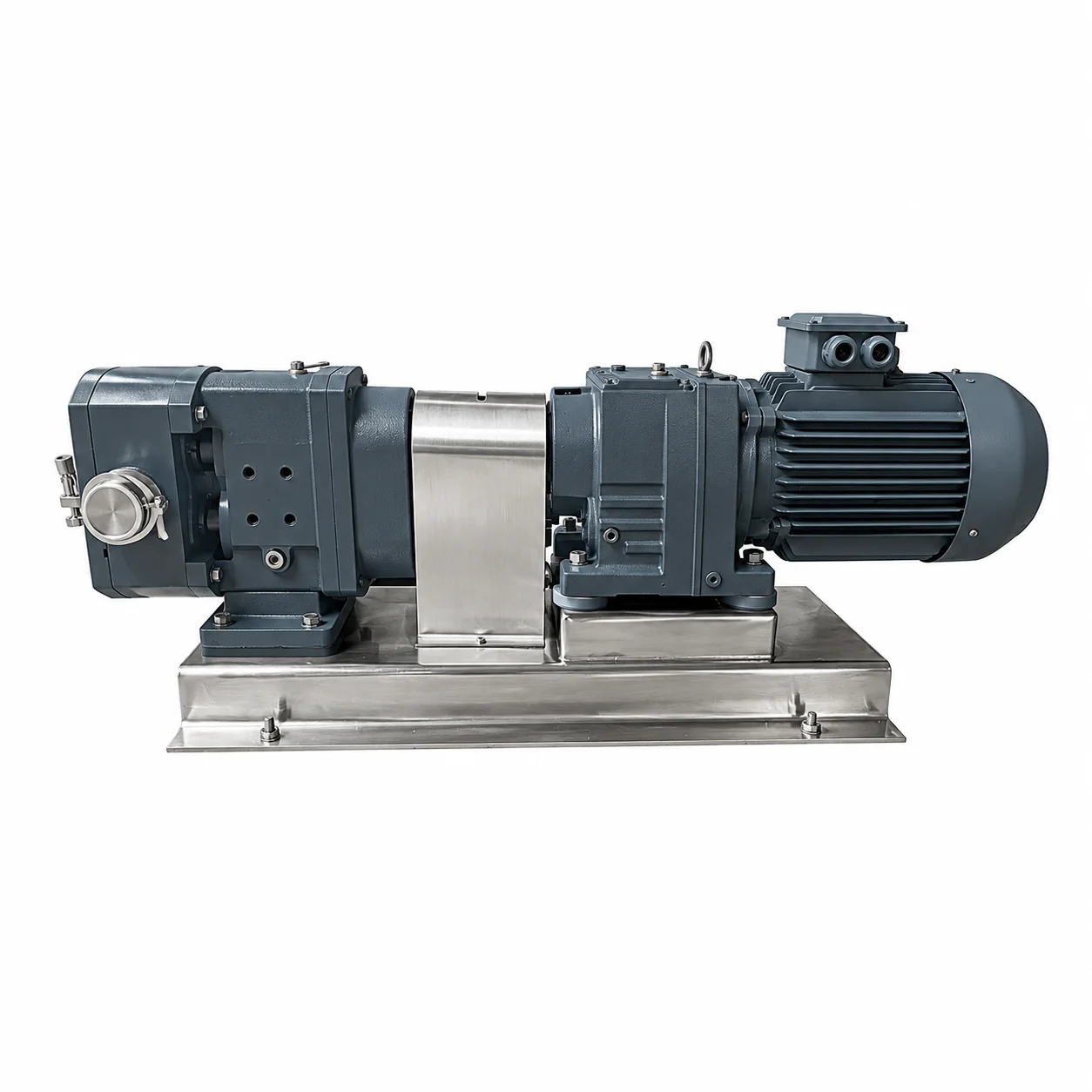
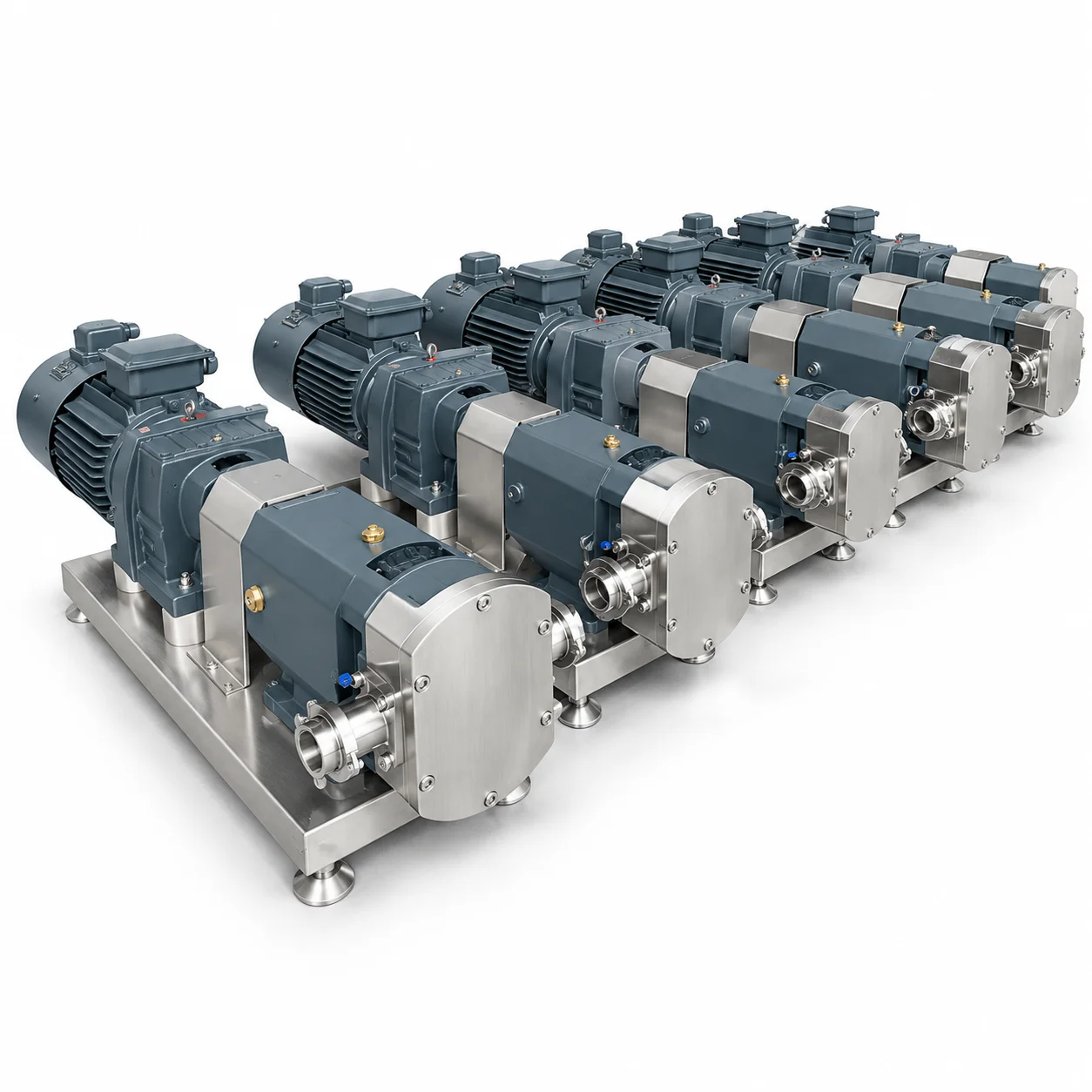
Sanitary Stainless Steel Lobe Pump for Sauce, Syrup & Honey
$2,476.88 原价为:$2,476.88。$1,746.53当前价格为:$1,746.53。
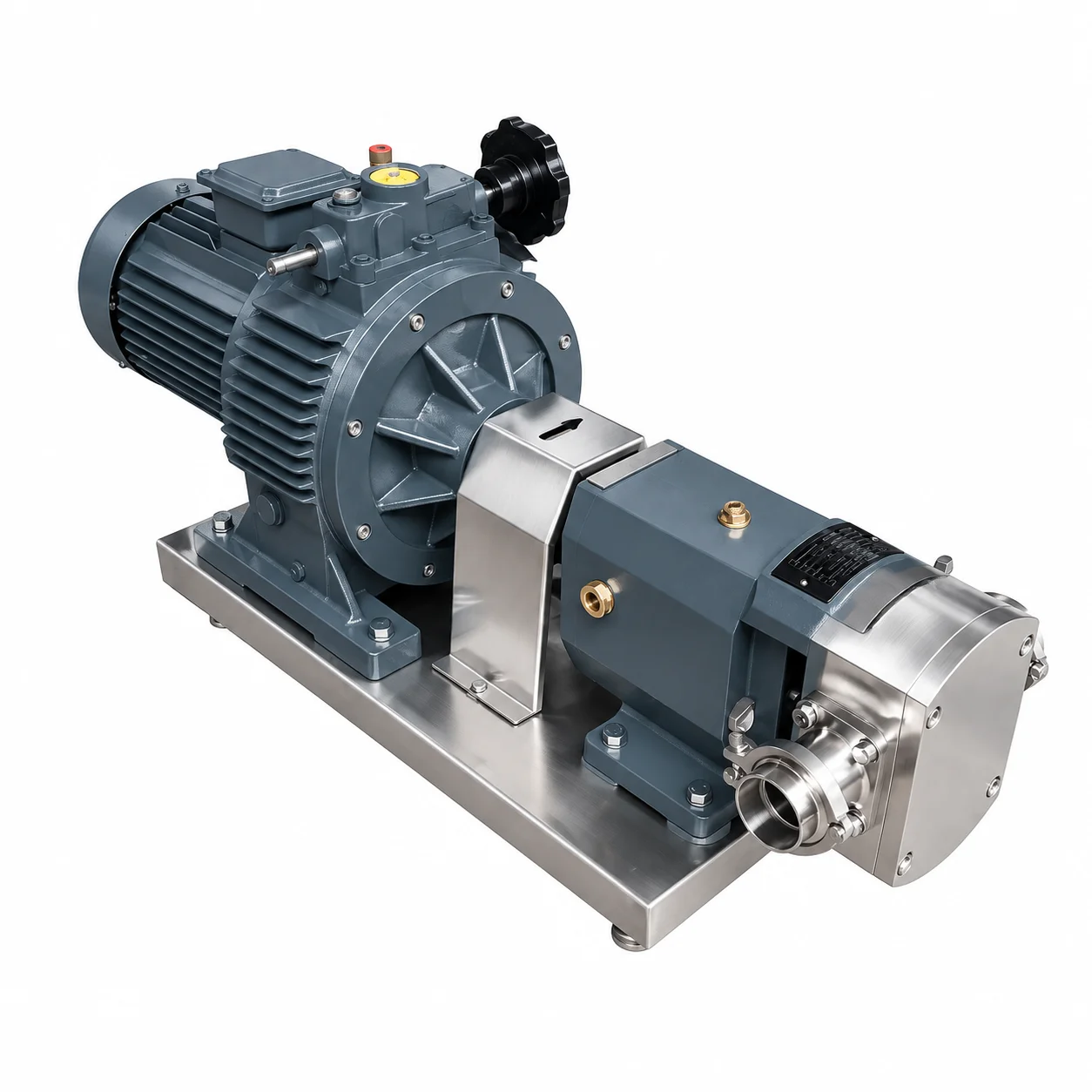
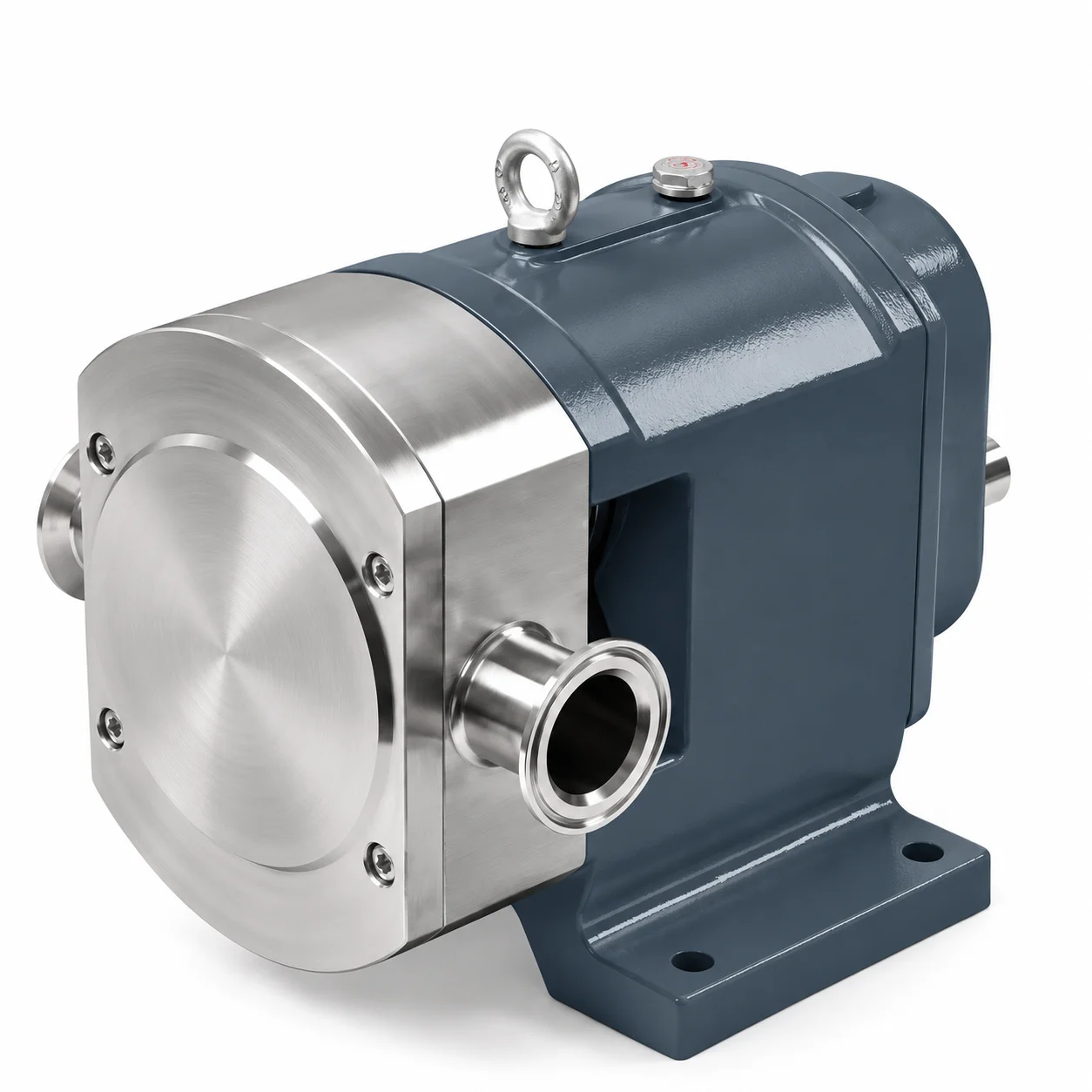
We manufacture a sanitary rotary lobe pump that is used to transfer sauces, syrups and other viscous ingredients. With this pump we are also able to transfer liquid sugar and honey. We have the application knowledge to select the proper pump, drive and seal to accommodate your particular product.
库存 100 件
Rotor Optional
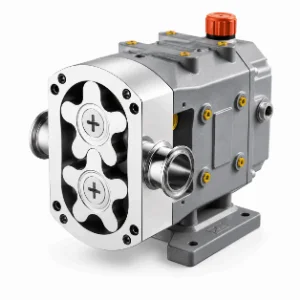
Three-Lobe Rotor
Applicable Liquids:
- Suitable for creams, liquids and sauces with low, medium and high viscosity, uniform texture and no hard granules.
- Example: Chocolate, honey, mashed potatoes and ice cream.
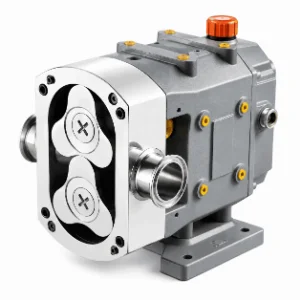
Butterfly Rotor
Applicable Liquids:
- Suitable for shear-free, non-destructive transfer of soft-grained sauces and small-particle materials.
- Example: Jam, pulp, juice, jelly and tomato sauce.
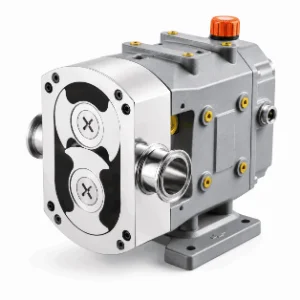
Single-Lobe Rotor
Applicable Liquids:
- Suitable for conveying materials containing larger solid particles while maintaining stable transfer.
- Example: Rock salt, chilli sauce and peanut butter.
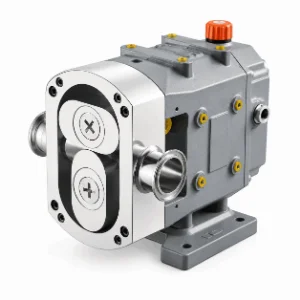
Multi-Lobe Rotor
Applicable Liquids:
- Suitable for creams, liquids and sauces with low, medium and high viscosity where higher output accuracy and smooth flow are required.
- Example: Chocolate, honey, cream, yoghurt, butter and grease.
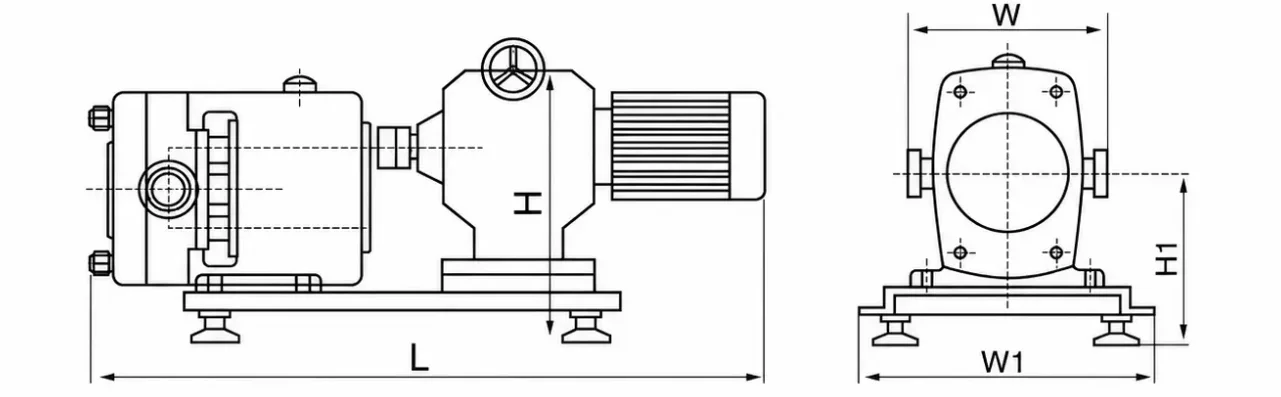
Parameter Chart
| Model | Flow per 100 Rotation |
Power (kW) |
Suggested RPM |
Capacity (L/H) |
Diameter | L | H | H1 | W | W1 | Connection Type |
|---|---|---|---|---|---|---|---|---|---|---|---|
| ZB3A-3 | 3L | 0.55 | 200-500 | 300-800 | Φ25×1.5 | 710 | 290 | 150 | 150 | 240 | Clamp / Thread / Flange |
| ZB3A-6 | 6L | 0.75 | 200-500 | 650-1600 | Φ25×1.5 | 780 | 390 | 170 | 190 | 240 | Clamp / Thread / Flange |
| ZB3A-8 | 8L | 1.5 | 200-500 | 850-2160 | Φ38×1.5 | 850 | 400 | 170 | 190 | 280 | Clamp / Thread / Flange |
| ZB3A-12 | 12L | 2.2 | 200-500 | 1300-3200 | Φ38×1.5 | 980 | 450 | 185 | 220 | 330 | Clamp / Thread / Flange |
| ZB3A-20 | 20L | 3 | 200-500 | 2100-5400 | Φ38×1.5 | 1000 | 450 | 190 | 250 | 330 | Clamp / Thread / Flange |
| ZB3A-30 | 30L | 4 | 200-500 | 3200-6400 | Φ50.8×1.5 | 1050 | 480 | 220 | 270 | 350 | Clamp / Thread / Flange |
| ZB3A-36 | 36L | 4 | 200-400 | 3800-7600 | Φ50.8×1.5 | 1100 | 490 | 220 | 270 | 360 | Clamp / Thread / Flange |
| ZB3A-52 | 52L | 5.5 | 200-400 | 5600-11000 | Φ63×1.5 | 1250 | 580 | 260 | 270 | 480 | Clamp / Thread / Flange |
| ZB3A-66 | 66L | 7.5 | 200-400 | 7100-14000 | Φ76×1.5 | 1350 | 600 | 260 | 270 | 480 | Clamp / Thread / Flange |
| ZB3A-78 | 78L | 7.5 | 200-400 | 9000-18000 | Φ76×1.5 | 1260 | 600 | 295 | 370 | 480 | Clamp / Thread / Flange |
| ZB3A-100 | 100L | 11 | 200-400 | 11000-22000 | Φ76×2 | 1320 | 670 | 295 | 370 | 480 | Clamp / Thread / Flange |
| ZB3A-135 | 135L | 15 | 200-400 | 15000-30000 | Φ89×2 | 1500 | 670 | 295 | 370 | 480 | Clamp / Thread / Flange |
| ZB3A-160 | 160L | 18.5 | 200-400 | 17000-34000 | Φ102×3 | 1500 | 720 | 320 | 420 | 560 | Clamp / Thread / Flange |
| ZB3A-200 | 200L | 22 | 200-400 | 21600-43000 | Φ102×3 | 1500 | 720 | 320 | 420 | 560 | Clamp / Thread / Flange |
| ZB3A-300 | 300L | 30 | 200-400 | 32400-64800 | Φ125×3 | 1650 | 800 | 400 | 480 | 620 | Clamp / Thread / Flange |
| ZB3A-400 | 400L | 37 | 200-400 | 43200-86400 | Φ150×3 | 1700 | 800 | 400 | 480 | 620 | Clamp / Thread / Flange |
Sanitary Rotary Lobe Pump for Food Transfer
Our sanitary rotary lobe pump is constructed from stainless steel and is used to transfer sauces, syrups, liquid sugars, and honey in food processing. When suggesting a configuration for transfer of a given product, we first need to determine the temperature of the product being transferred. Honey in particular can be very difficult to transfer if it is too cold. Cooled syrups can crystallize and increase the viscosity of the product.
The pump works by drawing product into a cavity created between the two rotors and transferring it to the outlet. The rotors on the pump can be adjusted to change the volume of product transferred. The actual volume transferred is less than the volume of the cavity and is determined by the difference in pressure between the two ends of the pump.
For transferring food sauces and dressings we generally use a configurable design to create the best flow pattern for the product. If the product contains large pieces of vegetables or herbs, we suggest a larger clearance between the rotors.
Texture retention depends on the design of the impeller, the clearances and the rotation speed of the pump.
Honey and Syrup
We evaluate the potential of honey and syrup products to fill the impeller of the pump during start up or after a shut down. To encourage product to flow into the impeller we recommend the use of a short suction line and an inlet that is partially submerged in the product. Some sugar solutions can harden upon drying and reduce drainability of the product. During evaluation of the equipment for your plant we will also take into account the processes and chemicals that the plant uses to wash the equipment.
Product and Technical Information
| Pump design: | Sanitary positive displacement rotary lobe. |
| Construction: | Stainless steel. |
| Intended use: | Sauces, syrups, liquid sugar and honey. |
| Duty point: | Determine the flow rate, differential pressure, viscosity and temperature of the product to be pumped. |
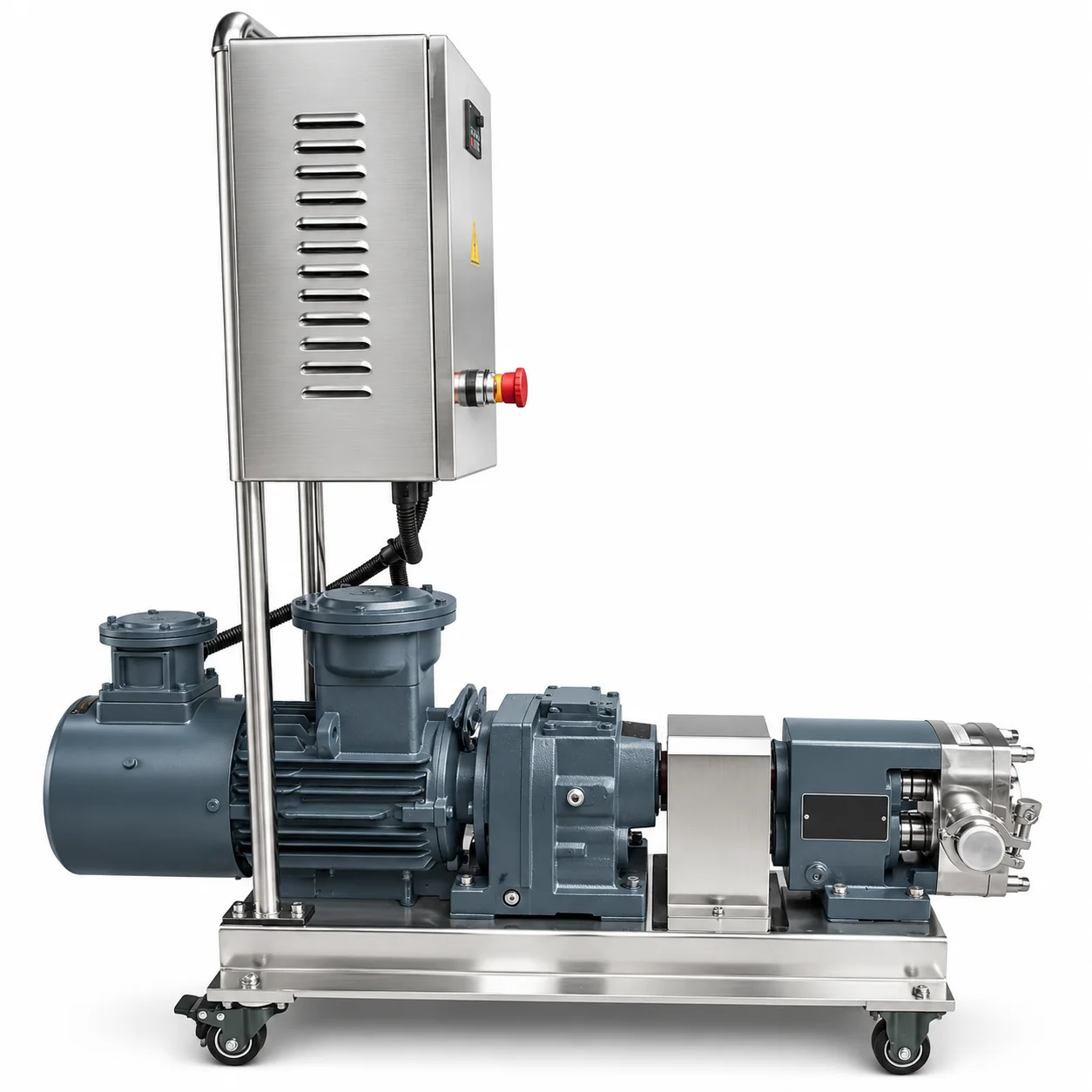
| Drive and Installation: | Determine the dimensions of the motor and gearbox to be used to drive the pump to the specified speed. |
| Seals and cleaning: | Determine the type of mechanical seal to be used and the elastomers that will come in contact with the process fluids, as well as the cleaning agents to be used. |
| CE Documentation: | Obtain the EU Declaration of Conformity for the pump and associated controls to validate compliance with the E.U. directives. |
On a continuous food production line this pump could be used to meter varying amounts of product for each individual recipe to fill a tank. In a retrofit situation we would also review the orientation of the suction and discharge port to remove any constraints that would limit access to the seals or rotors.
We regularly evaluate operator procedures to drain the pump to ensure that the cleaning process removes residue on the product path.
Size the Pump for Your Process
To determine the size of the pump needed for your process, send the range of flow rates required, the viscosity of the product at start up and during operation, and the temperature range of the product. Also include elevation of the suction tank and provide dimensions of the piping and restrictions downstream of the pump. If the product being transferred is a sauce with solid particles, include the maximum size of the particles to determine if they will obstruct the pump impeller.
Using this information we determine the motor and gearbox requirements to drive the pump at the desired speed to overcome the system resistance. We assess the potential effects of obstructed pump discharge on the system to determine if safeguards have been implemented to protect the system.
Can this pump transport cold honey?
Honey becomes very viscous at low temperatures. In some cases the starting torque of the pump may not be sufficient to draw the honey into the pump cavities.
Can the pump transport sauce with large particles?
Similar to above, the inclusion must also be described along with the maximum allowable degree of breakage to determine if it will obstruct the impeller.
Can the flow rate of the pump be changed to match a particular filling line?
A variable speed drive may be used to vary the flow rate of the pump.
Is the pump able to be cleaned in place?
This would depend on the specific design of the pump and the wash cycle to be performed.
We evaluate drainability, cleaning flow, temperature and chemical compatibility prior to finalizing the design.
What factors determine the horsepower of a liquid sugar pump?
We size the motor to drive the volume of liquid at the expected pressure and to overcome the torque of the liquid with the greatest resistance. The most demanding condition of the system is typically at start up with the liquid still in the pipe and the sugar in its solid state.
How do you validate the CE marking?
Check the EU Declaration of Conformity to confirm the model number corresponds with the pump being supplied.
Request a Quote to Transfer Your Food Product
To receive a quote to purchase a system from us to transfer your food product, please provide us the following information: the properties of your food product and the temperature at which it will be transferred, the connection standards at each end of the transfer system, and the dimensions of the space in which the transfer system will be installed. We will determine the optimum size of the pump to be used in the transfer system and provide you with a quote.

Sanitary Rotary Lobe Pump for Food Transfer
Our sanitary rotary lobe pump is constructed from stainless steel and is used to transfer sauces, syrups, liquid sugars, and honey in food processing. When suggesting a configuration for transfer of a given product, we first need to determine the temperature of the product being transferred. Honey in particular can be very difficult to transfer if it is too cold. Cooled syrups can crystallize and increase the viscosity of the product.
The pump works by drawing product into a cavity created between the two rotors and transferring it to the outlet. The rotors on the pump can be adjusted to change the volume of product transferred. The actual volume transferred is less than the volume of the cavity and is determined by the difference in pressure between the two ends of the pump.
For transferring food sauces and dressings we generally use a configurable design to create the best flow pattern for the product. If the product contains large pieces of vegetables or herbs, we suggest a larger clearance between the rotors.
Texture retention depends on the design of the impeller, the clearances and the rotation speed of the pump.
Honey and Syrup
We evaluate the potential of honey and syrup products to fill the impeller of the pump during start up or after a shut down. To encourage product to flow into the impeller we recommend the use of a short suction line and an inlet that is partially submerged in the product. Some sugar solutions can harden upon drying and reduce drainability of the product. During evaluation of the equipment for your plant we will also take into account the processes and chemicals that the plant uses to wash the equipment.
Product and Technical Information
| Pump design: | Sanitary positive displacement rotary lobe. |
| Construction: | Stainless steel. |
| Intended use: | Sauces, syrups, liquid sugar and honey. |
| Duty point: | Determine the flow rate, differential pressure, viscosity and temperature of the product to be pumped. |
| Drive and Installation: | Determine the dimensions of the motor and gearbox to be used to drive the pump to the specified speed. |
| Seals and cleaning: | Determine the type of mechanical seal to be used and the elastomers that will come in contact with the process fluids, as well as the cleaning agents to be used. |
| CE Documentation: | Obtain the EU Declaration of Conformity for the pump and associated controls to validate compliance with the E.U. directives. |
On a continuous food production line this pump could be used to meter varying amounts of product for each individual recipe to fill a tank. In a retrofit situation we would also review the orientation of the suction and discharge port to remove any constraints that would limit access to the seals or rotors.
We regularly evaluate operator procedures to drain the pump to ensure that the cleaning process removes residue on the product path.
Size the Pump for Your Process
To determine the size of the pump needed for your process, send the range of flow rates required, the viscosity of the product at start up and during operation, and the temperature range of the product. Also include elevation of the suction tank and provide dimensions of the piping and restrictions downstream of the pump. If the product being transferred is a sauce with solid particles, include the maximum size of the particles to determine if they will obstruct the pump impeller.
Using this information we determine the motor and gearbox requirements to drive the pump at the desired speed to overcome the system resistance. We assess the potential effects of obstructed pump discharge on the system to determine if safeguards have been implemented to protect the system.
Can this pump transport cold honey?
Honey becomes very viscous at low temperatures. In some cases the starting torque of the pump may not be sufficient to draw the honey into the pump cavities.
Can the pump transport sauce with large particles?
Similar to above, the inclusion must also be described along with the maximum allowable degree of breakage to determine if it will obstruct the impeller.
Can the flow rate of the pump be changed to match a particular filling line?
A variable speed drive may be used to vary the flow rate of the pump.
Is the pump able to be cleaned in place?
This would depend on the specific design of the pump and the wash cycle to be performed.
We evaluate drainability, cleaning flow, temperature and chemical compatibility prior to finalizing the design.
What factors determine the horsepower of a liquid sugar pump?
We size the motor to drive the volume of liquid at the expected pressure and to overcome the torque of the liquid with the greatest resistance. The most demanding condition of the system is typically at start up with the liquid still in the pipe and the sugar in its solid state.
How do you validate the CE marking?
Check the EU Declaration of Conformity to confirm the model number corresponds with the pump being supplied.
Request a Quote to Transfer Your Food Product
To receive a quote to purchase a system from us to transfer your food product, please provide us the following information: the properties of your food product and the temperature at which it will be transferred, the connection standards at each end of the transfer system, and the dimensions of the space in which the transfer system will be installed. We will determine the optimum size of the pump to be used in the transfer system and provide you with a quote.

MAECENAS IACULIS
Vestibulum curae torquent diam diam commodo parturient penatibus nunc dui adipiscing convallis bulum parturient suspendisse parturient a.Parturient in parturient scelerisque nibh lectus quam a natoque adipiscing a vestibulum hendrerit et pharetra fames nunc natoque dui.
ADIPISCING CONVALLIS BULUM
- Vestibulum penatibus nunc dui adipiscing convallis bulum parturient suspendisse.
- Abitur parturient praesent lectus quam a natoque adipiscing a vestibulum hendre.
- Diam parturient dictumst parturient scelerisque nibh lectus.
Scelerisque adipiscing bibendum sem vestibulum et in a a a purus lectus faucibus lobortis tincidunt purus lectus nisl class eros.Condimentum a et ullamcorper dictumst mus et tristique elementum nam inceptos hac parturient scelerisque vestibulum amet elit ut volutpat.