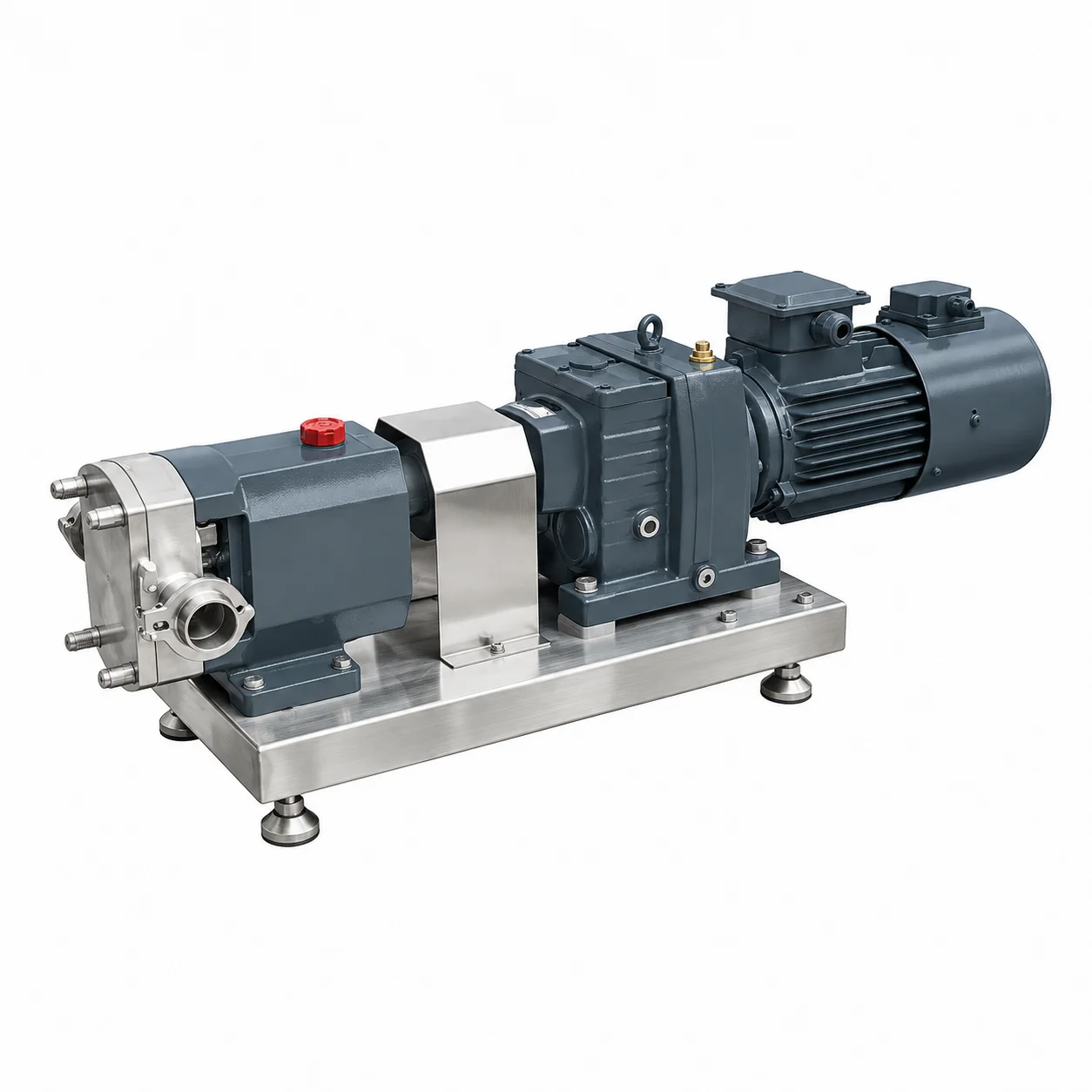
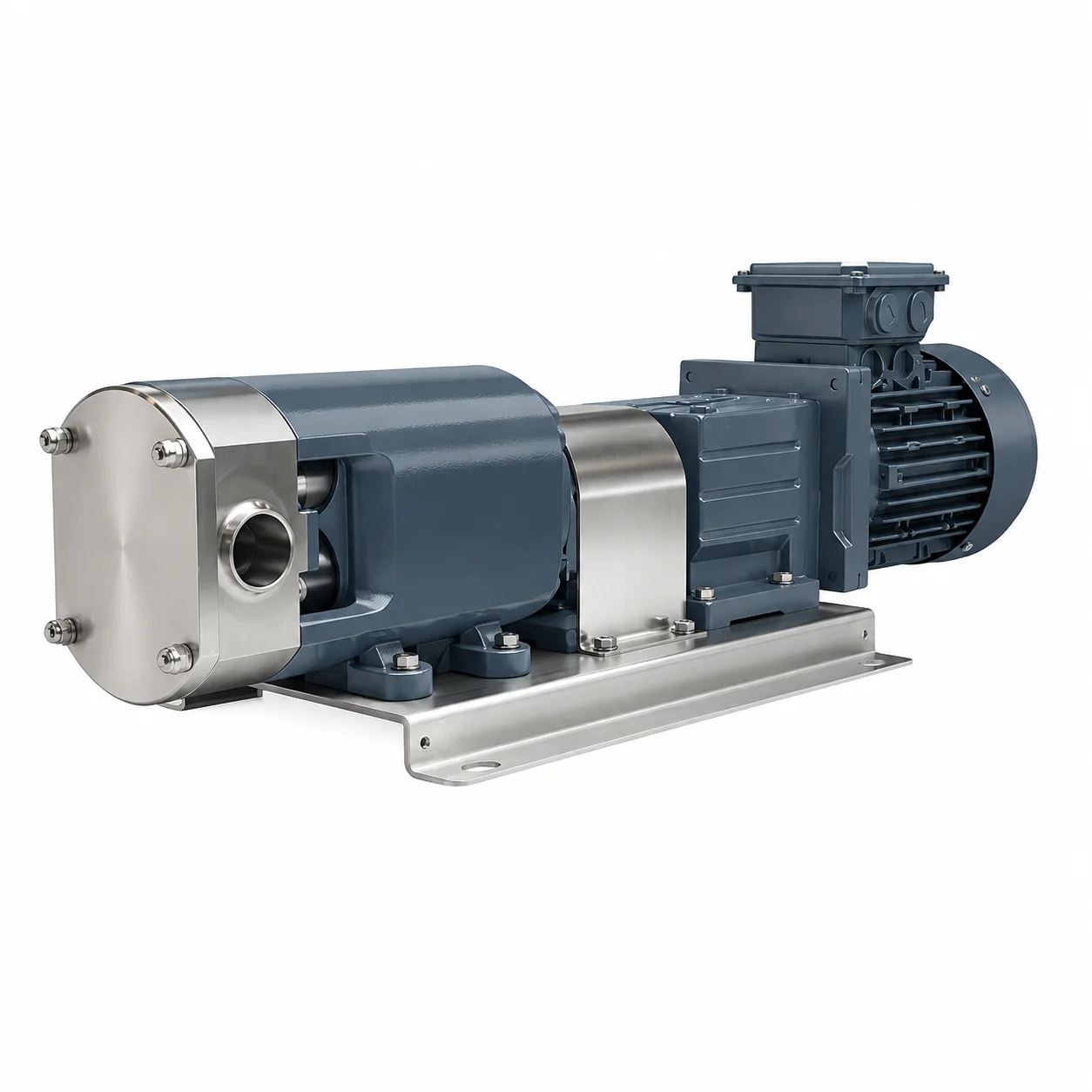
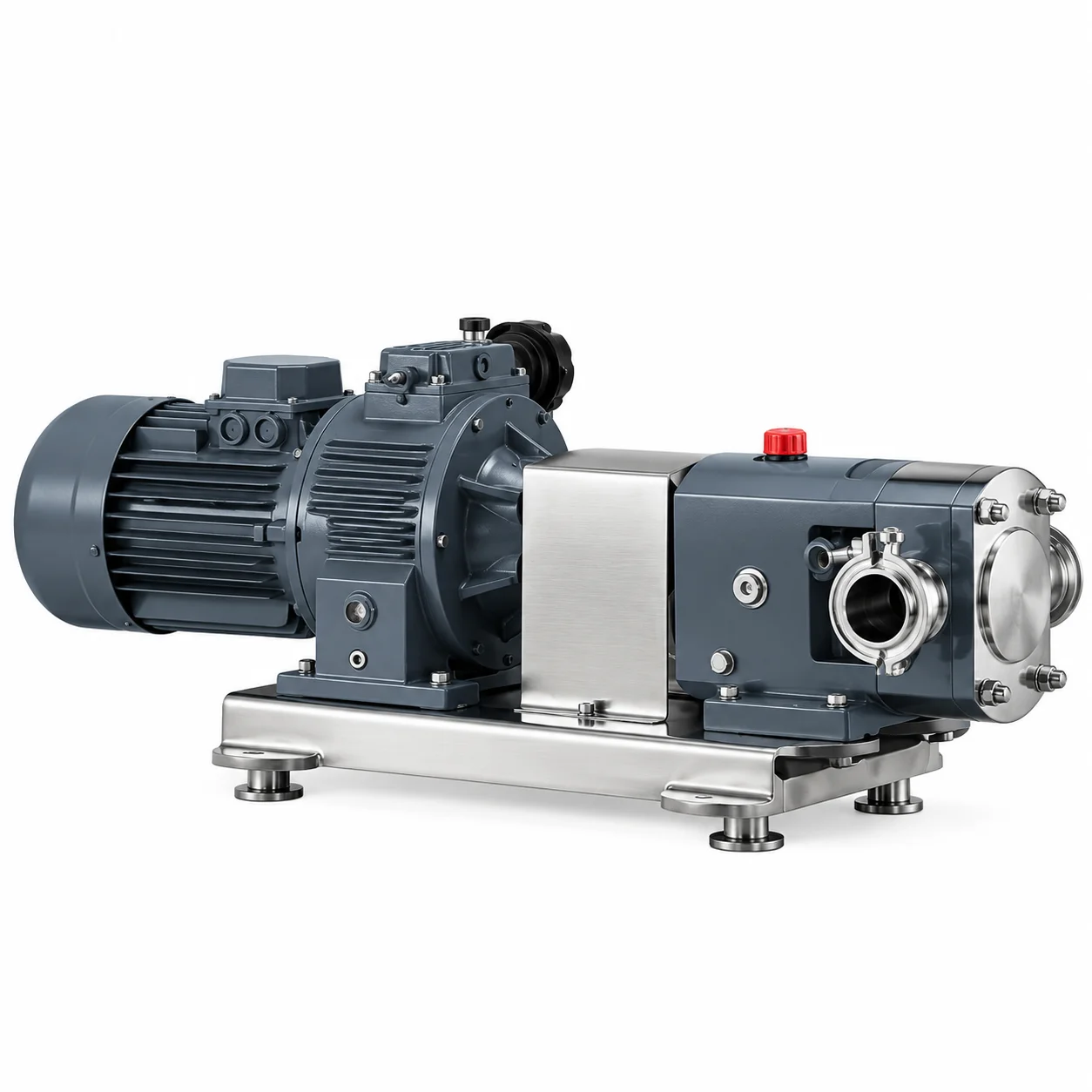
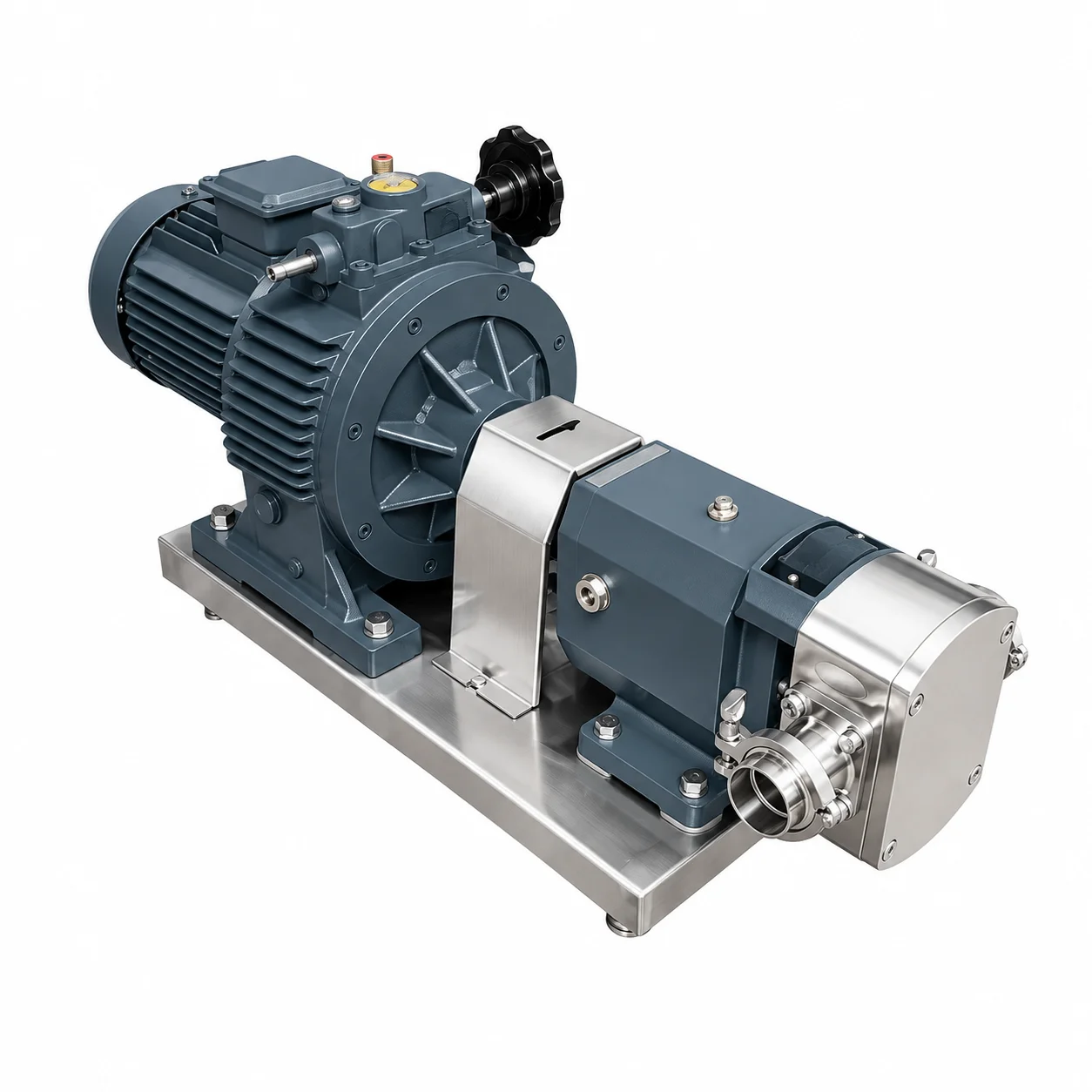
Stainless Steel Rotary Lobe Pump for Syrup and Sauces
$2,218.66 原价为:$2,218.66。$1,524.35当前价格为:$1,524.35。
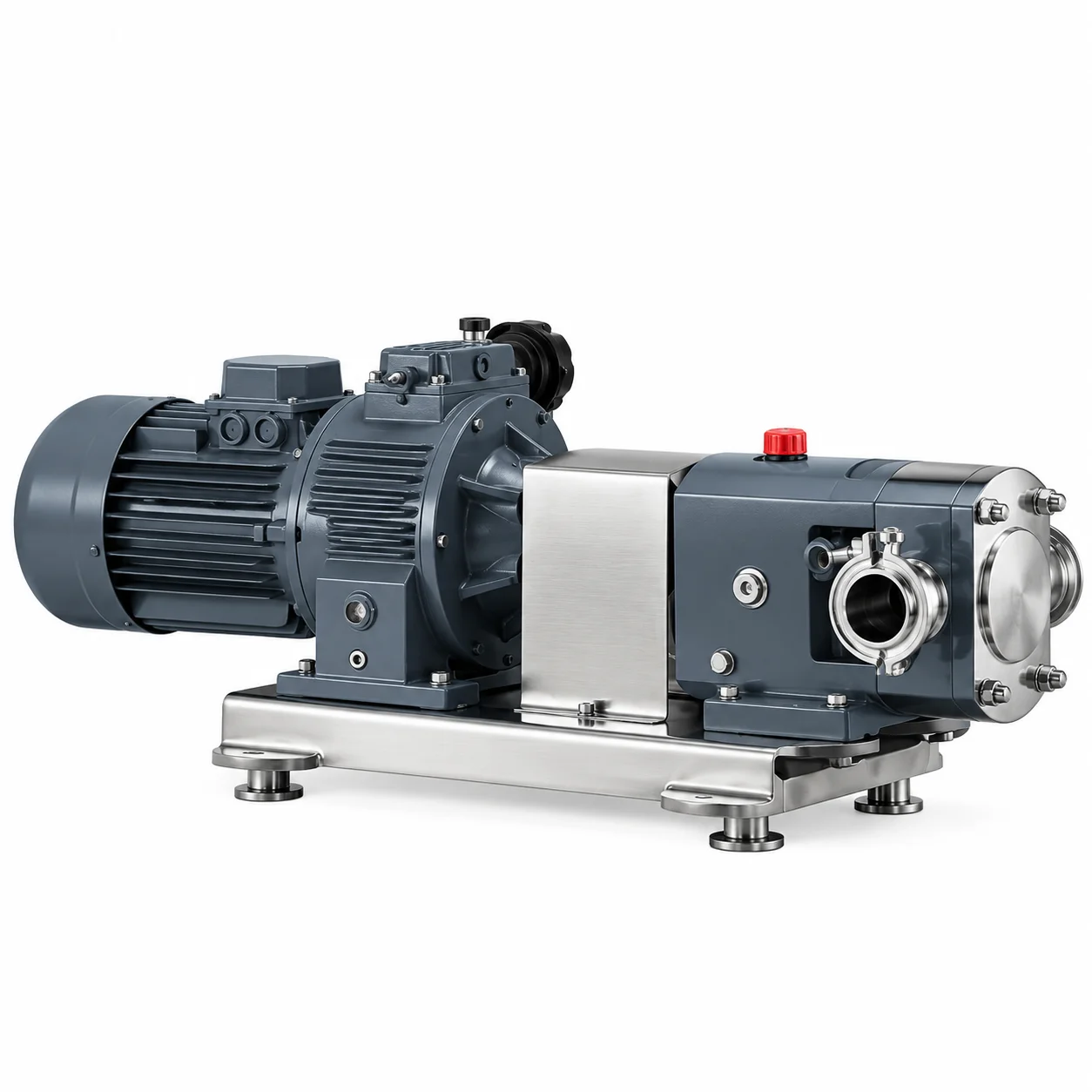
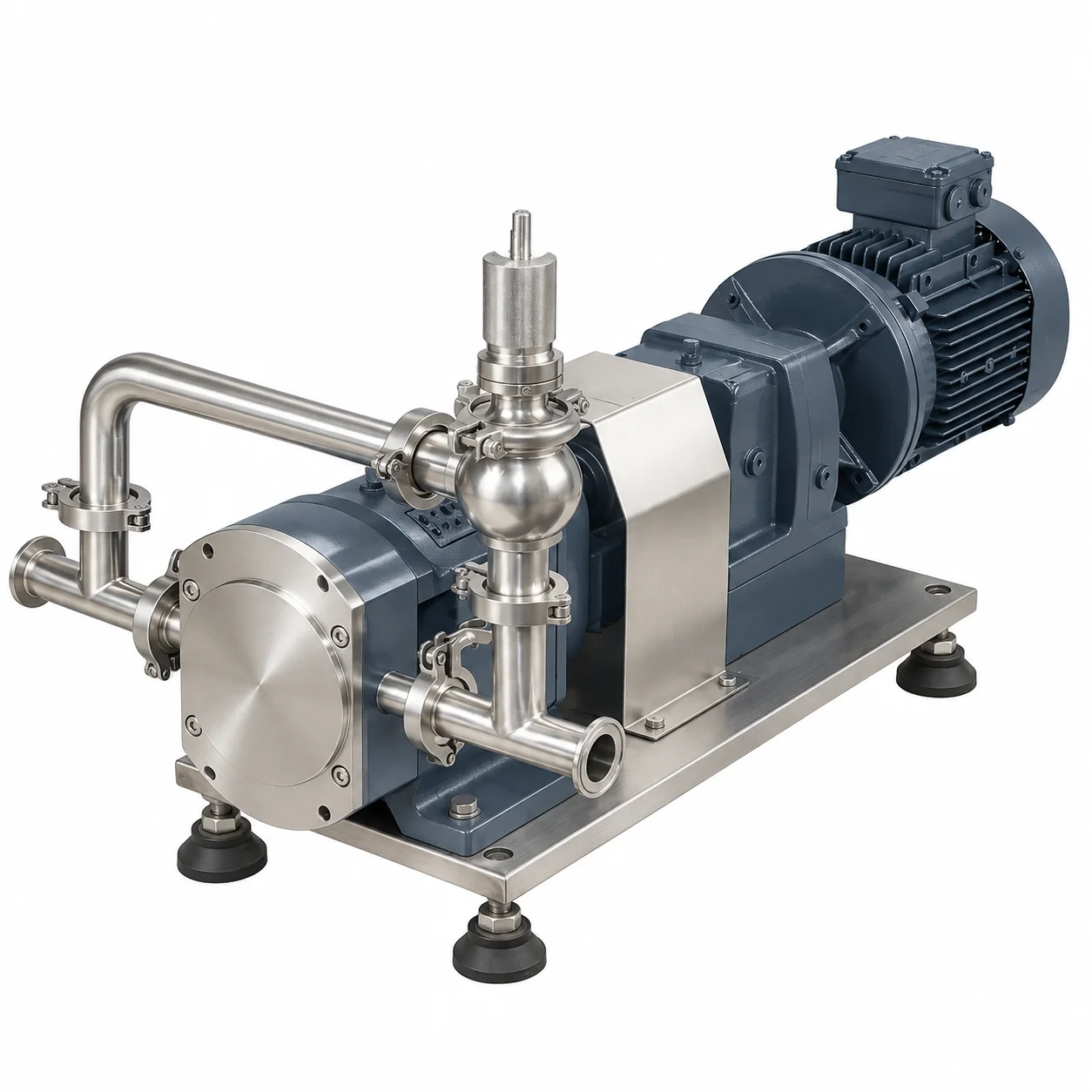
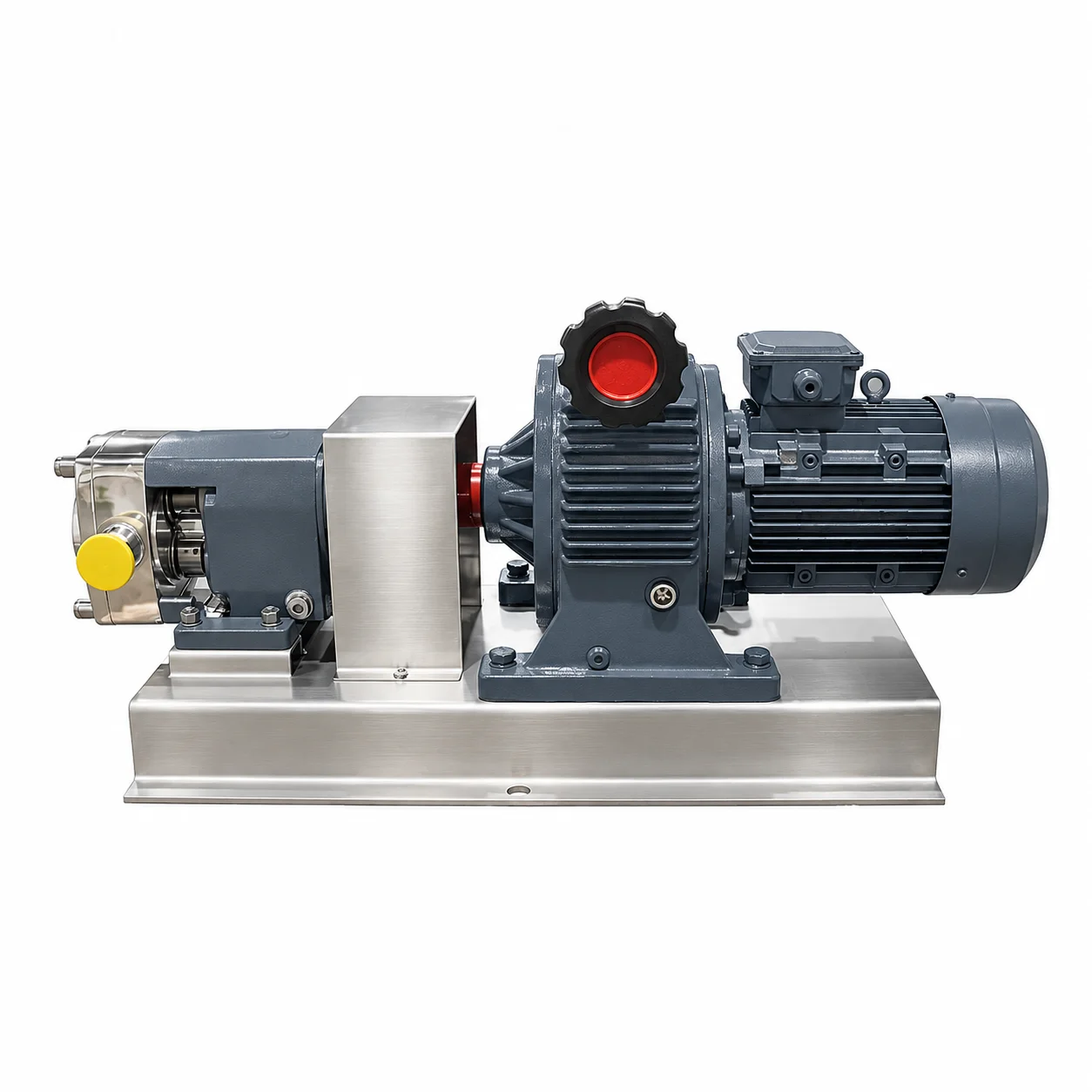
We offer a stainless steel rotary lobe pump for transferring syrup, honey, tomato sauce, jam, and ketchup in a food processing line. It uses a positive displacement mechanism to transfer liquid products with high viscosity. Contact us with the flow rate, operating pressure and temperature of the product to be transferred, as well as the viscosity of the product, to enable us to recommend the best pump for the application.
库存 100 件
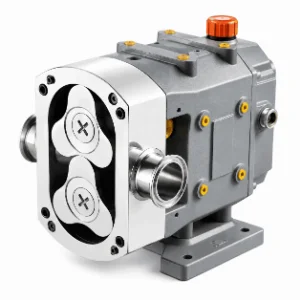
Rotor Optional
Three-Lobe Rotor
Applicable Liquids:
- Suitable for creams, liquids and sauces with low, medium and high viscosity, uniform texture and no hard granules.
- Example: Chocolate, honey, mashed potatoes and ice cream.
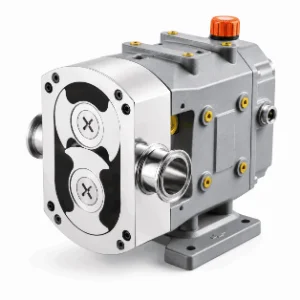
Butterfly Rotor
Applicable Liquids:
- Suitable for shear-free, non-destructive transfer of soft-grained sauces and small-particle materials.
- Example: Jam, pulp, juice, jelly and tomato sauce.
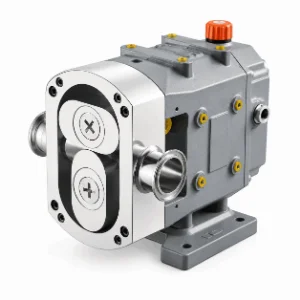
Single-Lobe Rotor
Applicable Liquids:
- Suitable for conveying materials containing larger solid particles while maintaining stable transfer.
- Example: Rock salt, chilli sauce and peanut butter.
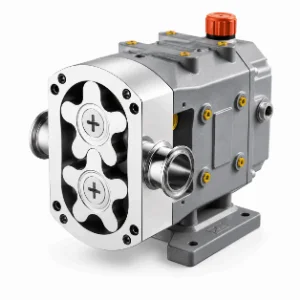
Multi-Lobe Rotor
Applicable Liquids:
- Suitable for creams, liquids and sauces with low, medium and high viscosity where higher output accuracy and smooth flow are required.
- Example: Chocolate, honey, cream, yoghurt, butter and grease.
Parameter Chart
| Model | Flow per 100 Rotation |
Power (kW) |
Suggested RPM |
Capacity (L/H) |
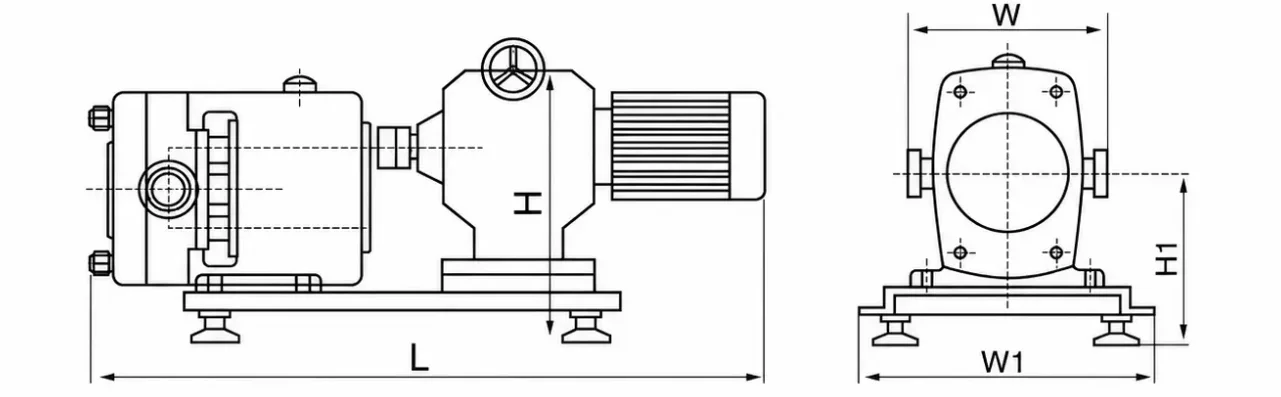
Diameter | L | H | H1 | W | W1 | Connection Type |
|---|---|---|---|---|---|---|---|---|---|---|---|
| ZB3A-3 | 3L | 0.55 | 200-500 | 300-800 | Φ25×1.5 | 710 | 290 | 150 | 150 | 240 | Clamp / Thread / Flange |
| ZB3A-6 | 6L | 0.75 | 200-500 | 650-1600 | Φ25×1.5 | 780 | 390 | 170 | 190 | 240 | Clamp / Thread / Flange |
| ZB3A-8 | 8L | 1.5 | 200-500 | 850-2160 | Φ38×1.5 | 850 | 400 | 170 | 190 | 280 | Clamp / Thread / Flange |
| ZB3A-12 | 12L | 2.2 | 200-500 | 1300-3200 | Φ38×1.5 | 980 | 450 | 185 | 220 | 330 | Clamp / Thread / Flange |
| ZB3A-20 | 20L | 3 | 200-500 | 2100-5400 | Φ38×1.5 | 1000 | 450 | 190 | 250 | 330 | Clamp / Thread / Flange |
| ZB3A-30 | 30L | 4 | 200-500 | 3200-6400 | Φ50.8×1.5 | 1050 | 480 | 220 | 270 | 350 | Clamp / Thread / Flange |
| ZB3A-36 | 36L | 4 | 200-400 | 3800-7600 | Φ50.8×1.5 | 1100 | 490 | 220 | 270 | 360 | Clamp / Thread / Flange |
| ZB3A-52 | 52L | 5.5 | 200-400 | 5600-11000 | Φ63×1.5 | 1250 | 580 | 260 | 270 | 480 | Clamp / Thread / Flange |
| ZB3A-66 | 66L | 7.5 | 200-400 | 7100-14000 | Φ76×1.5 | 1350 | 600 | 260 | 270 | 480 | Clamp / Thread / Flange |
| ZB3A-78 | 78L | 7.5 | 200-400 | 9000-18000 | Φ76×1.5 | 1260 | 600 | 295 | 370 | 480 | Clamp / Thread / Flange |
| ZB3A-100 | 100L | 11 | 200-400 | 11000-22000 | Φ76×2 | 1320 | 670 | 295 | 370 | 480 | Clamp / Thread / Flange |
| ZB3A-135 | 135L | 15 | 200-400 | 15000-30000 | Φ89×2 | 1500 | 670 | 295 | 370 | 480 | Clamp / Thread / Flange |
| ZB3A-160 | 160L | 18.5 | 200-400 | 17000-34000 | Φ102×3 | 1500 | 720 | 320 | 420 | 560 | Clamp / Thread / Flange |
| ZB3A-200 | 200L | 22 | 200-400 | 21600-43000 | Φ102×3 | 1500 | 720 | 320 | 420 | 560 | Clamp / Thread / Flange |
| ZB3A-300 | 300L | 30 | 200-400 | 32400-64800 | Φ125×3 | 1650 | 800 | 400 | 480 | 620 | Clamp / Thread / Flange |
| ZB3A-400 | 400L | 37 | 200-400 | 43200-86400 | Φ150×3 | 1700 | 800 | 400 | 480 | 620 | Clamp / Thread / Flange |
Product Overview
We produce a positive displacement stainless steel rotary lobe pump for transfer of viscous products such as syrup, honey, ketchup, tomato sauce, etc. This pump is ideally used in conjunction with production lines to move product between different stages of the process. Confirm the specific characteristics of the pump you require such as capacity, pressure, and type of drive with respect to your particular application.
Working Principle
The pump consists of two lobes which rotate within the casing of the pump and do not touch each other. Product is drawn into the pump through the inlet by the expulsion of air from the preceding volume of the pump casing. The product is then transferred to the outlet of the pump where it is expelled to the discharge line.
Key Features and Benefits
Stainless steel construction: Of the components of the pump that come into contact with product, confirm the grade of stainless steel to determine its compatibility with respect to your product and process.
Viscous product transfer: Compared to transfer of thin products, transfer of products such as syrup, honey, sauces and jam requires more energy.
Size should be determined by viscosity and the temperature of the fluid being pumped as well as by the conditions of the suction.
A rotary lobe pump uses repeated displacements to transfer the product as opposed to relying on centrifugal force to do the same.
This pump can be used to transfer product from one vessel to another as well as to transfer product from the processing vessel to the packaging vessel. The design of this pump allows it to be used for a variety of processes.
Examples of some of the products that could be pumped using this design are honey, syrup, tomato sauce, jam and ketchup. The physical and chemical properties of these products can vary from batch to batch. To determine if this pump will be effective for a particular product, more information about the product should be provided.
This pump is designed to transfer liquid from one vessel to another using a rotary lobe mechanism with stainless steel components. The operating characteristics of the pump can be adjusted to meet the specific demands of the process. The motor and mechanical seal are not provided with the pump and should be selected to meet the conditions of the application.
Materials used for other components of the pump that come in contact with the product should also be determined prior to use in food processing to meet the requirements of food safety.
A rotary lobe pump can be used to transfer viscous and thick food products to the next processing step.
To connect the pump to the existing tanks and piping it is crucial to verify the configuration before purchase.
To make a complete quotation, it is necessary to provide the flow rate, pressure, viscosity and temperature of the product being transferred, the suction lift or type of inlet fitting, how long the pump will be in use and the power source and space available for mounting the pump. Additionally, provide information on the type of connection required.
For products that change consistency with change in temperature (honey, syrups, sauces, etc.) indicate the lowest expected operating temperature to determine if the pump will be adequate for the task.
What products can this pump be used to transfer?
This type of pump is appropriate to transfer viscous products in the range of 20-30 Centipoise. Products with higher viscosity may be pumped using special equipment or by pre-heating the product to decrease viscosity.
How does a rotary lobe pump operate to transfer product?
The pump consists of two lobes mounted on a rotating shaft. As the lobes turn they enclose product and transport it to the outlet.
This is a positive displacement pump.
Is the pump body actually made of stainless steel?
The pump body might be made of stainless steel, but without stating what grade of stainless steel, or what other materials are in contact with the liquid being pumped, it’s tough to determine if this pump would even be fit for use in your application.
What flow rates and pressures can this pump generate?
The pump does not disclose this information. Data pertaining to the model, speed and other variables in the system affect the answer to this question.
Can the pump handle both honey and ketchup?
Honey and ketchup may have different properties which could affect the pump’s ability to transfer the fluid. To determine this you’d need to provide more information on the conditions the pump will be operated under.
What information should I provide to choose the correct pump for my application?
To help determine the appropriate pump to use for your application you should give the range of flow and pressure requirements, the viscosity of the liquid to be pumped, the temperature of the liquid and the environment the pump will be used in, as well as the means of power available to operate the pump and any requirements for cleaning the pump.
Request Product Data
To further assist you in selection of the appropriate pump for transferring either syrup, honey or sauce we would need additional information on your process.

Product Overview
We produce a positive displacement stainless steel rotary lobe pump for transfer of viscous products such as syrup, honey, ketchup, tomato sauce, etc. This pump is ideally used in conjunction with production lines to move product between different stages of the process. Confirm the specific characteristics of the pump you require such as capacity, pressure, and type of drive with respect to your particular application.
Working Principle
The pump consists of two lobes which rotate within the casing of the pump and do not touch each other. Product is drawn into the pump through the inlet by the expulsion of air from the preceding volume of the pump casing. The product is then transferred to the outlet of the pump where it is expelled to the discharge line.
Key Features and Benefits
Stainless steel construction: Of the components of the pump that come into contact with product, confirm the grade of stainless steel to determine its compatibility with respect to your product and process.
Viscous product transfer: Compared to transfer of thin products, transfer of products such as syrup, honey, sauces and jam requires more energy.
Size should be determined by viscosity and the temperature of the fluid being pumped as well as by the conditions of the suction.
A rotary lobe pump uses repeated displacements to transfer the product as opposed to relying on centrifugal force to do the same.
This pump can be used to transfer product from one vessel to another as well as to transfer product from the processing vessel to the packaging vessel. The design of this pump allows it to be used for a variety of processes.
Examples of some of the products that could be pumped using this design are honey, syrup, tomato sauce, jam and ketchup. The physical and chemical properties of these products can vary from batch to batch. To determine if this pump will be effective for a particular product, more information about the product should be provided.
This pump is designed to transfer liquid from one vessel to another using a rotary lobe mechanism with stainless steel components. The operating characteristics of the pump can be adjusted to meet the specific demands of the process. The motor and mechanical seal are not provided with the pump and should be selected to meet the conditions of the application.
Materials used for other components of the pump that come in contact with the product should also be determined prior to use in food processing to meet the requirements of food safety.
A rotary lobe pump can be used to transfer viscous and thick food products to the next processing step.
To connect the pump to the existing tanks and piping it is crucial to verify the configuration before purchase.
To make a complete quotation, it is necessary to provide the flow rate, pressure, viscosity and temperature of the product being transferred, the suction lift or type of inlet fitting, how long the pump will be in use and the power source and space available for mounting the pump. Additionally, provide information on the type of connection required.
For products that change consistency with change in temperature (honey, syrups, sauces, etc.) indicate the lowest expected operating temperature to determine if the pump will be adequate for the task.
What products can this pump be used to transfer?
This type of pump is appropriate to transfer viscous products in the range of 20-30 Centipoise. Products with higher viscosity may be pumped using special equipment or by pre-heating the product to decrease viscosity.
How does a rotary lobe pump operate to transfer product?
The pump consists of two lobes mounted on a rotating shaft. As the lobes turn they enclose product and transport it to the outlet.
This is a positive displacement pump.
Is the pump body actually made of stainless steel?
The pump body might be made of stainless steel, but without stating what grade of stainless steel, or what other materials are in contact with the liquid being pumped, it’s tough to determine if this pump would even be fit for use in your application.
What flow rates and pressures can this pump generate?
The pump does not disclose this information. Data pertaining to the model, speed and other variables in the system affect the answer to this question.
Can the pump handle both honey and ketchup?
Honey and ketchup may have different properties which could affect the pump’s ability to transfer the fluid. To determine this you’d need to provide more information on the conditions the pump will be operated under.
What information should I provide to choose the correct pump for my application?
To help determine the appropriate pump to use for your application you should give the range of flow and pressure requirements, the viscosity of the liquid to be pumped, the temperature of the liquid and the environment the pump will be used in, as well as the means of power available to operate the pump and any requirements for cleaning the pump.
Request Product Data
To further assist you in selection of the appropriate pump for transferring either syrup, honey or sauce we would need additional information on your process.

MAECENAS IACULIS
Vestibulum curae torquent diam diam commodo parturient penatibus nunc dui adipiscing convallis bulum parturient suspendisse parturient a.Parturient in parturient scelerisque nibh lectus quam a natoque adipiscing a vestibulum hendrerit et pharetra fames nunc natoque dui.
ADIPISCING CONVALLIS BULUM
- Vestibulum penatibus nunc dui adipiscing convallis bulum parturient suspendisse.
- Abitur parturient praesent lectus quam a natoque adipiscing a vestibulum hendre.
- Diam parturient dictumst parturient scelerisque nibh lectus.
Scelerisque adipiscing bibendum sem vestibulum et in a a a purus lectus faucibus lobortis tincidunt purus lectus nisl class eros.Condimentum a et ullamcorper dictumst mus et tristique elementum nam inceptos hac parturient scelerisque vestibulum amet elit ut volutpat.