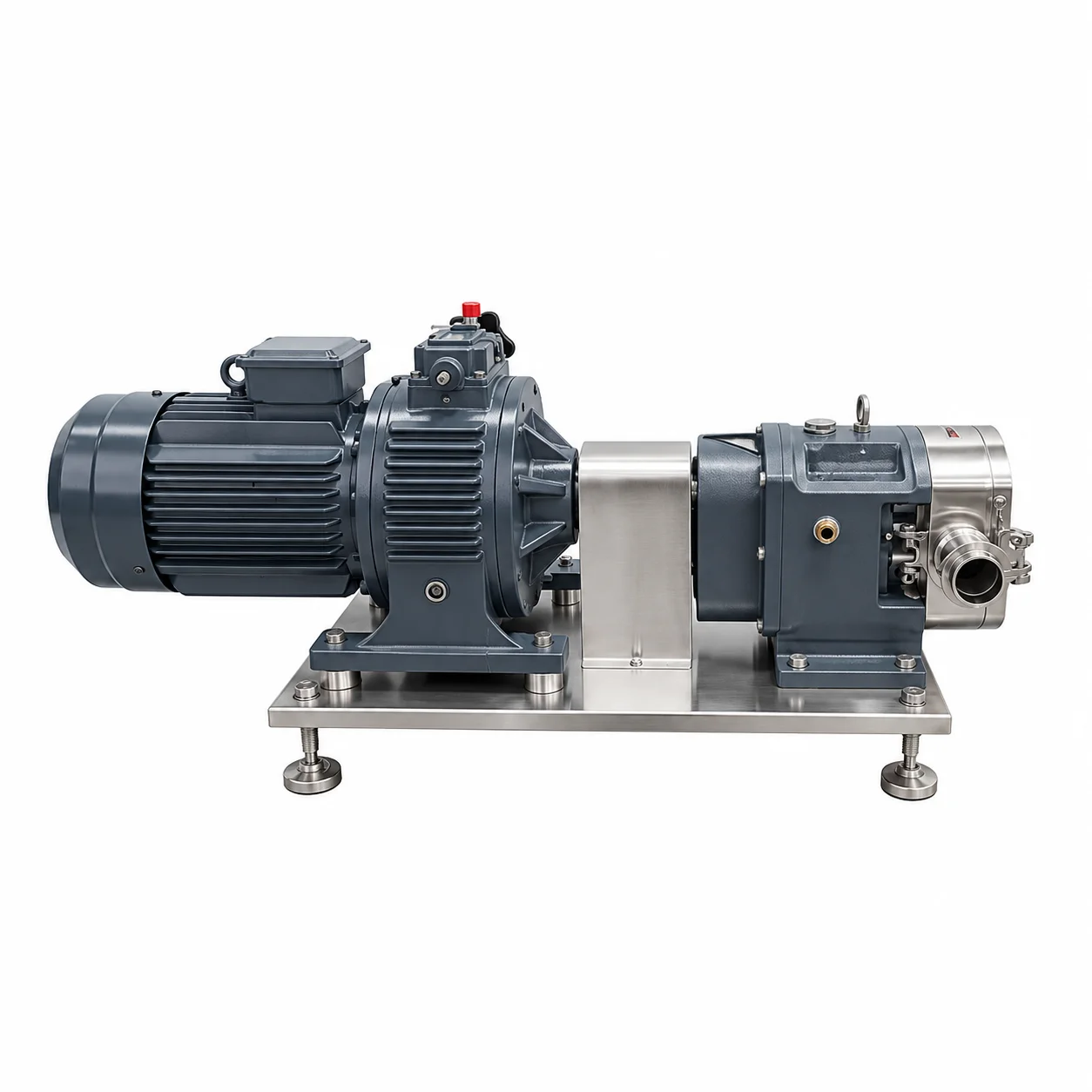
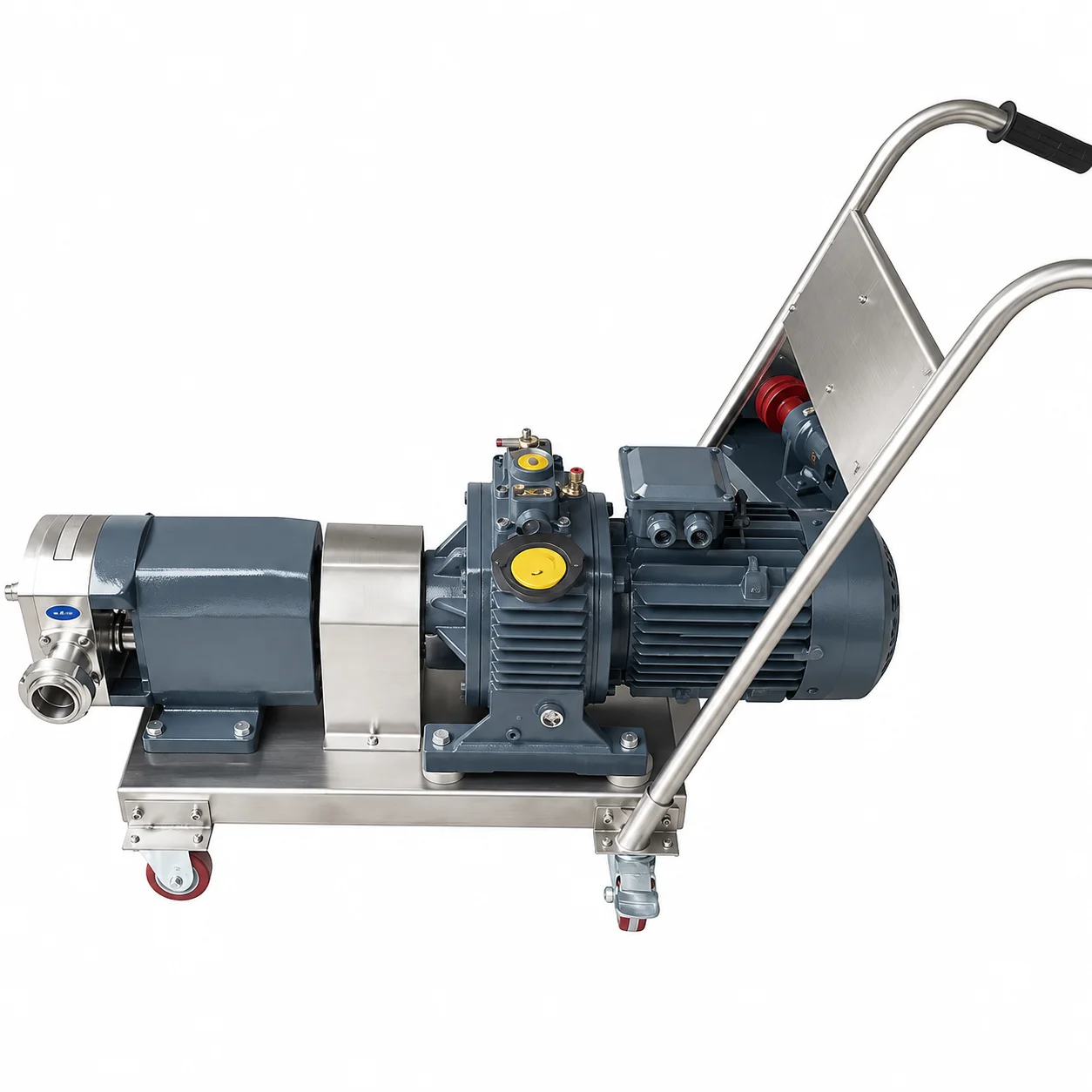
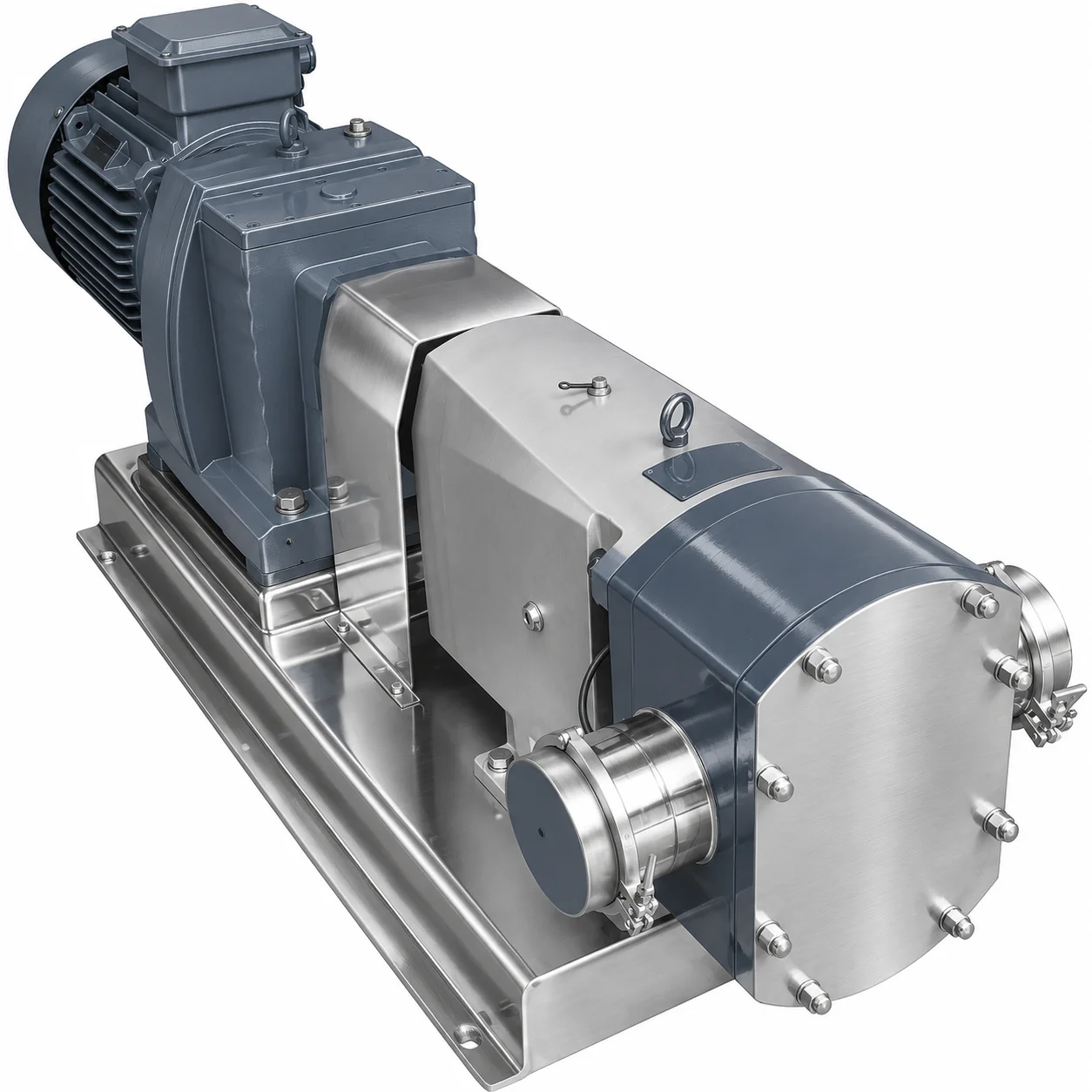
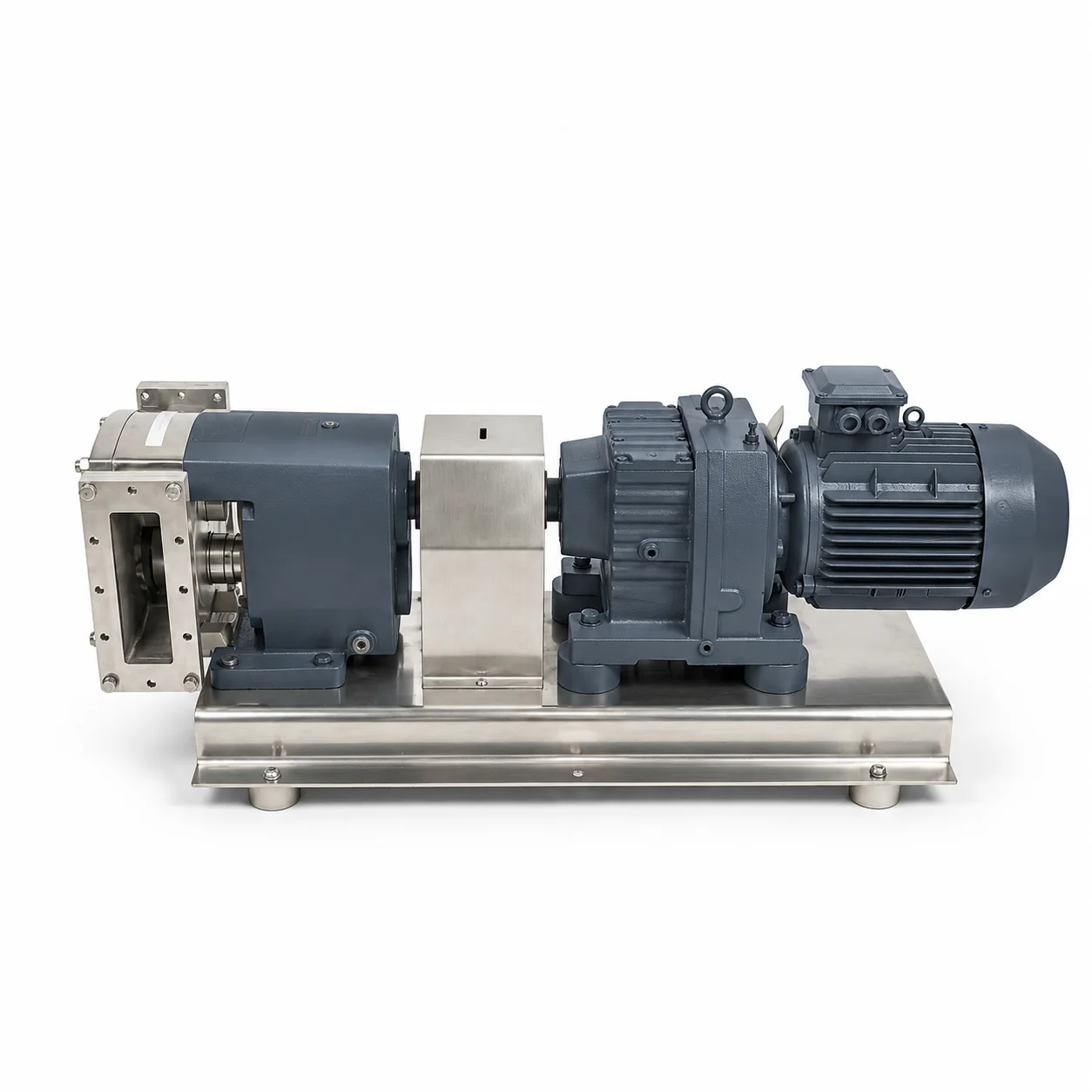
2.2 kW 50Hz 316L Jacketed Honey Rotary Lobe Pump
$2,429.58 原价为:$2,429.58。$1,708.80当前价格为:$1,708.80。
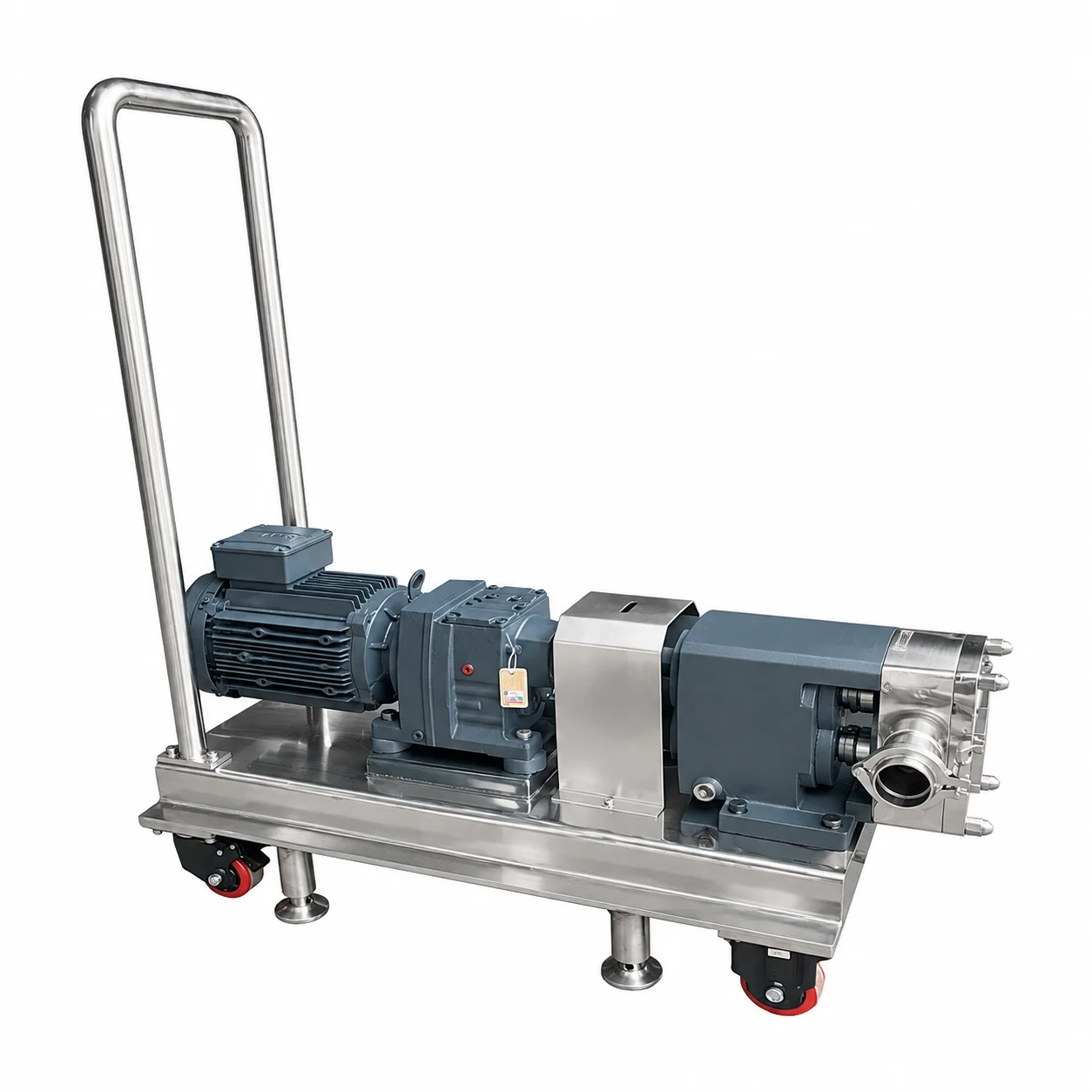
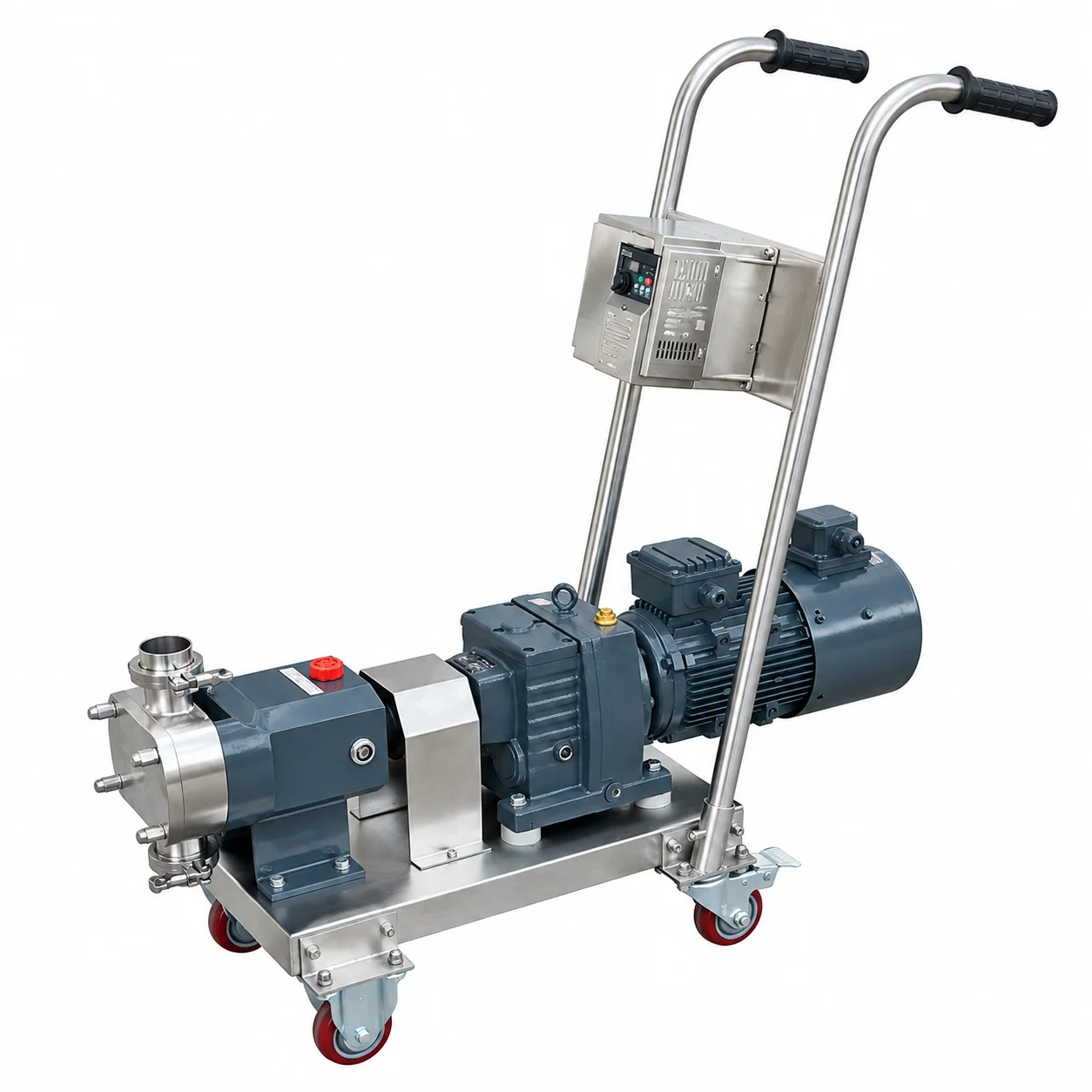
We have available a 2.2 kW, 50 Hz rotary lobe pump with a jacketed body and top/bottom port configuration, used to transfer honey. Provide us with the characteristics of the flow and pressure required, the temperature of the honey to be pumped, the type of connection and any electrical considerations to enable us to confirm the pump most suited to your particular process.
库存 100 件
Rotor Optional
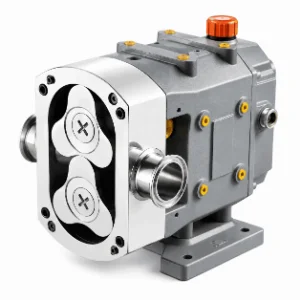
Three-Lobe Rotor
Applicable Liquids:
- Suitable for creams, liquids and sauces with low, medium and high viscosity, uniform texture and no hard granules.
- Example: Chocolate, honey, mashed potatoes and ice cream.
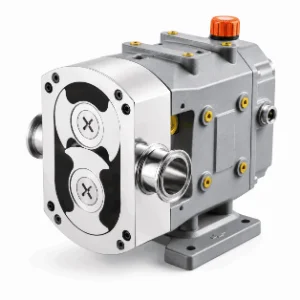
Butterfly Rotor
Applicable Liquids:
- Suitable for shear-free, non-destructive transfer of soft-grained sauces and small-particle materials.
- Example: Jam, pulp, juice, jelly and tomato sauce.
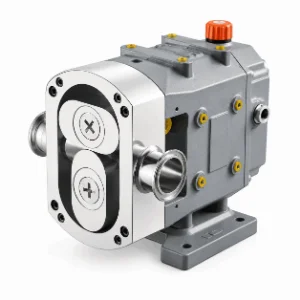
Single-Lobe Rotor
Applicable Liquids:
- Suitable for conveying materials containing larger solid particles while maintaining stable transfer.
- Example: Rock salt, chilli sauce and peanut butter.
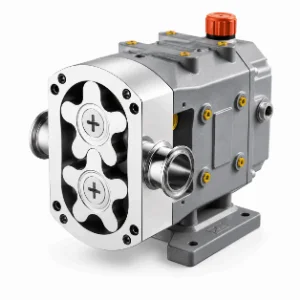
Multi-Lobe Rotor
Applicable Liquids:
- Suitable for creams, liquids and sauces with low, medium and high viscosity where higher output accuracy and smooth flow are required.
- Example: Chocolate, honey, cream, yoghurt, butter and grease.
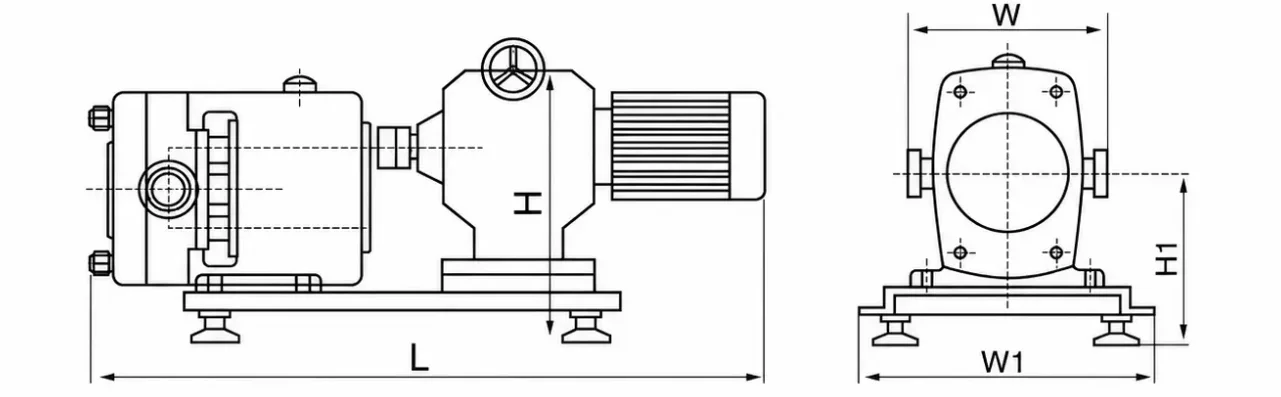
Parameter Chart
| Model | Flow per 100 Rotation |
Power (kW) |
Suggested RPM |
Capacity (L/H) |
Diameter | L | H | H1 | W | W1 | Connection Type |
|---|---|---|---|---|---|---|---|---|---|---|---|
| ZB3A-3 | 3L | 0.55 | 200-500 | 300-800 | Φ25×1.5 | 710 | 290 | 150 | 150 | 240 | Clamp / Thread / Flange |
| ZB3A-6 | 6L | 0.75 | 200-500 | 650-1600 | Φ25×1.5 | 780 | 390 | 170 | 190 | 240 | Clamp / Thread / Flange |
| ZB3A-8 | 8L | 1.5 | 200-500 | 850-2160 | Φ38×1.5 | 850 | 400 | 170 | 190 | 280 | Clamp / Thread / Flange |
| ZB3A-12 | 12L | 2.2 | 200-500 | 1300-3200 | Φ38×1.5 | 980 | 450 | 185 | 220 | 330 | Clamp / Thread / Flange |
| ZB3A-20 | 20L | 3 | 200-500 | 2100-5400 | Φ38×1.5 | 1000 | 450 | 190 | 250 | 330 | Clamp / Thread / Flange |
| ZB3A-30 | 30L | 4 | 200-500 | 3200-6400 | Φ50.8×1.5 | 1050 | 480 | 220 | 270 | 350 | Clamp / Thread / Flange |
| ZB3A-36 | 36L | 4 | 200-400 | 3800-7600 | Φ50.8×1.5 | 1100 | 490 | 220 | 270 | 360 | Clamp / Thread / Flange |
| ZB3A-52 | 52L | 5.5 | 200-400 | 5600-11000 | Φ63×1.5 | 1250 | 580 | 260 | 270 | 480 | Clamp / Thread / Flange |
| ZB3A-66 | 66L | 7.5 | 200-400 | 7100-14000 | Φ76×1.5 | 1350 | 600 | 260 | 270 | 480 | Clamp / Thread / Flange |
| ZB3A-78 | 78L | 7.5 | 200-400 | 9000-18000 | Φ76×1.5 | 1260 | 600 | 295 | 370 | 480 | Clamp / Thread / Flange |
| ZB3A-100 | 100L | 11 | 200-400 | 11000-22000 | Φ76×2 | 1320 | 670 | 295 | 370 | 480 | Clamp / Thread / Flange |
| ZB3A-135 | 135L | 15 | 200-400 | 15000-30000 | Φ89×2 | 1500 | 670 | 295 | 370 | 480 | Clamp / Thread / Flange |
| ZB3A-160 | 160L | 18.5 | 200-400 | 17000-34000 | Φ102×3 | 1500 | 720 | 320 | 420 | 560 | Clamp / Thread / Flange |
| ZB3A-200 | 200L | 22 | 200-400 | 21600-43000 | Φ102×3 | 1500 | 720 | 320 | 420 | 560 | Clamp / Thread / Flange |
| ZB3A-300 | 300L | 30 | 200-400 | 32400-64800 | Φ125×3 | 1650 | 800 | 400 | 480 | 620 | Clamp / Thread / Flange |
| ZB3A-400 | 400L | 37 | 200-400 | 43200-86400 | Φ150×3 | 1700 | 800 | 400 | 480 | 620 | Clamp / Thread / Flange |
This pump is designed to transport honey and similar viscose process liquids.
The model offered here has a 2.2 kW motor operating at 50 Hz with SS316L construction with jacketed pump body. Users should check the capacity, pressure and temperature limits of the pump to ensure it will handle the process liquid to be transported.
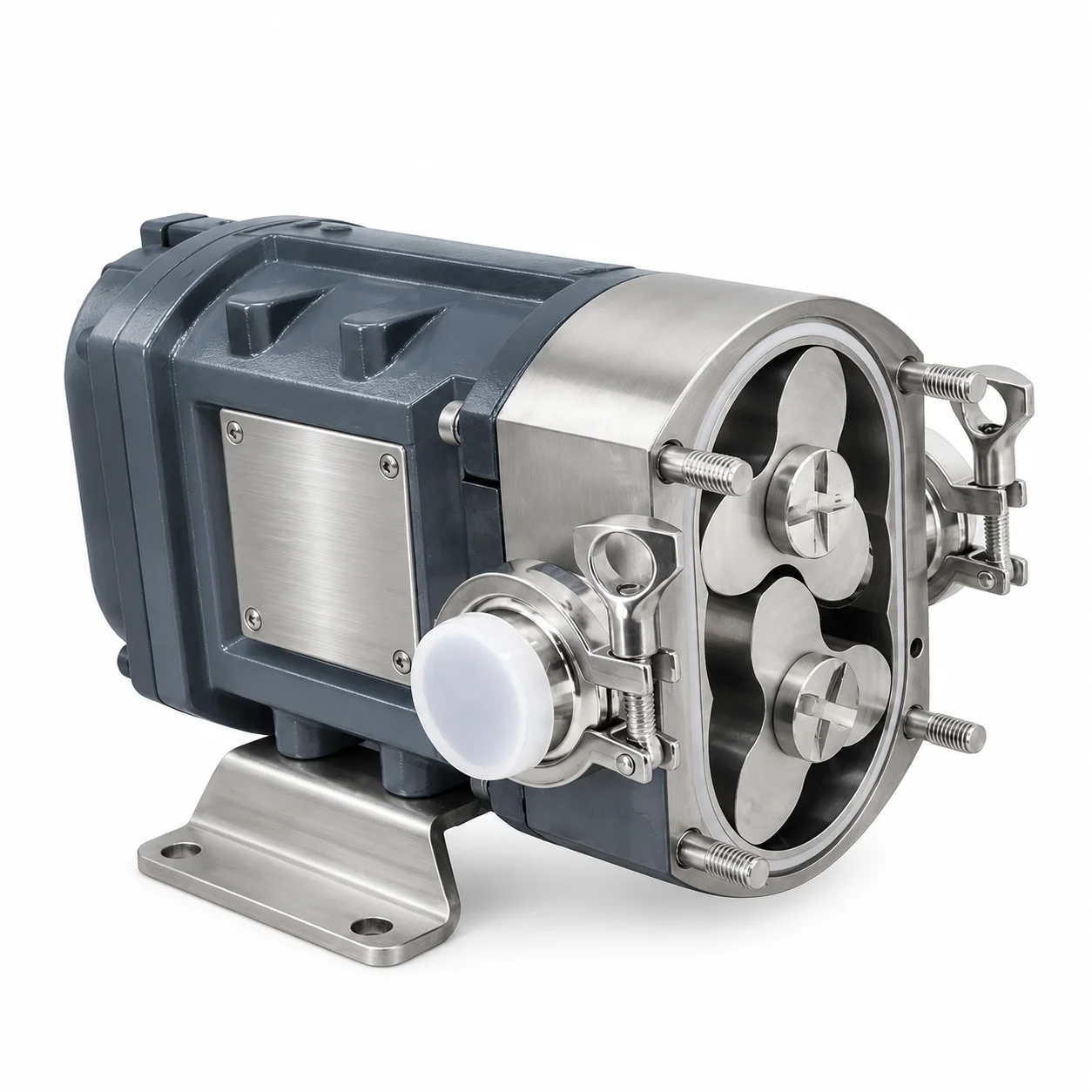
The internal mechanisms of this pump consist of two large rotating lobes, one turning in the opposite direction of the other.
As the lobes turn they create a vacuum which draws honey into the pump. The rotating lobes of the pump push the liquid to the outlet of the pump.
Positive displacement pumps are typically used to transfer liquids with high viscosity.
The top and bottom of the pump define the inlet and outlet of the pump and should be aligned accordingly before installation.
Some features of the pump and associated benefits to the user are listed below.
| A 2.2 kW motor will transfer honey at a given flow rate and pressure with the specified temperature of the process liquid. |
| At 50 Hz operation users should verify the electrical system and any other motors and drives used in the system can operate at this frequency. |
| The construction of the pump body and parts in contact with the process liquid is SS316L. This provides increased corrosion resistance and ease of cleaning. |
Limits for heating and cooling have not been defined.
Verify these with the supplier.
Displacement pumps can be used to transfer honey when used for the correct application.
Honey can solidify as it cools making it very difficult to move through equipment. A jacketted pump body may be used to maintain the honey at the temperature required to process it. Jacketted pumps can be used to transfer honey between various pieces of equipment along the production line. The pump selected should be able to handle the resistence of the honey line and the flow required.
Rotary lobe pumps have been designed to transfer honey and may also be used to transfer other similar products with similar characteristics.
Configuration and Technical Information
Rotary lobe pumps have a 2.2 kW, 50 Hz, SS316L stirned steel housing with top and bottom connections. Jacketing is also provided on the pump. The pump is intended to transfer honey. Other features of the pump to be determined prior to use should include flow and pressure.
When requesting a quotation for this pump provide estimated flow and pressure requirements, the type of honey to be transferred, the viscosity of the honey at the process temperature, the dimensions of the pipe, and the method of cleaning to be employed.
Confirm with the supplier the type of seals to be used, the rotor diameter and the connections and motor supply.
SS316L is used to construct the pump.
It may be necessary to specify the ‘duty point’ to ensure compatibility with the equipment used to fill the tank.
To choose the appropriate pump you must provide the expected flow rate, the discharge pressure of the system including any losses in the pipeline and the physical properties of the honey to be pumped.
If heating or cooling of the honey is required during transfer, the type of medium to be used in the jacket should be specified.
Confirm with the pump supplier the limitations of SS316L with regard to seal compatibility and the procedures to be followed for proper cleaning of the pump to ensure it complies with required standards of hygiene.
Indicate the space available for installation of the pump to determine clearances for piping and electrical connections.
What is the difference between a ‘top’ and ‘bottom’ connection on the pump?
Before installation of the pump determine the connection which will carry the honey.
To ensure compatibility with your site conditions, confirm the voltage, wiring and other details of the drives before ordering.
What are the flow and pressure ratings of the honey extractors?
Flow and pressure ratings of these pumps are unstated. Provide the performance data you need based on the properties of the honey you will be extracting.
What must we verify with respect to SS316L?
Verify the components made of SS316L, the type of finish on the surface of the components, and the type of seals used. Further, confirm the level of compatibility of the components with the process for cleaning.
Request a Configuration and Quote
Give us an idea of the temperature and viscosity of the honey to be extracted, and the flow and pressure you need. Also provide the electrical supply and the type of jacket you need.

This pump is designed to transport honey and similar viscose process liquids.
The model offered here has a 2.2 kW motor operating at 50 Hz with SS316L construction with jacketed pump body. Users should check the capacity, pressure and temperature limits of the pump to ensure it will handle the process liquid to be transported.
The internal mechanisms of this pump consist of two large rotating lobes, one turning in the opposite direction of the other.
As the lobes turn they create a vacuum which draws honey into the pump. The rotating lobes of the pump push the liquid to the outlet of the pump.
Positive displacement pumps are typically used to transfer liquids with high viscosity.
The top and bottom of the pump define the inlet and outlet of the pump and should be aligned accordingly before installation.
Some features of the pump and associated benefits to the user are listed below.
| A 2.2 kW motor will transfer honey at a given flow rate and pressure with the specified temperature of the process liquid. |
| At 50 Hz operation users should verify the electrical system and any other motors and drives used in the system can operate at this frequency. |
| The construction of the pump body and parts in contact with the process liquid is SS316L. This provides increased corrosion resistance and ease of cleaning. |
Limits for heating and cooling have not been defined.
Verify these with the supplier.
Displacement pumps can be used to transfer honey when used for the correct application.
Honey can solidify as it cools making it very difficult to move through equipment. A jacketted pump body may be used to maintain the honey at the temperature required to process it. Jacketted pumps can be used to transfer honey between various pieces of equipment along the production line. The pump selected should be able to handle the resistence of the honey line and the flow required.
Rotary lobe pumps have been designed to transfer honey and may also be used to transfer other similar products with similar characteristics.
Configuration and Technical Information
Rotary lobe pumps have a 2.2 kW, 50 Hz, SS316L stirned steel housing with top and bottom connections. Jacketing is also provided on the pump. The pump is intended to transfer honey. Other features of the pump to be determined prior to use should include flow and pressure.
When requesting a quotation for this pump provide estimated flow and pressure requirements, the type of honey to be transferred, the viscosity of the honey at the process temperature, the dimensions of the pipe, and the method of cleaning to be employed.
Confirm with the supplier the type of seals to be used, the rotor diameter and the connections and motor supply.
SS316L is used to construct the pump.
It may be necessary to specify the ‘duty point’ to ensure compatibility with the equipment used to fill the tank.
To choose the appropriate pump you must provide the expected flow rate, the discharge pressure of the system including any losses in the pipeline and the physical properties of the honey to be pumped.
If heating or cooling of the honey is required during transfer, the type of medium to be used in the jacket should be specified.
Confirm with the pump supplier the limitations of SS316L with regard to seal compatibility and the procedures to be followed for proper cleaning of the pump to ensure it complies with required standards of hygiene.
Indicate the space available for installation of the pump to determine clearances for piping and electrical connections.
What is the difference between a ‘top’ and ‘bottom’ connection on the pump?
Before installation of the pump determine the connection which will carry the honey.
To ensure compatibility with your site conditions, confirm the voltage, wiring and other details of the drives before ordering.
What are the flow and pressure ratings of the honey extractors?
Flow and pressure ratings of these pumps are unstated. Provide the performance data you need based on the properties of the honey you will be extracting.
What must we verify with respect to SS316L?
Verify the components made of SS316L, the type of finish on the surface of the components, and the type of seals used. Further, confirm the level of compatibility of the components with the process for cleaning.
Request a Configuration and Quote
Give us an idea of the temperature and viscosity of the honey to be extracted, and the flow and pressure you need. Also provide the electrical supply and the type of jacket you need.

MAECENAS IACULIS
Vestibulum curae torquent diam diam commodo parturient penatibus nunc dui adipiscing convallis bulum parturient suspendisse parturient a.Parturient in parturient scelerisque nibh lectus quam a natoque adipiscing a vestibulum hendrerit et pharetra fames nunc natoque dui.
ADIPISCING CONVALLIS BULUM
- Vestibulum penatibus nunc dui adipiscing convallis bulum parturient suspendisse.
- Abitur parturient praesent lectus quam a natoque adipiscing a vestibulum hendre.
- Diam parturient dictumst parturient scelerisque nibh lectus.
Scelerisque adipiscing bibendum sem vestibulum et in a a a purus lectus faucibus lobortis tincidunt purus lectus nisl class eros.Condimentum a et ullamcorper dictumst mus et tristique elementum nam inceptos hac parturient scelerisque vestibulum amet elit ut volutpat.