Sanitary Lobe Pump for High-Viscosity Sugar Syrup
$2,807.93 原价为:$2,807.93。$1,918.76当前价格为:$1,918.76。
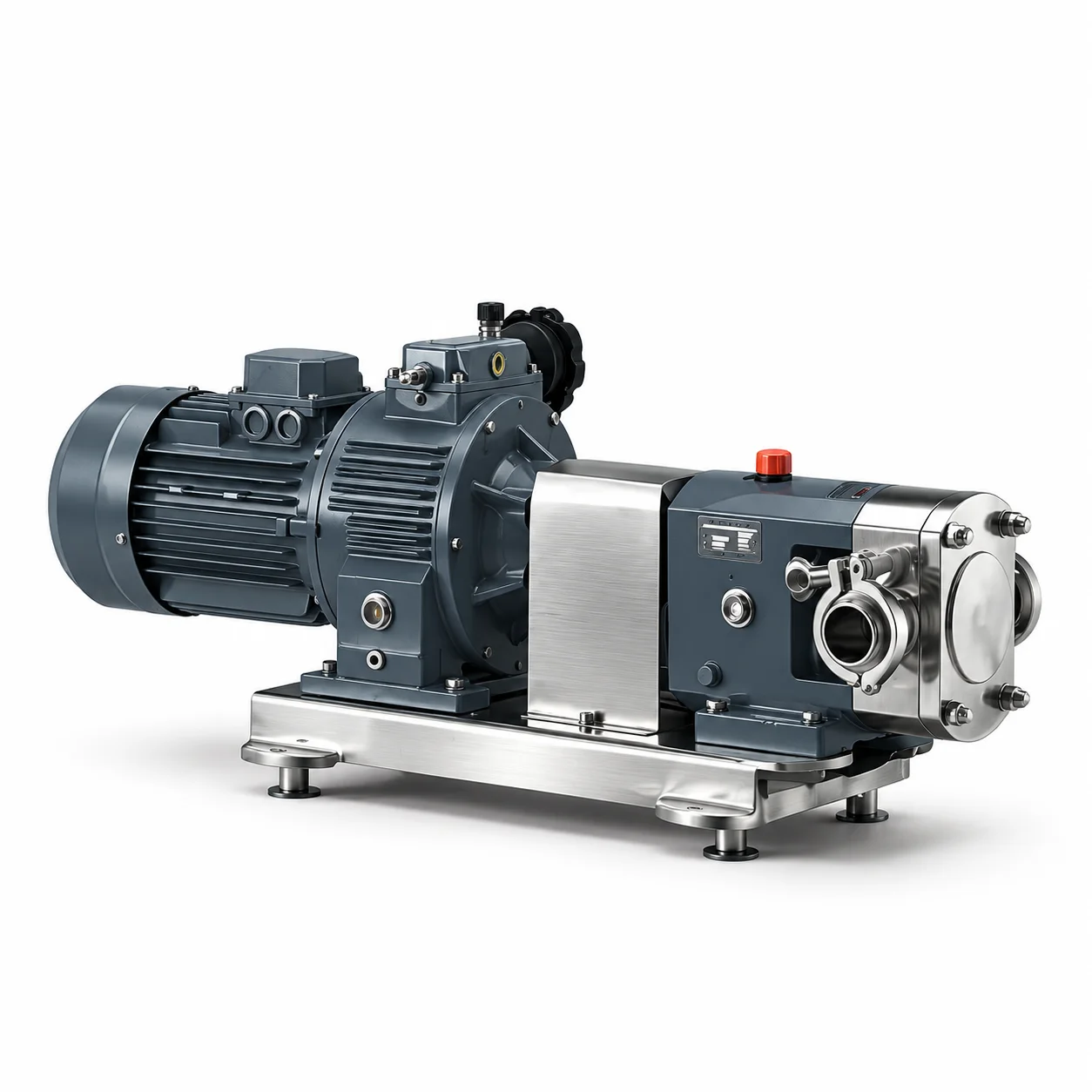
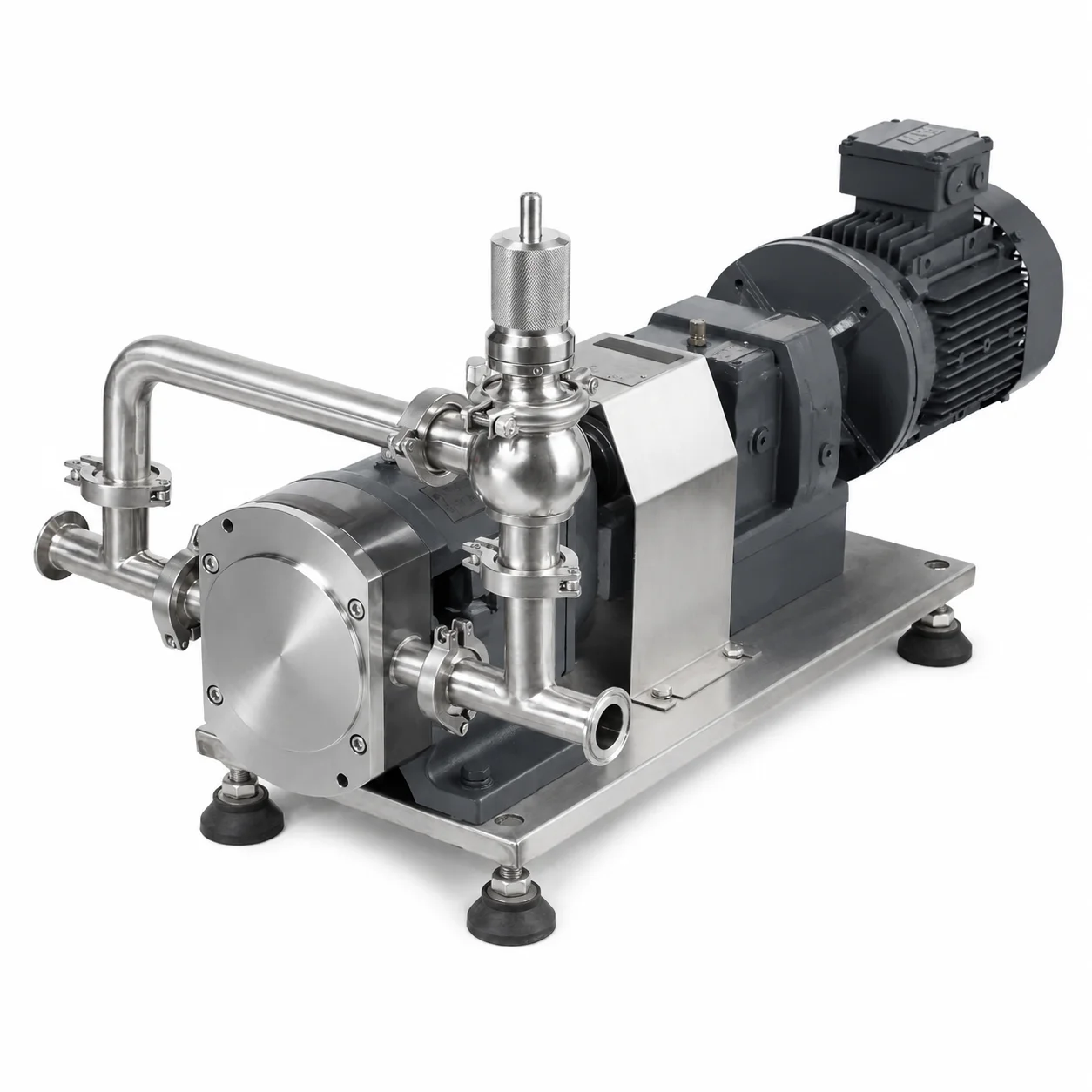
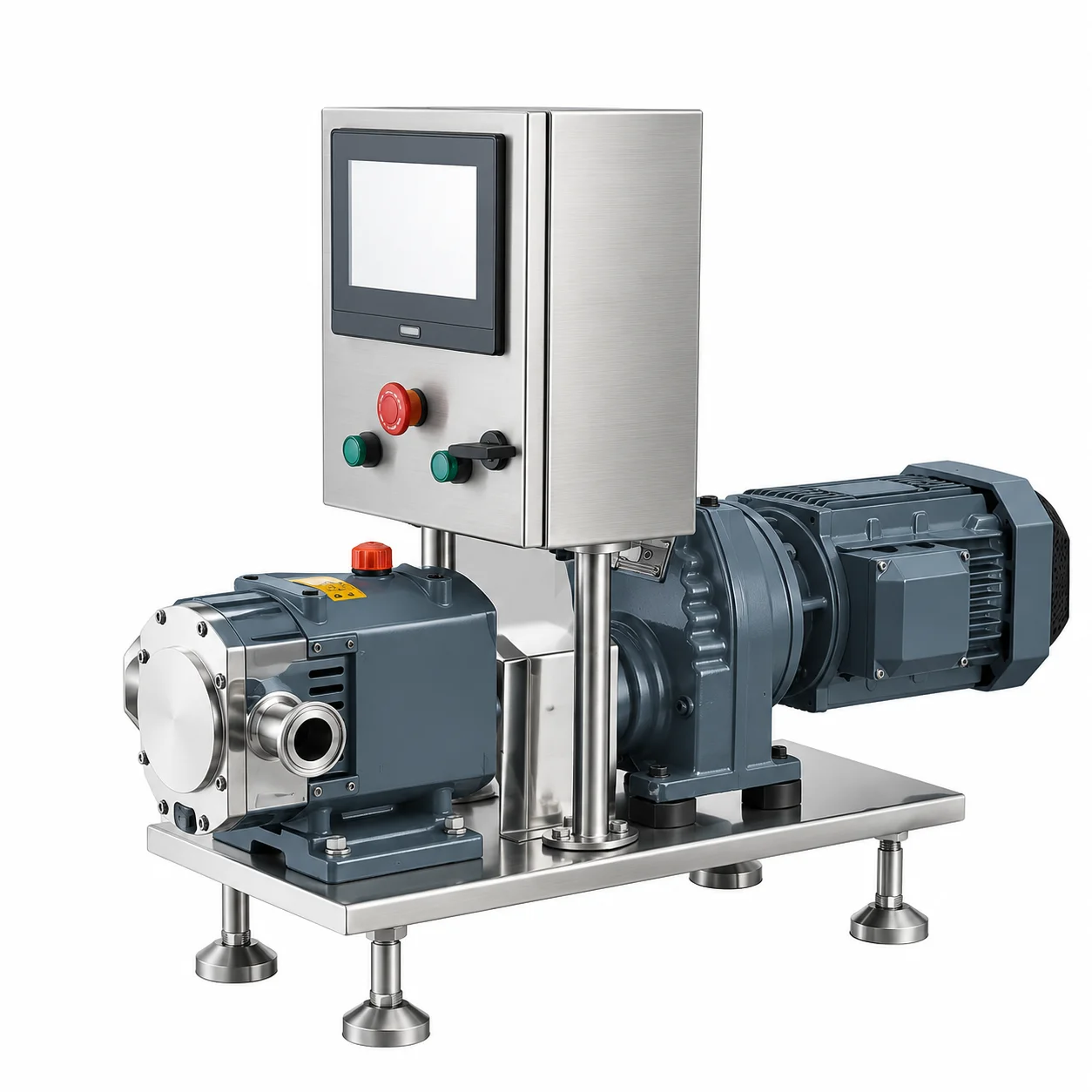
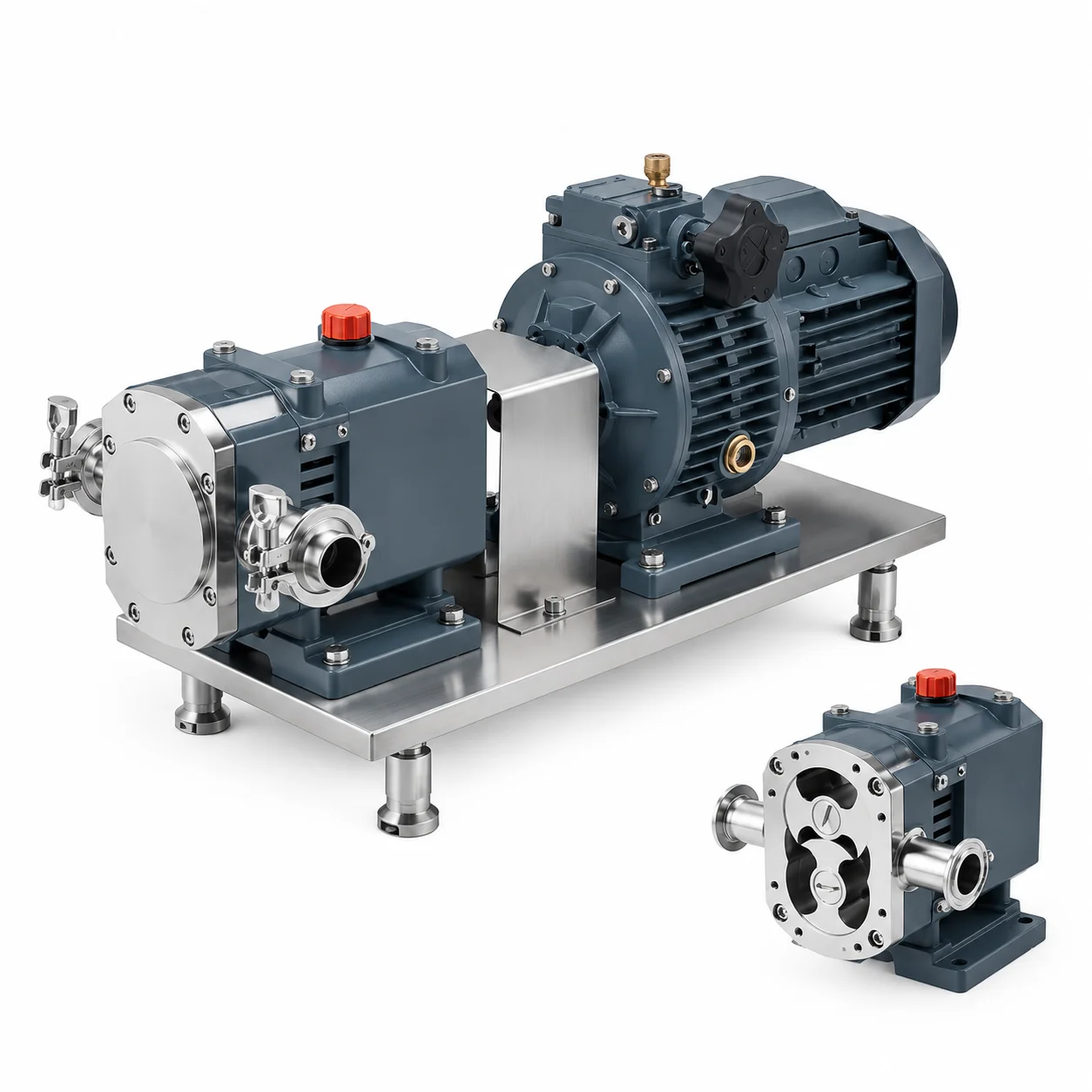
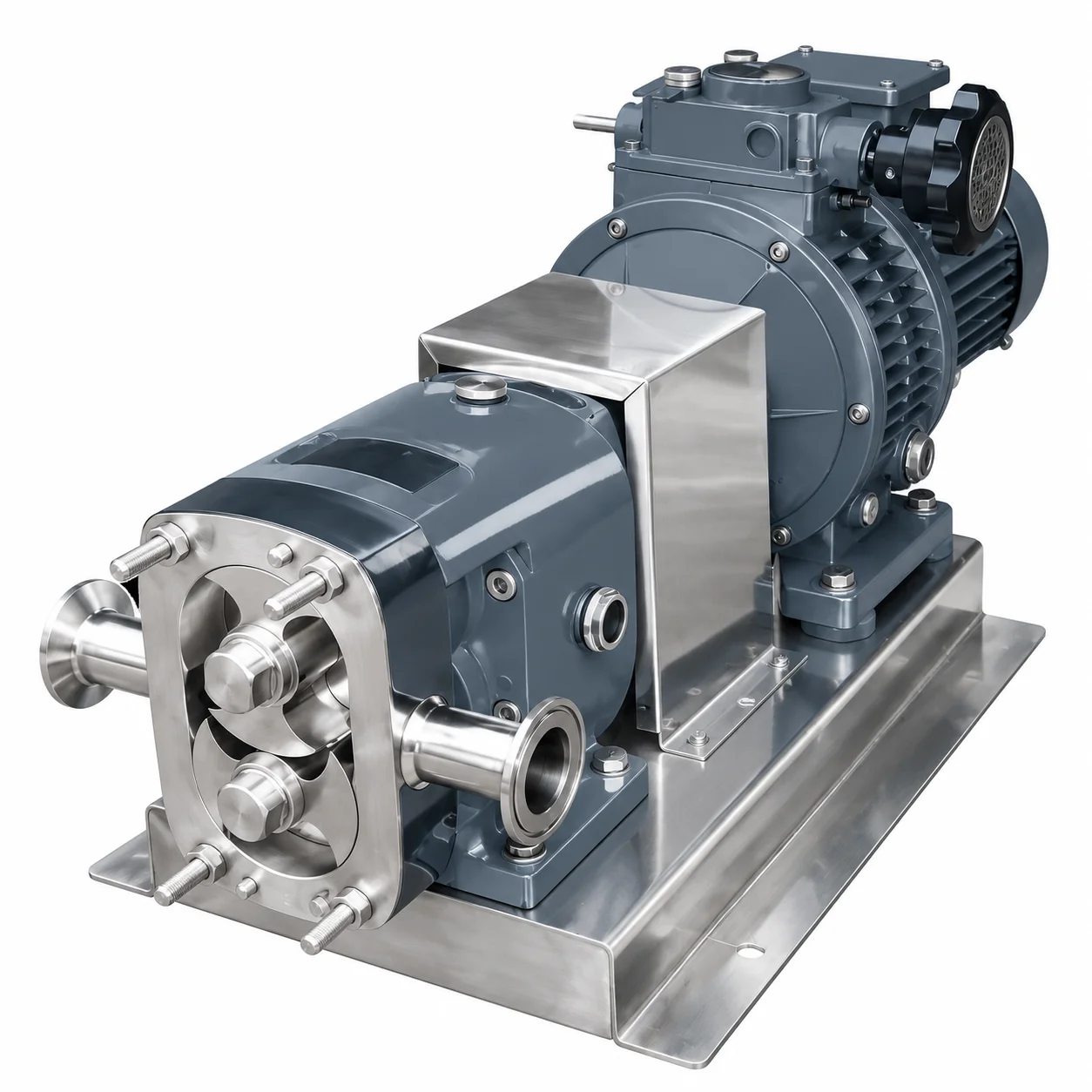
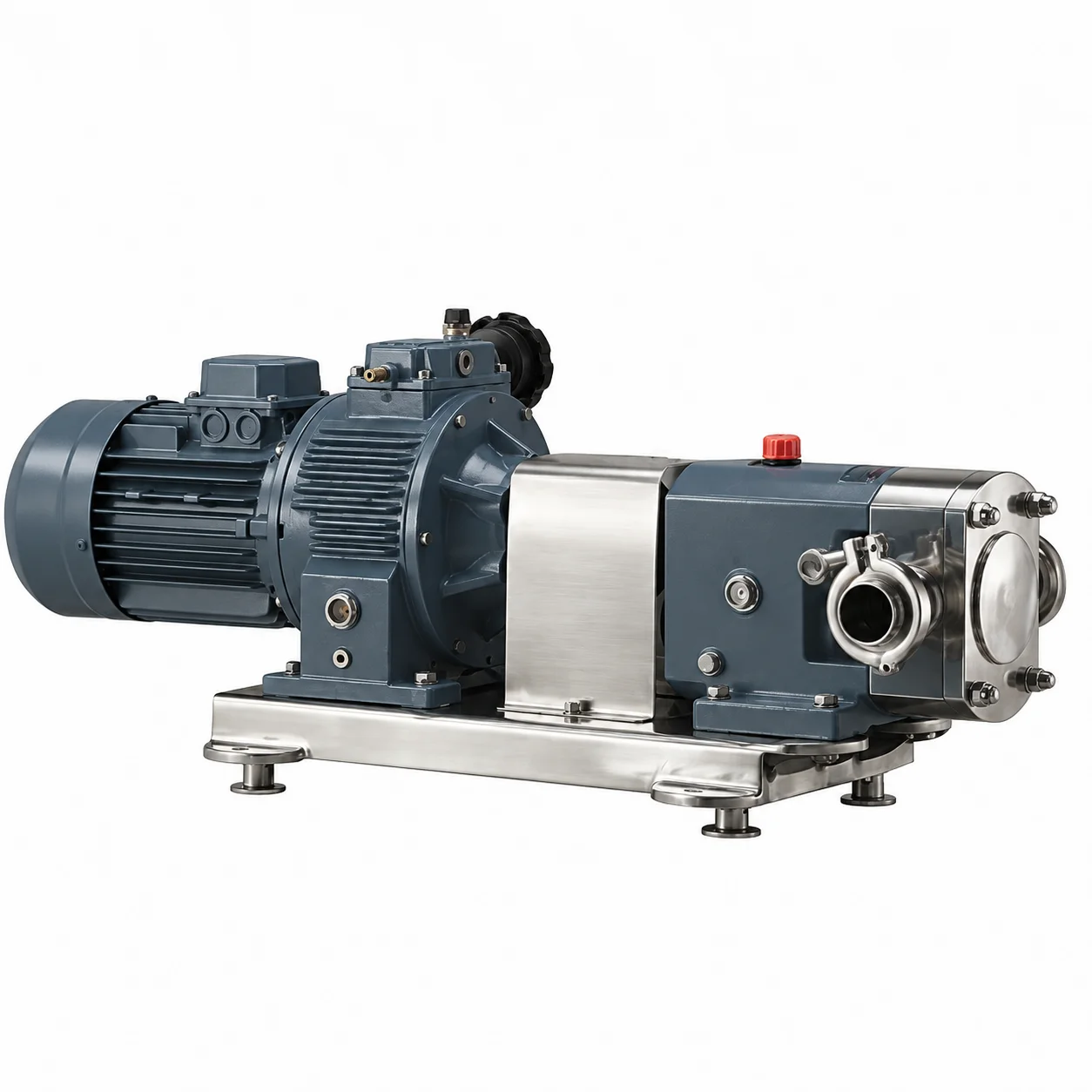
We have a sanitary rotary lobe pump appropriate for transferring sugar syrup in food processing. Positive displacement pumps like this one are well suited for transferring fluids with high viscosity. To assist us in recommending the best pump for your application and giving you the best estimate, what do you infer about the service conditions of the pump (flow rate, pressure, temperature of the syrup, average viscosity of the syrup, method of cleaning, type of connection)?
库存 100 件
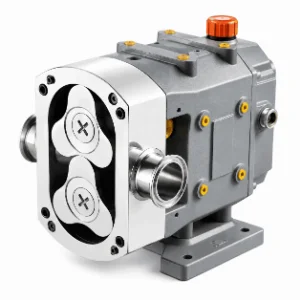
Rotor Optional
Three-Lobe Rotor
Applicable Liquids:
- Suitable for creams, liquids and sauces with low, medium and high viscosity, uniform texture and no hard granules.
- Example: Chocolate, honey, mashed potatoes and ice cream.
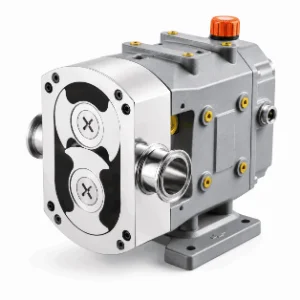
Butterfly Rotor
Applicable Liquids:
- Suitable for shear-free, non-destructive transfer of soft-grained sauces and small-particle materials.
- Example: Jam, pulp, juice, jelly and tomato sauce.
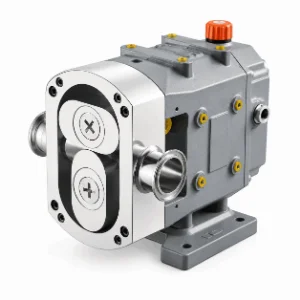
Single-Lobe Rotor
Applicable Liquids:
- Suitable for conveying materials containing larger solid particles while maintaining stable transfer.
- Example: Rock salt, chilli sauce and peanut butter.
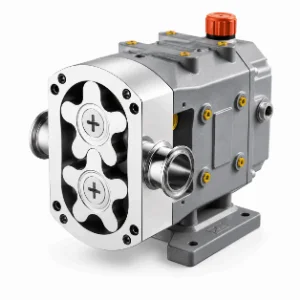
Multi-Lobe Rotor
Applicable Liquids:
- Suitable for creams, liquids and sauces with low, medium and high viscosity where higher output accuracy and smooth flow are required.
- Example: Chocolate, honey, cream, yoghurt, butter and grease.
Parameter Chart
| Model | Flow per 100 Rotation |
Power (kW) |
Suggested RPM |
Capacity (L/H) |
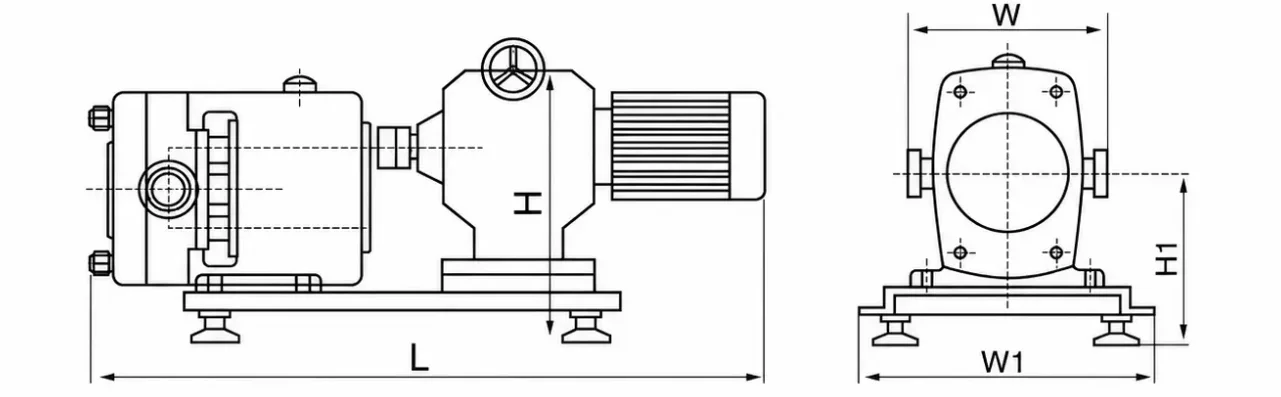
Diameter | L | H | H1 | W | W1 | Connection Type |
|---|---|---|---|---|---|---|---|---|---|---|---|
| ZB3A-3 | 3L | 0.55 | 200-500 | 300-800 | Φ25×1.5 | 710 | 290 | 150 | 150 | 240 | Clamp / Thread / Flange |
| ZB3A-6 | 6L | 0.75 | 200-500 | 650-1600 | Φ25×1.5 | 780 | 390 | 170 | 190 | 240 | Clamp / Thread / Flange |
| ZB3A-8 | 8L | 1.5 | 200-500 | 850-2160 | Φ38×1.5 | 850 | 400 | 170 | 190 | 280 | Clamp / Thread / Flange |
| ZB3A-12 | 12L | 2.2 | 200-500 | 1300-3200 | Φ38×1.5 | 980 | 450 | 185 | 220 | 330 | Clamp / Thread / Flange |
| ZB3A-20 | 20L | 3 | 200-500 | 2100-5400 | Φ38×1.5 | 1000 | 450 | 190 | 250 | 330 | Clamp / Thread / Flange |
| ZB3A-30 | 30L | 4 | 200-500 | 3200-6400 | Φ50.8×1.5 | 1050 | 480 | 220 | 270 | 350 | Clamp / Thread / Flange |
| ZB3A-36 | 36L | 4 | 200-400 | 3800-7600 | Φ50.8×1.5 | 1100 | 490 | 220 | 270 | 360 | Clamp / Thread / Flange |
| ZB3A-52 | 52L | 5.5 | 200-400 | 5600-11000 | Φ63×1.5 | 1250 | 580 | 260 | 270 | 480 | Clamp / Thread / Flange |
| ZB3A-66 | 66L | 7.5 | 200-400 | 7100-14000 | Φ76×1.5 | 1350 | 600 | 260 | 270 | 480 | Clamp / Thread / Flange |
| ZB3A-78 | 78L | 7.5 | 200-400 | 9000-18000 | Φ76×1.5 | 1260 | 600 | 295 | 370 | 480 | Clamp / Thread / Flange |
| ZB3A-100 | 100L | 11 | 200-400 | 11000-22000 | Φ76×2 | 1320 | 670 | 295 | 370 | 480 | Clamp / Thread / Flange |
| ZB3A-135 | 135L | 15 | 200-400 | 15000-30000 | Φ89×2 | 1500 | 670 | 295 | 370 | 480 | Clamp / Thread / Flange |
| ZB3A-160 | 160L | 18.5 | 200-400 | 17000-34000 | Φ102×3 | 1500 | 720 | 320 | 420 | 560 | Clamp / Thread / Flange |
| ZB3A-200 | 200L | 22 | 200-400 | 21600-43000 | Φ102×3 | 1500 | 720 | 320 | 420 | 560 | Clamp / Thread / Flange |
| ZB3A-300 | 300L | 30 | 200-400 | 32400-64800 | Φ125×3 | 1650 | 800 | 400 | 480 | 620 | Clamp / Thread / Flange |
| ZB3A-400 | 400L | 37 | 200-400 | 43200-86400 | Φ150×3 | 1700 | 800 | 400 | 480 | 620 | Clamp / Thread / Flange |
This lobe pump is used to transfer sugar syrup and similar products within the food industry.
Unlike centrifugal pumps, this type of pump can transfer sugar syrup more effectively. To check if this pump meets your requirements, contact the manufacturer to check the documentation relevant to your application.
Operation
During operation the rotating lobes create a cavity to draw syrup up into the pump and discharge it through the outlet of the pump. In contrast to centrifugal pumps, the fluid is moved without the use of impellers turning at high speeds. Factors affecting the performance of the pump include the viscosity and the temperature of the syrup, and the overall configuration of the system.
Advantages
Good choice to transfer viscous syrups that other pumps may not be able to transfer.
The construction of the pump allows it to be used in the food industry.
The rate of flow of the pump is determined by the rotation speed of the rotor and the displacement volume of the rotor.
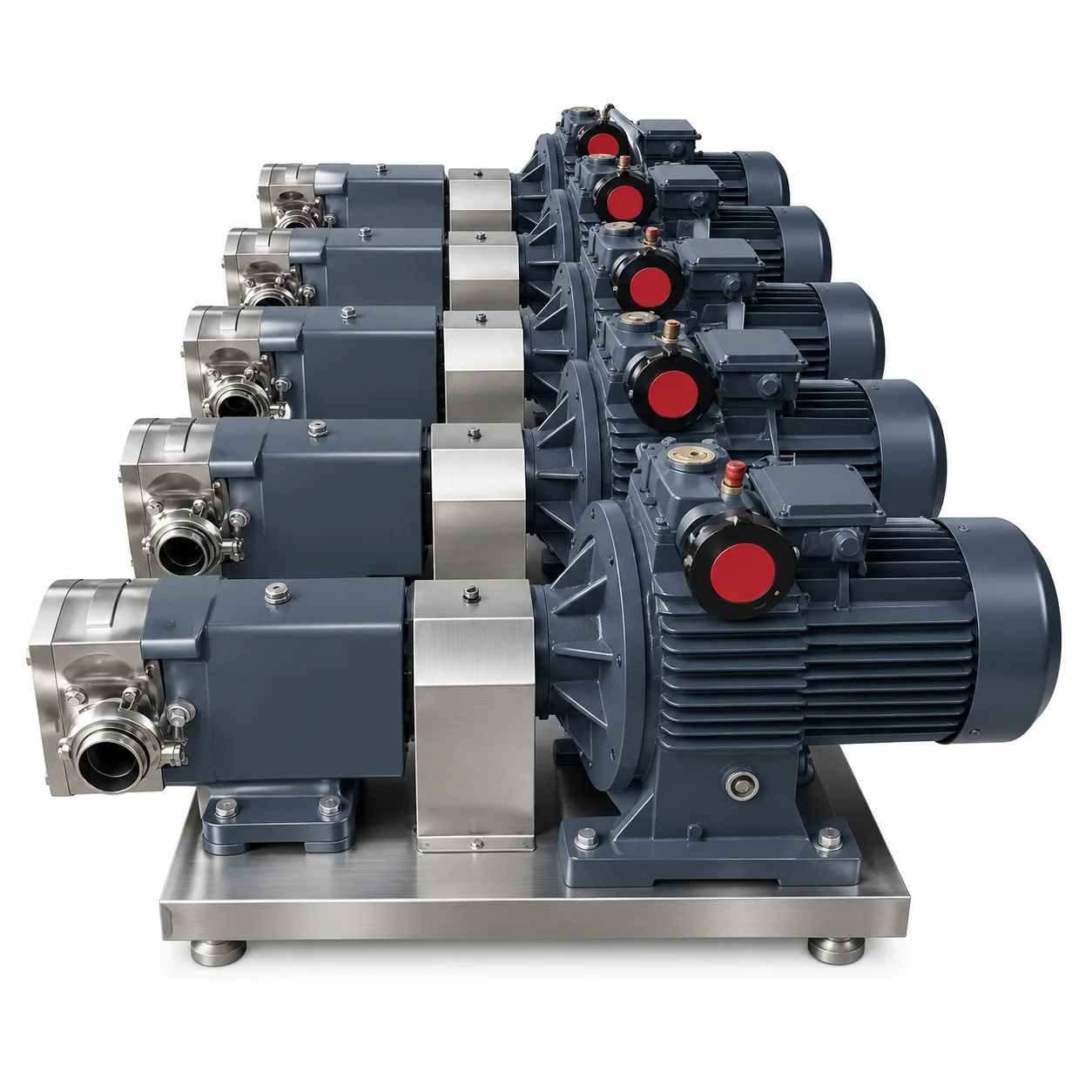
The size of the pump can be customized to suit the particular application.
Applications
This type of pump may be used to transfer sugar syrup to other process equipment for further refining or to feed a packaging machine on a production line.
Temperature Effects
The temperature of the syrup being pumped effects its flow characteristics. Cooler syrup becomes more viscous and therefore harder to pump. Selecting the pump and piping together accounts for the viscosity of the syrup being transferred.
Product Information
| Type of pump: | Rotary lobe, positive displacement. |
| Medium transferred: | High viscosity food products and sugar syrup. |
| Application: | Transfer of food products in a sanitary system. |
Details of the pump, such as flow and pressure, may vary depending on the particular model chosen. To use this pump to transport the syrup to the desired location, further confirmation of the syrup\’s ingredients to confirm compatibility with the seals and other components of the pump is necessary.
Pump Sizing
To properly size this pump for your application you should also give the expected syrup viscosity at operating temperature and the operating temperature range. Also provide the expected vacuum in the syrup at the pump suction. Once this information is provided along with the anticipated duty cycle of the pump, the pump supplier will be able to recommend the appropriate size.
FAQs
Is this pump suitable to move sugar syrup?
This pump will transfer sugar syrup provided the sugar syrup does not exceed the maximum viscosity the pump is designed to handle. To confirm this contact the pump supplier.
How does this type of pump function?
This type of pump functions by rotating lobes which capture the food product in the cavities of the lobes and conveys the product to the outlet of the pump.
Is this pump appropriate for food processing?
Yes, this pump can be used in food processing. To confirm this contact the pump supplier to verify the materials that come in contact with the food.
What factors affect pump performance?
Depends on numerous factors including the size and speed of the pump, the properties of the fluid, and the conditions of the system. To ascertain the exact pump size and speed required, please specify ‘duty point’ conditions.
What effect do changes in syrup temperature have on pump performance?
Viscosity of the syrup increases as temperature decreases. Requests for pump selections should include the minimum and maximum temperatures at which the syrup will be processed.
To receive a quotation for a syrup pump, what information should be provided?
The flow rate, pressure, and properties of the syrup to be pumped, the operating temperature of the syrup, the method to be used for cleaning the pump, the way in which the pump will be connected to the system, and the voltage of the power supply available at the pump location.
Request Configuration and Quote
To provide the most accurate recommendation and quotation for your application, it would be helpful to include the effects of processing the syrup on the pump and system components.

This lobe pump is used to transfer sugar syrup and similar products within the food industry.
Unlike centrifugal pumps, this type of pump can transfer sugar syrup more effectively. To check if this pump meets your requirements, contact the manufacturer to check the documentation relevant to your application.
Operation
During operation the rotating lobes create a cavity to draw syrup up into the pump and discharge it through the outlet of the pump. In contrast to centrifugal pumps, the fluid is moved without the use of impellers turning at high speeds. Factors affecting the performance of the pump include the viscosity and the temperature of the syrup, and the overall configuration of the system.
Advantages
Good choice to transfer viscous syrups that other pumps may not be able to transfer.
The construction of the pump allows it to be used in the food industry.
The rate of flow of the pump is determined by the rotation speed of the rotor and the displacement volume of the rotor.
The size of the pump can be customized to suit the particular application.
Applications
This type of pump may be used to transfer sugar syrup to other process equipment for further refining or to feed a packaging machine on a production line.
Temperature Effects
The temperature of the syrup being pumped effects its flow characteristics. Cooler syrup becomes more viscous and therefore harder to pump. Selecting the pump and piping together accounts for the viscosity of the syrup being transferred.
Product Information
| Type of pump: | Rotary lobe, positive displacement. |
| Medium transferred: | High viscosity food products and sugar syrup. |
| Application: | Transfer of food products in a sanitary system. |
Details of the pump, such as flow and pressure, may vary depending on the particular model chosen. To use this pump to transport the syrup to the desired location, further confirmation of the syrup\’s ingredients to confirm compatibility with the seals and other components of the pump is necessary.
Pump Sizing
To properly size this pump for your application you should also give the expected syrup viscosity at operating temperature and the operating temperature range. Also provide the expected vacuum in the syrup at the pump suction. Once this information is provided along with the anticipated duty cycle of the pump, the pump supplier will be able to recommend the appropriate size.
FAQs
Is this pump suitable to move sugar syrup?
This pump will transfer sugar syrup provided the sugar syrup does not exceed the maximum viscosity the pump is designed to handle. To confirm this contact the pump supplier.
How does this type of pump function?
This type of pump functions by rotating lobes which capture the food product in the cavities of the lobes and conveys the product to the outlet of the pump.
Is this pump appropriate for food processing?
Yes, this pump can be used in food processing. To confirm this contact the pump supplier to verify the materials that come in contact with the food.
What factors affect pump performance?
Depends on numerous factors including the size and speed of the pump, the properties of the fluid, and the conditions of the system. To ascertain the exact pump size and speed required, please specify ‘duty point’ conditions.
What effect do changes in syrup temperature have on pump performance?
Viscosity of the syrup increases as temperature decreases. Requests for pump selections should include the minimum and maximum temperatures at which the syrup will be processed.
To receive a quotation for a syrup pump, what information should be provided?
The flow rate, pressure, and properties of the syrup to be pumped, the operating temperature of the syrup, the method to be used for cleaning the pump, the way in which the pump will be connected to the system, and the voltage of the power supply available at the pump location.
Request Configuration and Quote
To provide the most accurate recommendation and quotation for your application, it would be helpful to include the effects of processing the syrup on the pump and system components.

MAECENAS IACULIS
Vestibulum curae torquent diam diam commodo parturient penatibus nunc dui adipiscing convallis bulum parturient suspendisse parturient a.Parturient in parturient scelerisque nibh lectus quam a natoque adipiscing a vestibulum hendrerit et pharetra fames nunc natoque dui.
ADIPISCING CONVALLIS BULUM
- Vestibulum penatibus nunc dui adipiscing convallis bulum parturient suspendisse.
- Abitur parturient praesent lectus quam a natoque adipiscing a vestibulum hendre.
- Diam parturient dictumst parturient scelerisque nibh lectus.
Scelerisque adipiscing bibendum sem vestibulum et in a a a purus lectus faucibus lobortis tincidunt purus lectus nisl class eros.Condimentum a et ullamcorper dictumst mus et tristique elementum nam inceptos hac parturient scelerisque vestibulum amet elit ut volutpat.